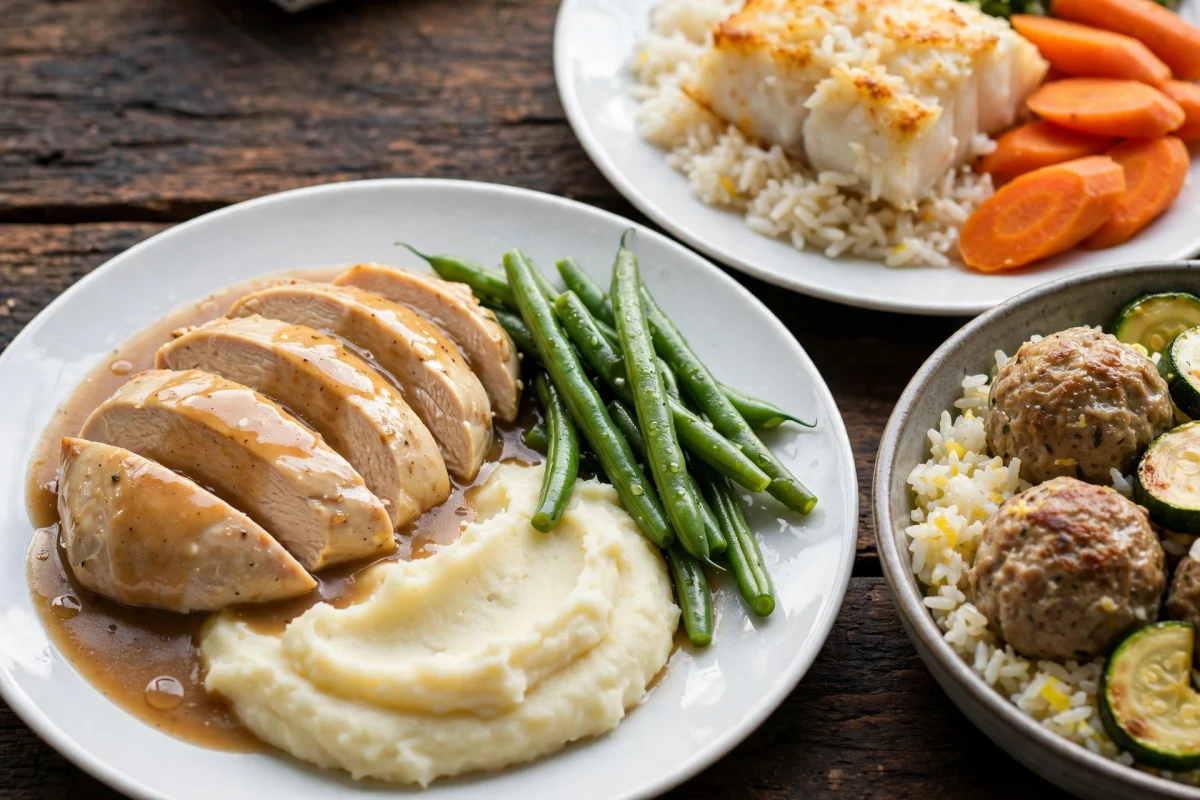
The first meal after a pancreatitis flare is rarely a feast. It is a small bowl of rice, a spoon of broth, and a quiet question about whether the kitchen can be trusted again.
This 7 day meal plan for pancreatitis is built for the stretch after your care team has moved you from clear liquids back to solid food, and for the longer run of chronic pancreatitis when every meal has to stay low in fat.
The week runs on poached and baked fish, skinless chicken, egg whites, soft rice, potatoes, carrots, and squash, with no frying and no heavy cream sauces anywhere.
It is a practical menu, not a treatment. It cannot calm an active flare or replace prescribed enzymes, and it will not suit every fat budget, so your gastroenterologist or dietitian still sets the limits you cook inside.
The real challenge is not willpower but rhythm. Pancreatitis tends to punish one large, rich meal more than several small, plain ones, which is why every day here carries four gentle slots instead of three big pushes.
That rhythm suits adults home from a hospital stay after acute pancreatitis, people living with chronic pancreatitis, and the family cook who has to make one low-fat dinner that still tastes like dinner for everyone at the table.
Key Principles of a Pancreatitis Diet
Six habits hold this low-fat pancreatitis pattern together, and each one comes from how the pancreas handles fat, protein, and meal size. They are not rules to win at, just the frame that keeps a low-fat week steady while your care team adjusts the details.
- Fat Stays Low at Every Meal: Most guidance keeps fat low across the whole day rather than saving it for one meal, and many care teams set a daily target near 30 to 50 grams. NIDDK's pancreatitis nutrition guidance describes that low-fat, small-meal pattern, and your own team decides your ceiling. Read labels on broth, sauces, and snack packs, since fat hides in places salt gets blamed for.
- Protein Anchors Every Slot: Skinless chicken, white fish, turkey breast, egg whites, and low-fat yogurt show up at every meal and snack. Protein gives the body material to repair and helps you hold muscle when portions are small, and these lean sources keep the fat cost low.
- Smaller Meals More Often: Four modest slots and a planned snack beat three heavy plates, since a large fatty meal asks the pancreas for a bigger digestive push. Eat slowly, stop before full, and keep a plain snack within reach for the gap between lunch and dinner.
- Gentle Cooking Only: Steam, poach, bake, simmer, and roast with a light hand. Frying, breading, cream reductions, and butter finishes are out for the pancreatitis meal plan, not because flavor disappears but because the fat load climbs fast.
- Alcohol Stays Out: Alcohol is one of the leading causes of pancreatitis and a common trigger for another attack, so your pancreatitis meal plan leaves it out completely. NIDDK's overview of pancreatitis lists alcohol among the main causes, and that is a care team conversation, not a moderation experiment.
- Texture and Temperature Stay Calm: Soft rice, cooked vegetables, warm soups, and room-temperature fruit sit easier than very spicy, very acidic, or very cold food. If a specific food has triggered pain before, leave it out even when it fits the fat budget.
Your 7 Day Meal Plan for Pancreatitis
The week moves from familiar American plates into Mexican, Mediterranean, Asian, Middle Eastern, and Italian cooking, then closes on a simple roast. Chicken, white fish, turkey, rice, potatoes, and squash carry the week, and every dinner is baked, steamed, poached, or simmered.
Day 1
Breakfast:
- Egg White Scramble with Steamed Spinach and Sourdough Toast: Egg whites cook soft in a nonstick pan while a handful of spinach wilts beside them, then both land on a slice of toasted sourdough. A squeeze of lemon and a pinch of pepper do the work butter usually does, and the plate stays light enough for a slow morning.
Lunch:
- Turkey and Rice Soup with Carrots and Dill: Lean ground turkey simmers with carrots, rice, and dill in a clear low-sodium broth until the rice turns soft and the broth smells like a warm kitchen. Make a double pot and keep two bowls in the fridge for the days when cooking feels like too much.
Dinner:
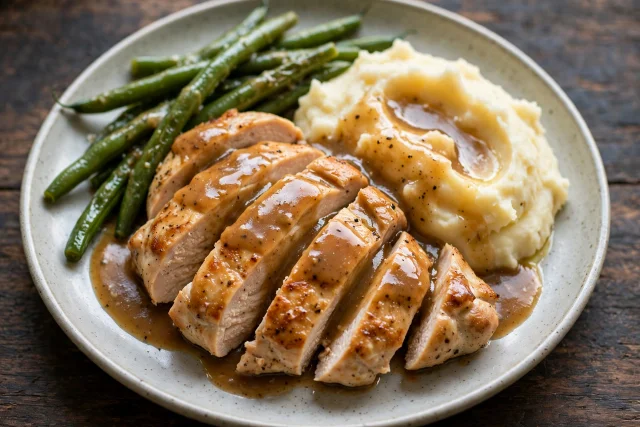
- Chicken with Pan Gravy, Mashed Potatoes, and Green Beans: Skinless chicken breast sears with a little mild paprika, then a spoonful of flour and a splash of broth turn the browned bits into a thin pan gravy. Potatoes mash with warm low-fat milk instead of butter, and the green beans stay bright beside them.
Snacks:
- Stewed Apple Compote with Graham Crackers: Apples soften with cinnamon and a little water until they slump into a warm compote, then two graham crackers go alongside for crunch. It tastes like dessert and sits gently, which is exactly what a small evening slot needs.
Day 2
Breakfast:
- Scrambled Egg White Tacos with Zucchini and Cilantro: Egg whites scramble with grated zucchini and a pinch of cumin, then tuck into warm corn tortillas with cilantro and a squeeze of lime. The filling stays soft and mild, so the taco reads like a real breakfast rather than a hospital tray.
Lunch:
- Chicken and Rice Bowl with Zucchini and Lime: Shredded chicken and soft rice meet sauteed zucchini, lime, and cilantro in a bowl that comes together from leftovers in minutes. Pack it warm for lunch or eat it cold, and add a spoon of yogurt if you want it creamier.
Dinner:
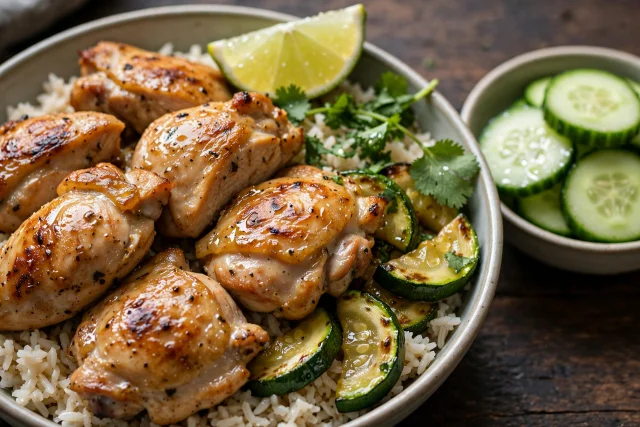
- Citrus Chicken with Cilantro Rice and Charred Zucchini: Chicken breasts marinate briefly in orange and lime juice, then roast until juicy while zucchini chars in a hot pan and rice folds with cilantro. The citrus keeps the plate bright without chili, and the whole dinner stays inside a light fat budget.
Snacks:
- Honeydew Cubes with Lime and Mint: Cold honeydew cubes get a squeeze of lime and a few torn mint leaves, nothing more. The bowl feels cooling on a warm afternoon and never asks the pancreas for much.
Day 3
Breakfast:
- Low-Fat Yogurt with Banana and Oat Crumble: Plain low-fat yogurt sits under banana slices and a spoon of toasted oats with cinnamon. The oats add crunch without nuts or granola clusters, and the bowl takes two minutes on a morning when you need something cold and calm.
Lunch:
- Lemon Chicken Orzo with Spinach and Peas: Orzo simmers in broth with shredded chicken, spinach, and peas until everything turns soft and glossy, then lemon lifts the pot at the end. The pot reheats well and tastes gentle the next day, which makes lunch easy twice.
Dinner:
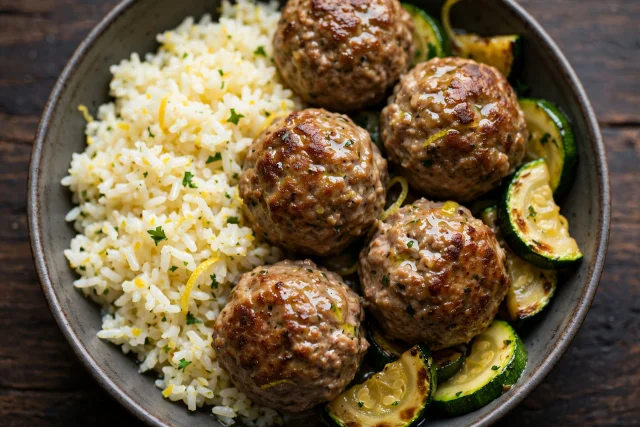
- Turkey Meatballs with Lemon Rice and Zucchini: Lean turkey meatballs poach in a light broth with zucchini and a pinch of oregano, then spoon over rice finished with lemon and parsley. The meatballs stay tender without breadcrumbs soaked in milk, and the broth keeps the plate moist instead of rich.
Snacks:
- Cucumber Rounds with Lemon Yogurt Dip: Cucumber rounds stand in for chips beside a dip of low-fat yogurt, lemon, and dill. The dip is thick enough to cling and light enough to eat slowly, which makes it a useful bridge between lunch and a late dinner.
Day 4
Breakfast:
- Rice Porridge with Egg Whites and Scallion: Rice simmers with ginger and water until it breaks down into a soft congee, then egg whites ribbon through at the end with scallion. A drop of soy sauce and a few drops of sesame oil give it flavor without turning it heavy.
Lunch:
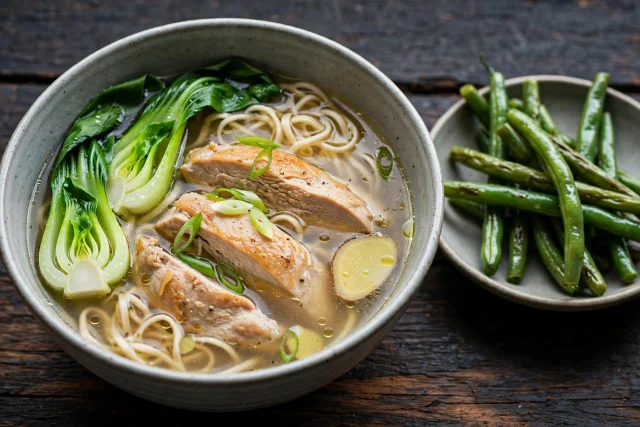
- Ginger Chicken Noodle Soup with Bok Choy: Ginger and chicken broth simmer with shredded breast and rice noodles until the kitchen smells clean and warm. Bok choy wilts in the last minute, and the bowl stays light enough to eat even when appetite is small.
Dinner:
- Steamed Cod with Jasmine Rice and Steamed Carrots: Cod steams over a basket until it flakes at the touch of a fork, then lands beside jasmine rice and carrots with a little soy and ginger. Steaming keeps the fish moist without oil, and the plate looks clean and complete.
Snacks:
- Steamed Pear with Ginger and Honey: A pear softens in a steamer with a slice of ginger, then finishes with a small drizzle of honey. Warm and spoonable, it helps when raw fruit feels too rough.
Day 5
Breakfast:
- Semolina Porridge with Banana and Cinnamon: Semolina thickens in warm low-fat milk with a cinnamon stick, then banana slices go on top just before eating. The porridge is soft and comforting, and it holds well if you need to eat it in two smaller bowls.
Lunch:
- Cumin Chicken with Couscous and Cucumber: Cumin and lemon season chicken that cooks quickly in a covered pan, then sits over couscous with cool cucumber and parsley. The couscous soaks up the pan juices, so the plate stays moist without a creamy sauce.
Dinner:
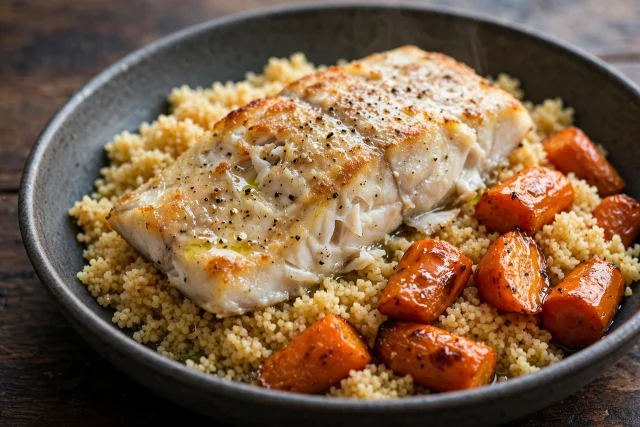
- Baked Haddock with Couscous and Roasted Carrots: Haddock bakes under lemon slices and a light dusting of cumin until it turns opaque and flaky, with carrots roasting on the same tray. Couscous steams on the side, and the whole dinner comes together with one oven and one pot.
Snacks:
- Orange and Mint Yogurt Cup: Orange segments fold into low-fat yogurt with torn mint and a small spoon of honey. It tastes like a sunnier version of a breakfast parfait and gives the afternoon a clean, cool finish.
Day 6
Breakfast:
- Baked Egg White Frittata with Zucchini and Basil: Egg whites bake with grated zucchini, basil, and a little parmesan until the center sets and the edges turn golden. Cut it into wedges and eat one warm, then keep the rest for a quick breakfast the next morning.
Lunch:
- Tuna and Potato Salad with Green Beans: Baby potatoes and green beans cook until tender, then toss with water-packed tuna, lemon, and a spoon of yogurt dressing. The salad travels well and tastes better after an hour in the fridge.
Dinner:
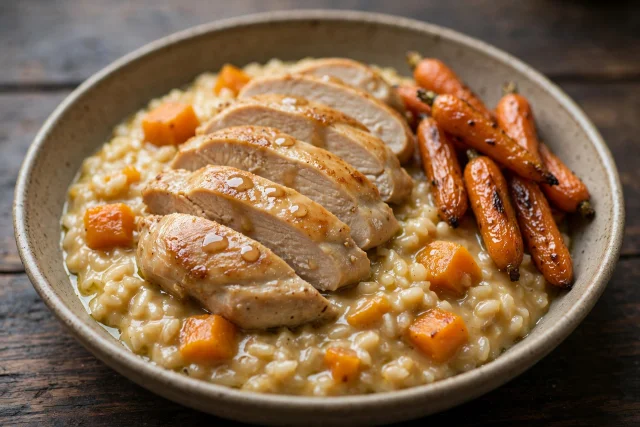
- Chicken and Squash Risotto: Arborio rice cooks slowly in warm broth with diced butternut squash, then shredded chicken folds in at the end with a little parmesan. The risotto turns creamy from the rice itself, so no butter or cream is needed.
Snacks:
- Berry Yogurt Ice Pops: Low-fat yogurt blends with strawberries and a little honey, then freezes in small molds overnight. They are cold, slightly tart, and slow to eat, which makes them a useful treat when the afternoon runs warm and you want something cold that still sits gently.
Day 7
Breakfast:
- Oatmeal with Blueberries and Cinnamon: Rolled oats cook in low-fat milk until soft, then blueberries and cinnamon stir through at the end. The bowl is warm, filling, and mild, a good first meal when the day starts early and the kitchen needs to stay quiet.
Lunch:
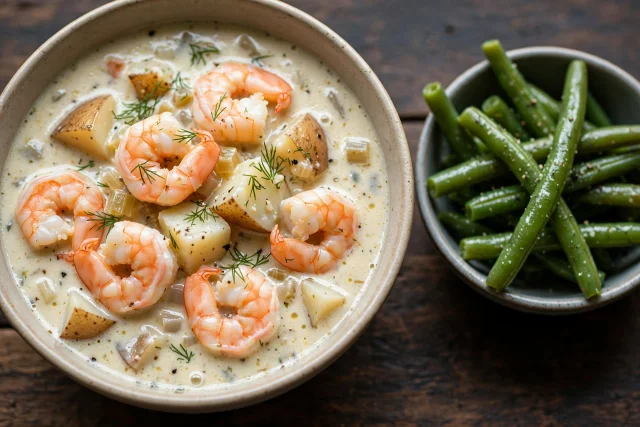
- Shrimp and Potato Chowder with Dill: Shrimp and diced potatoes simmer in a light milk broth with dill and a little celery until the potatoes turn tender. The chowder is thinner than a cream version but still tastes rounded, and it reheats gently on the stove.
Dinner:
- Roast Turkey Breast with Butternut Squash and Potatoes: Turkey breast roasts with thyme while butternut squash and potatoes caramelize on a second tray. The meat stays moist under foil, and the vegetables come out soft at the edges, a plain Sunday plate that still feels like a proper dinner.
Snacks:
- Rice Cakes with Pear Slices and Cinnamon: Rice cakes carry thin pear slices and a dusting of cinnamon for a snack that is crisp, sweet, and light. Assemble it at a desk or before bed, and it never leaves you feeling overfull.
Foods to Eat With Pancreatitis
This food list covers every dish in the week, grouped by the six stops that fill one main shop. Quantities are sized for two adults with leftovers, so double the proteins and grains for a larger table, and plan a short midweek top-up for fresh fish and greens.
Vegetables
- Leafy Greens and Herbs: Spinach, bok choy, basil, parsley, cilantro, dill, mint (for the scramble, soups, bowls, and yogurt dip).
- Root Vegetables: Carrots, potatoes, butternut squash (for the mash, roasts, chowder, and risotto).
- Everyday Vegetables: Zucchini, green beans, peas, cucumber, celery (for the tacos, bowls, salad, and soup base).
- Aromatics: Scallion and fresh ginger (for the congee, noodle soup, and steamed pear).
Fruits
- Fresh Fruit: Bananas, blueberries, strawberries, pears, honeydew, oranges, lemons, limes, and apples (for breakfasts, snacks, dressings, and the compote).
Proteins
- Poultry: Skinless chicken breast, turkey breast, and lean ground turkey (for the bowls, soups, meatballs, risotto, and roast).
- Fish and Seafood: Cod fillets, haddock fillets, shrimp, and water-packed canned tuna (for the steamed, baked, chowder, and salad slots).
- Eggs: Two cartons of egg whites (for the scramble, tacos, congee, and frittata).
Grains and Bakery
- Rice and Noodles: White rice, jasmine rice, arborio rice, and rice noodles (for the bowls, steamed plate, risotto, and soup).
- Pasta and Couscous: Orzo, couscous, and semolina (for the one-pot lunch, two dinners, and porridge).
- Oats and Cereal: Rolled oats (for the crumble and the blueberry oatmeal).
- Bread and Crackers: Sourdough bread, corn tortillas, graham crackers, and plain rice cakes (for toast, tacos, and snacks).
Dairy
- Low-Fat Dairy: Low-fat milk, plain low-fat yogurt, and a small wedge of parmesan (for the mash, porridge, dips, pops, chowder, frittata, and risotto).
Pantry, Oils, and Flavorings
- Oils and Broth: Olive oil and low-sodium chicken broth (for light sauteing, roasting, poaching, and thinning sauces).
- Spices: Cinnamon, cumin, oregano, thyme, mild paprika, black pepper, and salt (for the week's seasoning).
- Flavorings: Soy sauce, honey, and all-purpose flour (for the congee, snacks, and pan gravy).
Simple Swaps for Low Fat Pancreatitis Meals
Five swaps cover the situations that actually come up in a low-fat week, from a flare that changes the menu to a fish counter that runs out. Each one keeps the day's slot and the fat budget intact, so one missing ingredient never sends you back to takeout.
- When a Flare Changes the Menu: Stop the solids and call your care team, since a flare may mean clear liquids or no food for a stretch. These meals are for the recovery window after they clear you, not for the middle of an attack.
- When the Fish Counter Runs Out: Cod and haddock swap for each other, and tilapia or pollock work in the same steamed or baked slots. Keep the lemon and herbs the same and shorten the cooking time for thinner fillets.
- When Dairy Sits Heavy: Use lactose-free low-fat milk or a small amount of unsweetened plant milk in the mash and chowder. Start with half the amount and add broth to loosen, so the fat stays low.
- When Bread Feels Too Much: Trade sourdough, tortillas, and crackers for soft rice, mashed potato, or rice noodles. The slot stays filled and the meal turns softer without losing its shape.
- When Dinner Out Is the Only Option: Ask for grilled or steamed fish or chicken, sauce on the side, and plain rice or potatoes instead of fries. Eat a smaller portion than usual and skip alcohol completely, since restaurant fat and portion size are the two things you cannot see.
Getting Started With This 7 Day Meal Plan for Pancreatitis
Start with one shop and one hour of prep, not a full Sunday production. Cook a pot of rice, roast a tray of carrots and squash, poach four chicken breasts, and stir together the yogurt dip, then the first three days have a base waiting in the fridge.
Keep your care team in the loop, especially if you are tapering enzymes or adding foods back. NHS guidance on acute pancreatitis describes recovery as staged, so move at the pace your team sets and stop if pain returns. Ask too whether chronic pancreatitis warrants a vitamin check.
Keep exploring with our another gentle elimination week, a protein-first plan for low appetite days, a meatless holiday menu that stays simple, a budget Thanksgiving spread with gentle sides, and frugal fall meals that stay light, alongside a low acid week for sensitive stomachs and slow cooker soups that simmer without watching.
This article is for information only and is not medical advice. Read our full disclaimer.