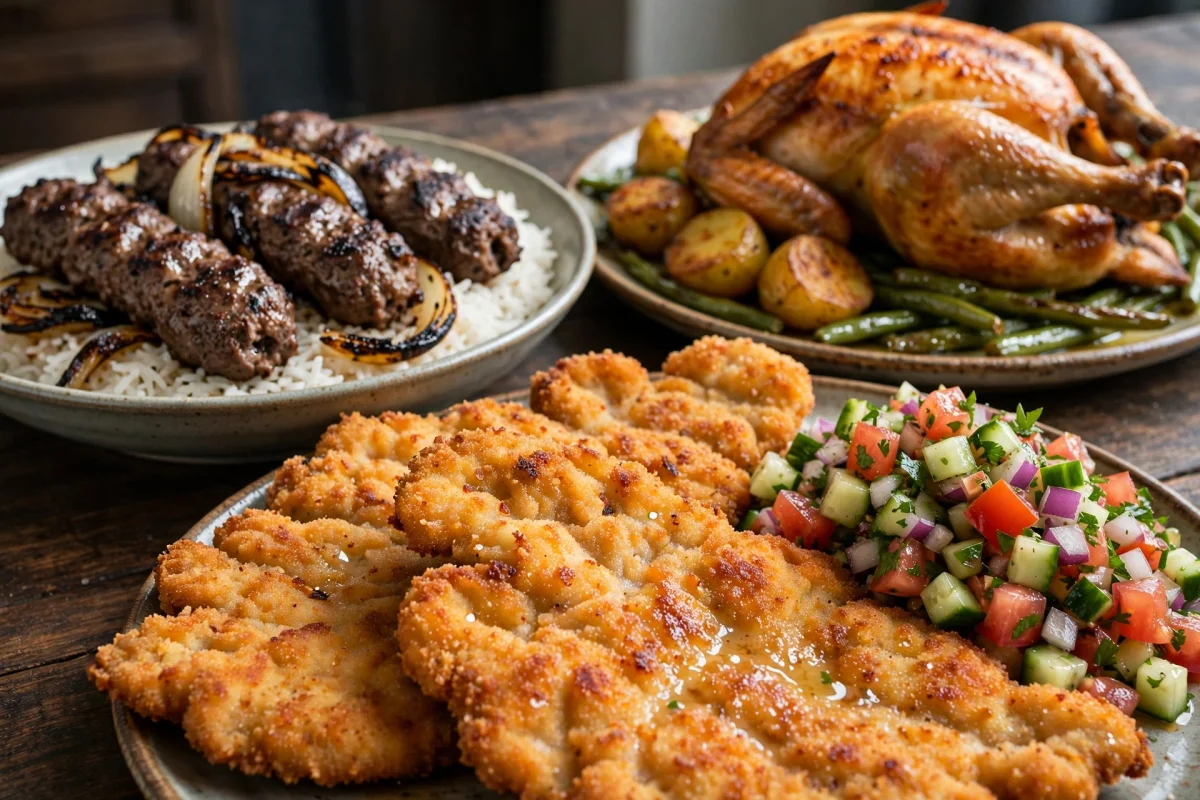
The first week of keeping kosher is mostly logistics. Two sets of pans, a fridge shelf for each, and a shop where every label suddenly needs reading before it goes in the trolley.
This 7 day easy kosher meal plan for beginners keeps the food familiar and the rules simple, with whole days that stay meat or dairy so nothing lands on the wrong plate at six in the evening. No dish asks for a substitute ingredient you have never seen, and no dinner needs more than one pan.
Think chicken schnitzel with Israeli salad, spinach and ricotta manicotti, Moroccan chicken with olives, and a Shabbat-style roast chicken at the end of the week. The flavors travel through Israeli, Italian, Yemenite, Greek, Ashkenazi, Moroccan, and American cooking, which is roughly how a kosher kitchen actually eats.
It suits anyone setting up a kosher home for the first time, whether that follows a conversion, a marriage, a move, or a decision made slowly over a year. It also suits the adult child coming home to a kitchen that now has rules, and the host who wants one week that does not end in a takeaway.
The week assumes you keep meat and dairy apart, avoid pork and shellfish, and buy products with a reliable certification where you can. If your household follows additional stringencies, read the grid with your own rabbi or mentor and adjust the brands rather than the structure.
Start where you are, keep the week simple, and let the routine settle before adding anything else. A kosher kitchen is built by repetition, not by one perfect shop, and seven calm days teach more than a shelf of new cookbooks.
Key Principles of a Kosher Kitchen for Beginners
Four working habits cover almost every decision a beginner faces in the first month, and each one is easier to hold than a long list of rules. They handle separation, sourcing, the wait between meals, and the prep that makes a Friday feel calm.
- Separate at the Sink: Give meat and dairy their own pans, boards, and drying space, and wash them apart rather than trusting a quick rinse. Color coded boards remove the guesswork, and one shelf for each in the fridge keeps the habit visible. The Orthodox Union's kosher overview walks through the separation rules in plain language.
- Certification Before Ingredients: A hechsher on the packet tells you a product was supervised, and it matters more than the ingredient list for things like cheese, bread, and wine. Learn the two or three symbols your local shops carry and build the pantry around them.
- Meat and Dairy Take Turns: Keep a gap between a meat meal and a dairy one, and follow the custom your community keeps rather than averaging advice from the internet. Planning whole meat days and whole dairy days, as this week does, removes the timing question entirely.
- Prep Ahead of Friday: Cook the grains, wash the greens, and set the table before the afternoon gets short. A pot of chicken soup made on Thursday and a roast that goes in the oven on Friday afternoon turn the day into dinner rather than a scramble.
Your 7 Day Easy Kosher Meal Plan
Days one, three, six, and seven stay meat or pareve, while days two, four, and five run dairy and fish, so no meal ever asks you to check which pan it came from. The cooking is deliberately plain, and the flavors come from herbs, citrus, and spice rather than from anything hard to source.
Day 1
Breakfast:
- Sabich Bowl with Roasted Eggplant and Tahini: Roasted eggplant, sliced egg, cucumber, and tomato pile into a bowl under tahini and a spoon of amba if you have it. It is pareve, so it works before a meat lunch without any planning.
Lunch:
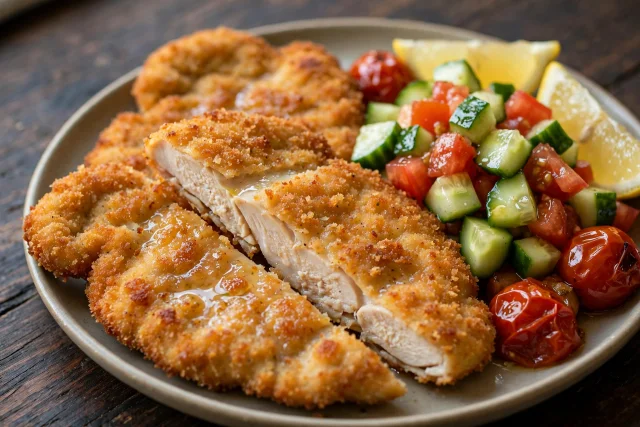
- Chicken Schnitzel with Israeli Salad: Thin chicken cutlets press into seasoned crumbs and fry until the edges go crisp and deep gold. Diced cucumber and tomato with lemon sit alongside, and the plate tastes like every good Friday lunch.
Dinner:
- Beef Kebabs with Charred Onions and Rice: Minced beef mixes with grated onion, parsley, and baharat, then shapes onto skewers or into small patties. Charred onion wedges and plain rice make a dinner that needs no dairy at all.
Snacks:
- Fresh Figs with Almonds: Split figs with a few almonds give a sweet, clean snack between meat meals. They need nothing else, which is the point.
Day 2
Breakfast:
- Ricotta and Tomato Toast with Basil: Toast carries ricotta, sliced tomato, olive oil, and torn basil with a crack of pepper. It is the dairy day breakfast that feels like a restaurant without a restaurant's washing up.
Lunch:
- Mozzarella and Roasted Pepper Sandwich: Roasted red peppers layer with mozzarella and basil in a crusty roll, then press in a hot pan until the cheese gives. Wrap it tight and it travels to work without falling apart.
Dinner:
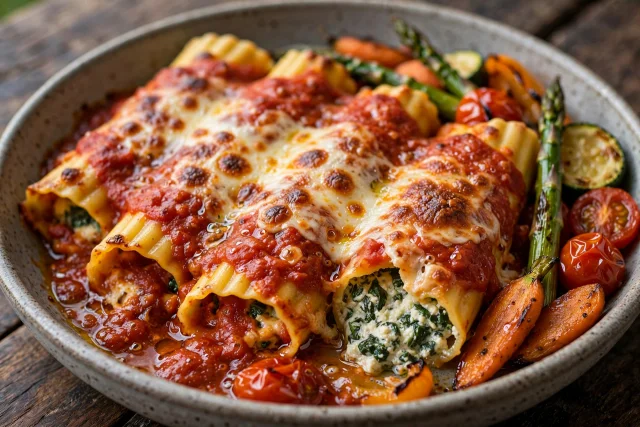
- Spinach and Ricotta Manicotti: Pasta tubes stuff with spinach and ricotta, sit on a layer of tomato sauce, and bake under a little mozzarella. Assemble it in the morning and the oven does the rest at dinner.
Snacks:
- Apple Slices with Halva: Cold apple slices with a thin slice of sesame halva make a snack that is sweet enough to end a meal. Check the hechsher on the halva, since brands vary.

Day 3
Breakfast:
- Hawaij Scrambled Eggs with Tomato: Eggs cook soft with hawaij, a Yemenite spice blend of cumin, coriander, and turmeric, then land beside chopped tomato. Warm flatbread finishes a breakfast that takes eight minutes.
Lunch:
- Yemenite Chicken Soup with Hawaij: Chicken simmers with onion, garlic, and hawaij until the broth turns gold and the meat falls apart. Add rice or small pasta at the end, and keep a container in the freezer for a bad week.
Dinner:
- Yemenite Beef Stew with Hawaij and Rice: Beef braises with tomato, potato, and hawaij until the sauce thickens against the meat. Spoon it over rice and let the pot sit, since it tastes better twenty minutes off the heat.
Snacks:
- Dried Mango and Cashews: Dried mango with a small handful of cashews covers the afternoon without any dairy. Portion it into a small container and leave it in the bag you carry.
Day 4
Breakfast:
- Feta and Olive Omelet: Feta crumbles and chopped olives fold into a soft omelet with oregano and black pepper. It is savory, quick, and exactly right before a dairy lunch.
Lunch:
- Village Salad with Feta and Oregano: Cucumber, tomato, pepper, red onion, and feta sit under olive oil, oregano, and a handful of olives. It needs good bread beside it and nothing else.
Dinner:
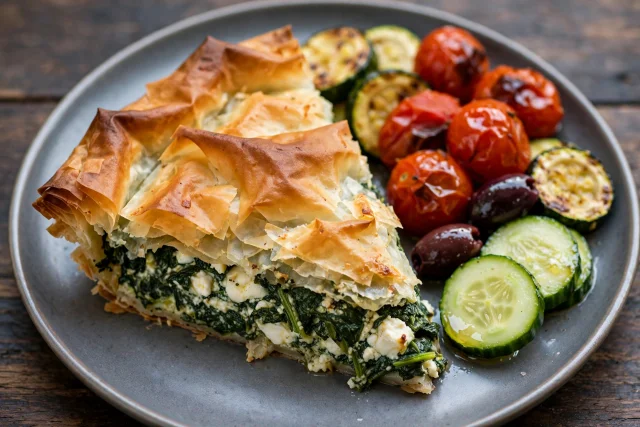
- Spinach and Feta Pie with Phyllo: Spinach wilts with onion and dill, mixes with feta, and bakes between oiled phyllo sheets until the top shatters. Cut it into squares and expect the tray to empty.
Snacks:
- Cucumber with Tzatziki: Cold cucumber spears with thick tzatziki make a snack that cools a hot afternoon. The dip keeps for three days and improves on the second.
Day 5
Breakfast:
- Bagel with Cream Cheese, Tomato, and Red Onion: A good bagel, a thick spread of cream cheese, tomato, red onion, and capers is a complete breakfast. Toast the bagel first so it holds the spread without going soft.
Lunch:
- Kasha Varnishkes with Caramelized Onions: Buckwheat groats toast in a dry pan before cooking, then mix with bow tie pasta and slow caramelized onions. It is humble food that tastes like someone's grandmother made it, pareve and filling.
Dinner:
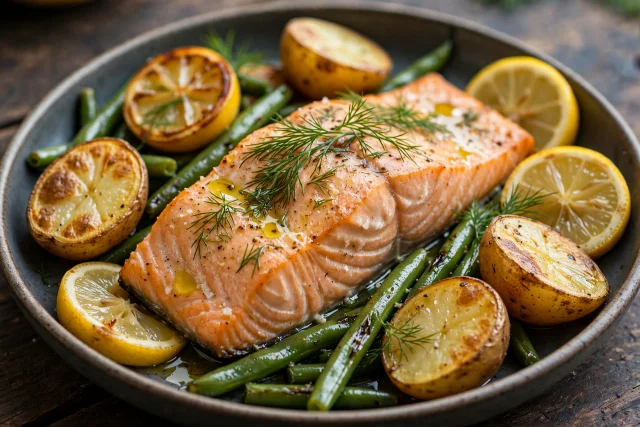
- Baked Salmon with Dill and New Potatoes: Salmon bakes with lemon, dill, and a little butter while new potatoes boil beside it. Fish sits in the pareve world, which makes this the easiest dinner of the week to place.
Snacks:
- Rugelach with Walnuts: Small rugelach with a walnut and cinnamon filling go with tea and need no explanation. Buy a certified brand or bake a batch and freeze half.
Day 6
Breakfast:
- Msemen with Honey and Almonds: Layered flatbread crisps in a pan, then drizzles with honey and chopped almonds. It is a weekend breakfast that takes twenty minutes and feels like an occasion.
Lunch:
- Chickpea and Pumpkin Tagine: Chickpeas and pumpkin simmer with tomato, cinnamon, and ras el hanout until the sauce clings. It is pareve and hearty, and it reheats better than almost anything else here.
Dinner:
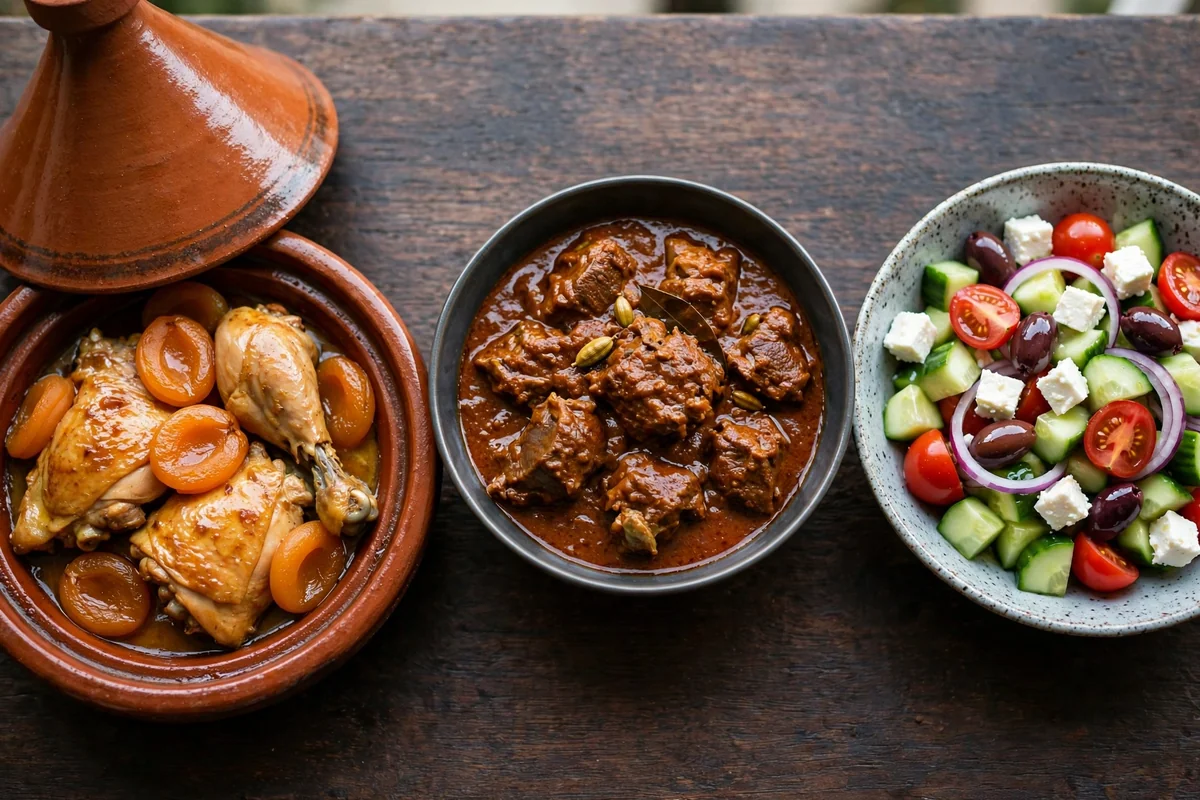
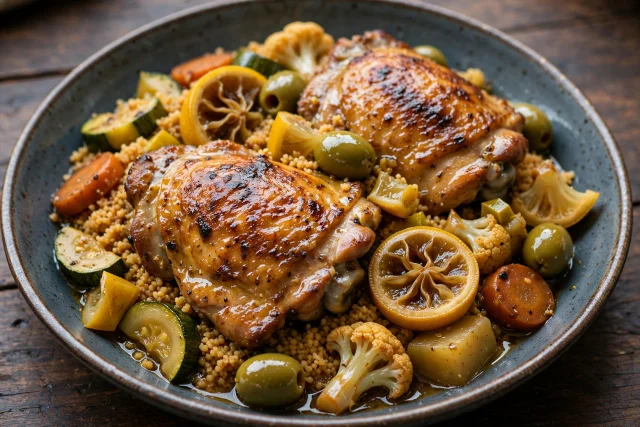
- Moroccan Chicken with Olives and Preserved Lemon: Chicken thighs braise with onion, saffron, green olives, and preserved lemon until the sauce turns glossy and sharp. Serve it with couscous and let the pot come to the table.
Snacks:
- Date and Almond Bites: Medjool dates blitz with toasted almonds and a pinch of cinnamon, then roll into small balls. Two is plenty, and they keep for weeks in the fridge.
Day 7
Breakfast:
- Skillet Eggs in Pepper Tomato Sauce: Peppers and tomato cook down with cumin and paprika, then eggs crack into wells and cover until set. Flatbread on the side makes it a full breakfast with no dairy anywhere.
Lunch:
- Turkey Club Sandwich with Avocado: Roast turkey, avocado, lettuce, and tomato stack on toasted sourdough with mustard and mayonnaise. Keep the mayonnaise dairy free and the sandwich stays inside a meat day.
Dinner:
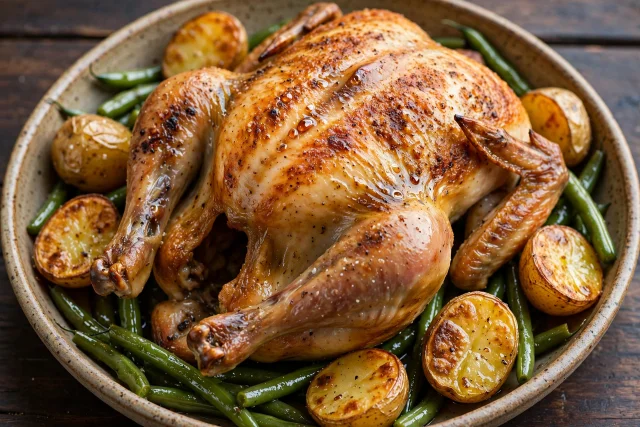
- Roast Chicken with Potatoes and Green Beans: A whole chicken roasts over potatoes and green beans until the skin crackles and the vegetables drink the fat. It is the Friday dinner this week builds toward, and the leftovers make Monday easier.
Snacks:
- Popcorn with Sea Salt: Popped corn with fine sea salt is pareve, cheap, and made in five minutes. A big bowl on the table disappears before the film starts.
Your Complete Kosher Meal Plan Grocery List
This list covers twenty eight dishes and separates naturally into a meat shop and a dairy shop, which is the habit worth building from week one. Check the certification symbols as you go, and keep a note of the brands that work in your area.
Fruits
- Fresh Fruits: Figs, apples, lemons, tomatoes, cucumbers, red peppers, avocado, mango (breakfasts, salads, and snacks).
- Dried Fruits: Medjool dates, dried mango (snacks and the tagine).
Vegetables
- Greens and Herbs: Spinach, lettuce, parsley, coriander, dill, basil, mint, thyme (the flavor base of the week).
- Roots and Bulbs: Onion, red onion, garlic, potatoes, new potatoes, pumpkin, eggplant, green beans, cucumber, tomato (roasts, stews, and salads).
- Pantry Vegetables: Chickpeas, olives, preserved lemon, roasted red peppers (the Moroccan and Italian days).
Meat and Fish
- Poultry: Chicken cutlets, one whole chicken, chicken thighs (schnitzel, Friday roast, and the Moroccan braise).
- Beef: Minced beef, stewing beef, sliced turkey (kebabs, the Yemenite stew, and the club sandwich).
- Fish: Salmon fillet (the dairy week dinner that stays pareve).
Dairy
- Cheeses: Ricotta, mozzarella, feta, cream cheese, parmesan (the manicotti, the sandwich, the pie, and the bagel).
- Everyday Dairy: Milk, butter, thick yogurt (breakfasts, tzatziki, and the salmon).
Bakery and Grains
- Bread: Flatbread, bagels, sourdough loaf, crusty rolls (breakfasts, sandwiches, and scoops).
- Grains and Pasta: Rice, couscous, manicotti tubes, bow tie pasta, buckwheat groats, phyllo pastry (every dinner base).
Pantry
- Spices: Hawaij, baharat, ras el hanout, cumin, paprika, oregano, cinnamon, saffron, black pepper (the whole spice shelf for seven cuisines).
- Pantry Extras: Tahini, honey, olive oil, mustard, mayonnaise, sesame halva, walnuts, almonds, cashews, popcorn kernels, tomato passata (the sauces, snacks, and sweets).
Easy Ingredient Swaps for This Kosher Meal Plan
Every beginner hits a night when the shop is out of something or a label turns out to be uncertified. These five swaps keep dinner kosher and keep you out of a second trip, without changing the shape of the week or the balance of the plate.
- When a Label Is Not Certified: Choose a certified alternative from the same shelf, or cook the dish from whole ingredients instead. Fruit, vegetables, eggs, and plain meat and fish are simpler to place than a prepared sauce. That is why this week leans on them.
- When You Want a Creamy Pasta: Use a certified dairy cream or a pareve oat cream on a dairy day, and keep the dish on that side of the line. Adding cheese at the table is where beginners slip, so finish the sauce in the pan.
- When Chicken Feels Boring: Swap in turkey cutlets, ground beef, or a whole trout for a pareve dinner. Cooking times barely change, and the plate stays inside the same day type.
- When Friday Runs Late: A store bought certified roast chicken with potatoes and a bag of salad is a legitimate Friday dinner. Add challah and candles and the day still feels kept, since the point is the day, not the cooking.
- When Guests Keep Kosher Differently: Ask what they keep before you plan, and cook plain rather than guessing at a stricter standard. A simple roast with vegetables satisfies most guests, and the conversation is easier than a mistake at the table.
Getting Started With This 7 Day Easy Kosher Meal Plan
Set up the kitchen before you cook anything, taping a label on the meat shelf and moving the dairy to its own drawer, then buy the two or three certified pantry items the week leans on. Read the OU consumer kosher guide once with a cup of tea, and keep the questions for your rabbi rather than for a search engine.
Cook the stew and the soup early in the week so the harder days have food waiting, and leave the roast for Friday when the house is already warm. By the second week the pans, shelves, and labels stop feeling like rules and start feeling like a kitchen, which is exactly what a beginner needs.
Keep exploring with our one shop budget week and cheap everyday meals that still taste good, plus a plant based Daniel Fast plan, a beginner plant based week and an anti-inflammatory plan for steady weeks, alongside casseroles the whole family will eat and cozy winter dinners for family nights.
This article is for information only and is not medical advice. Read our full disclaimer.