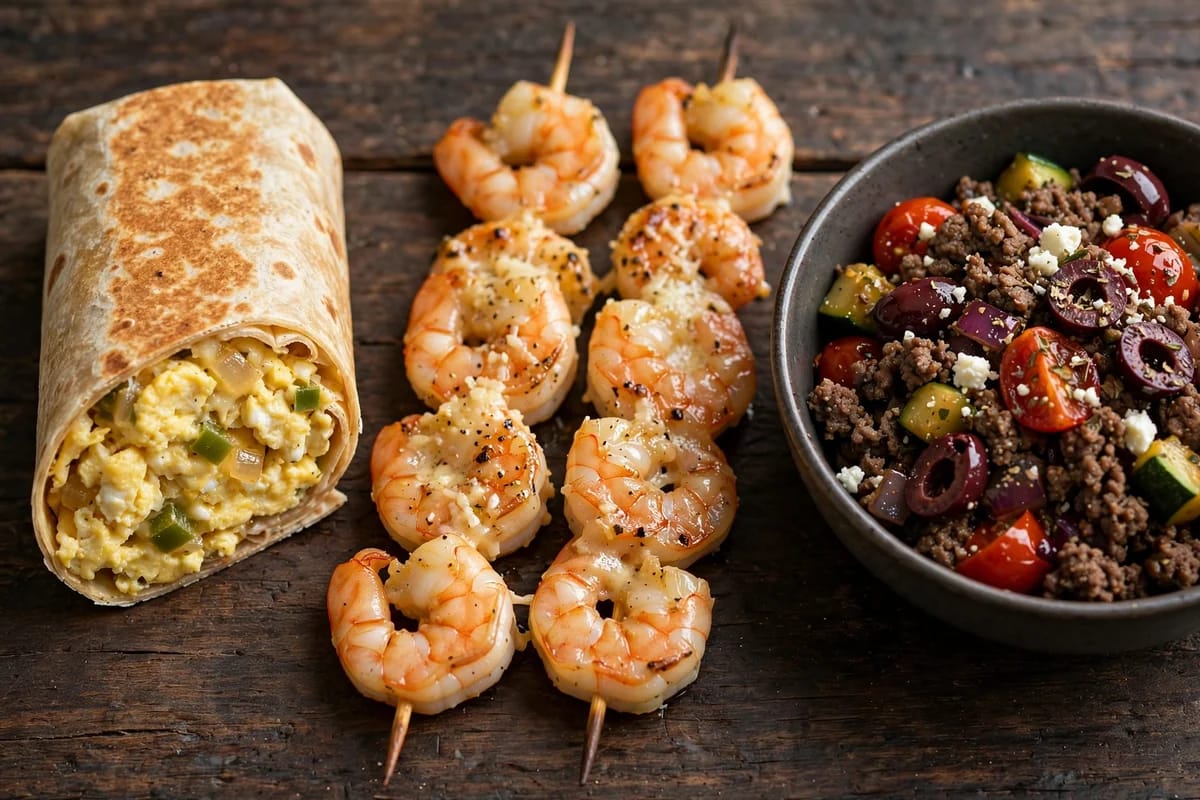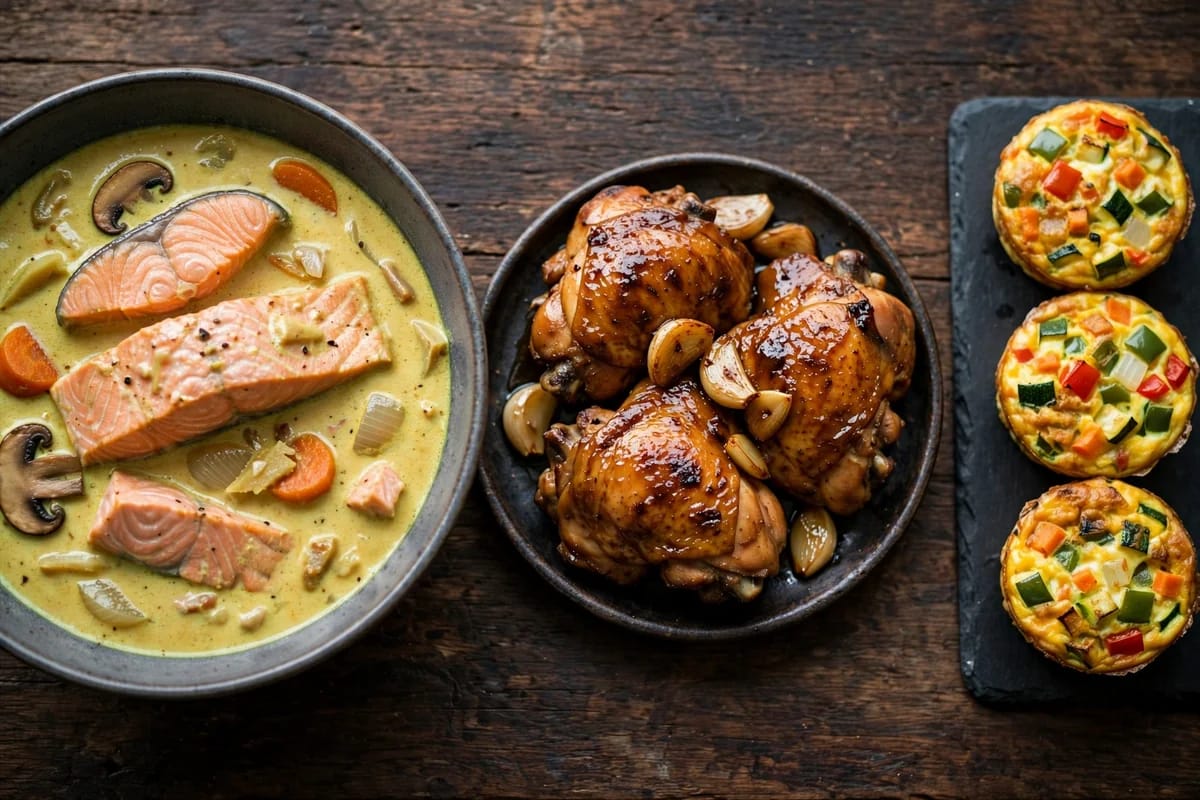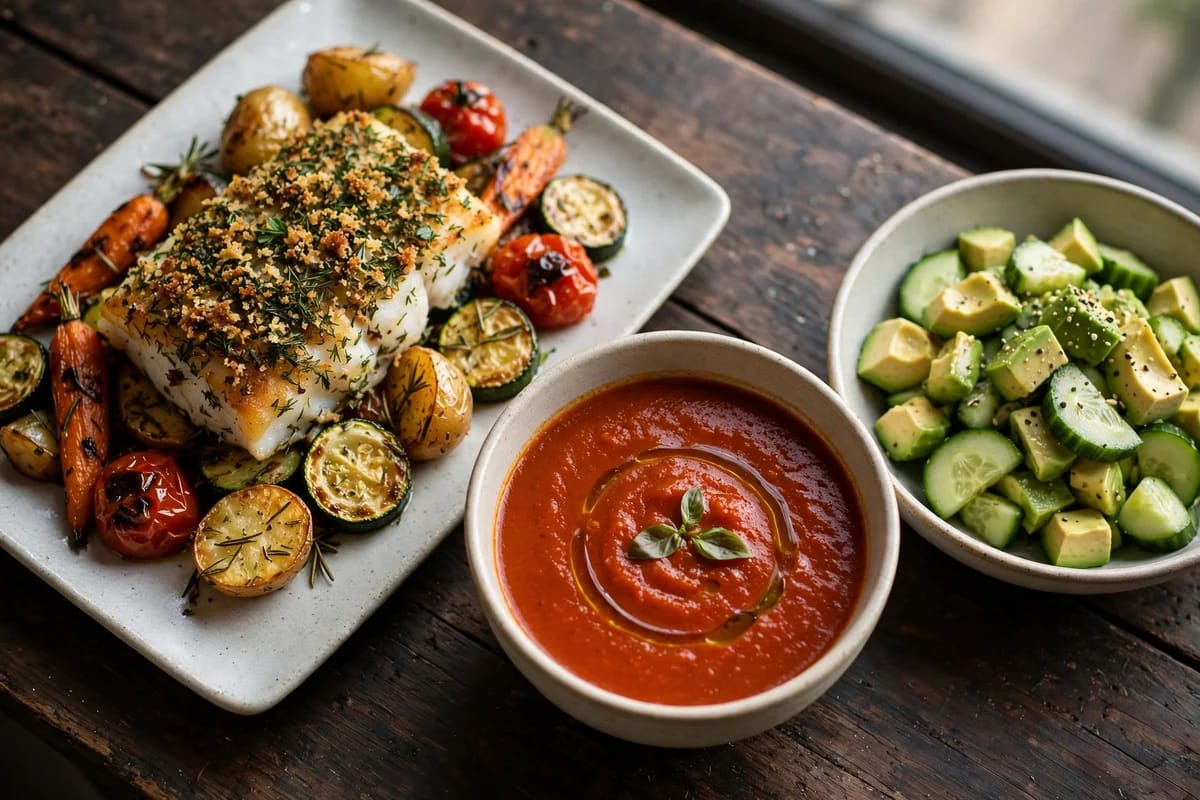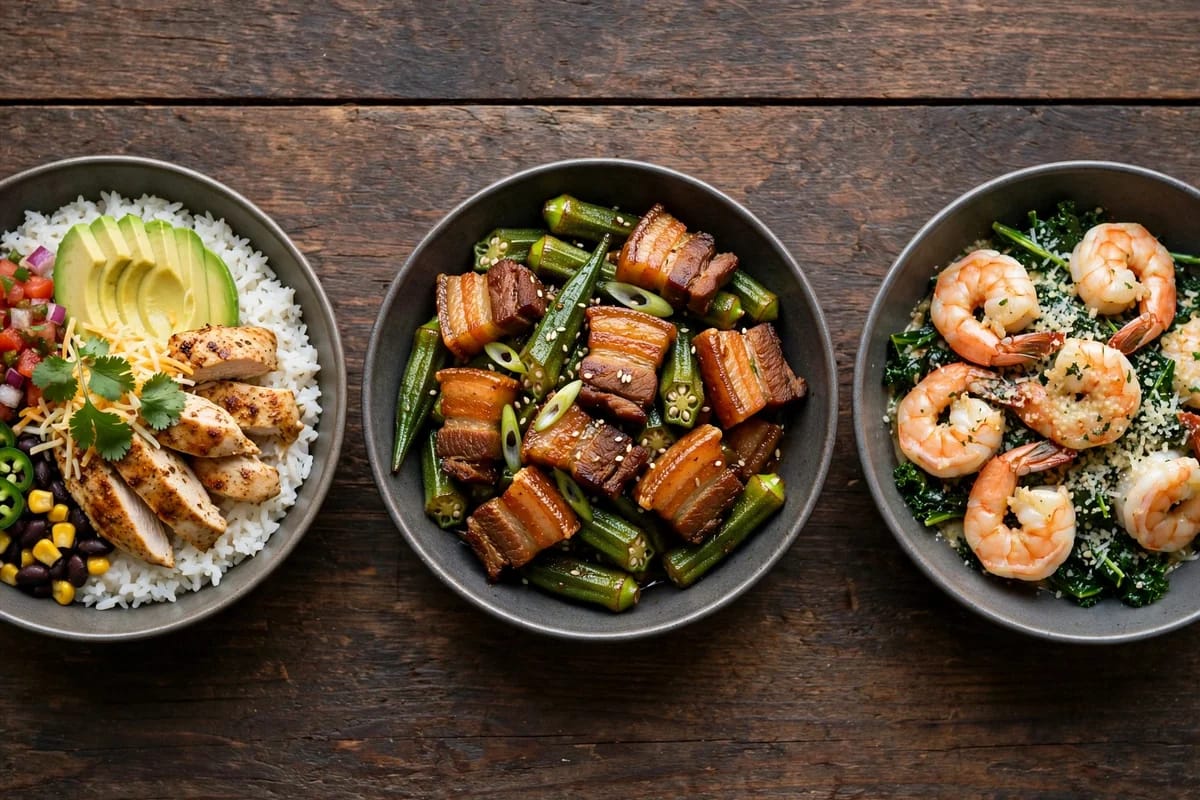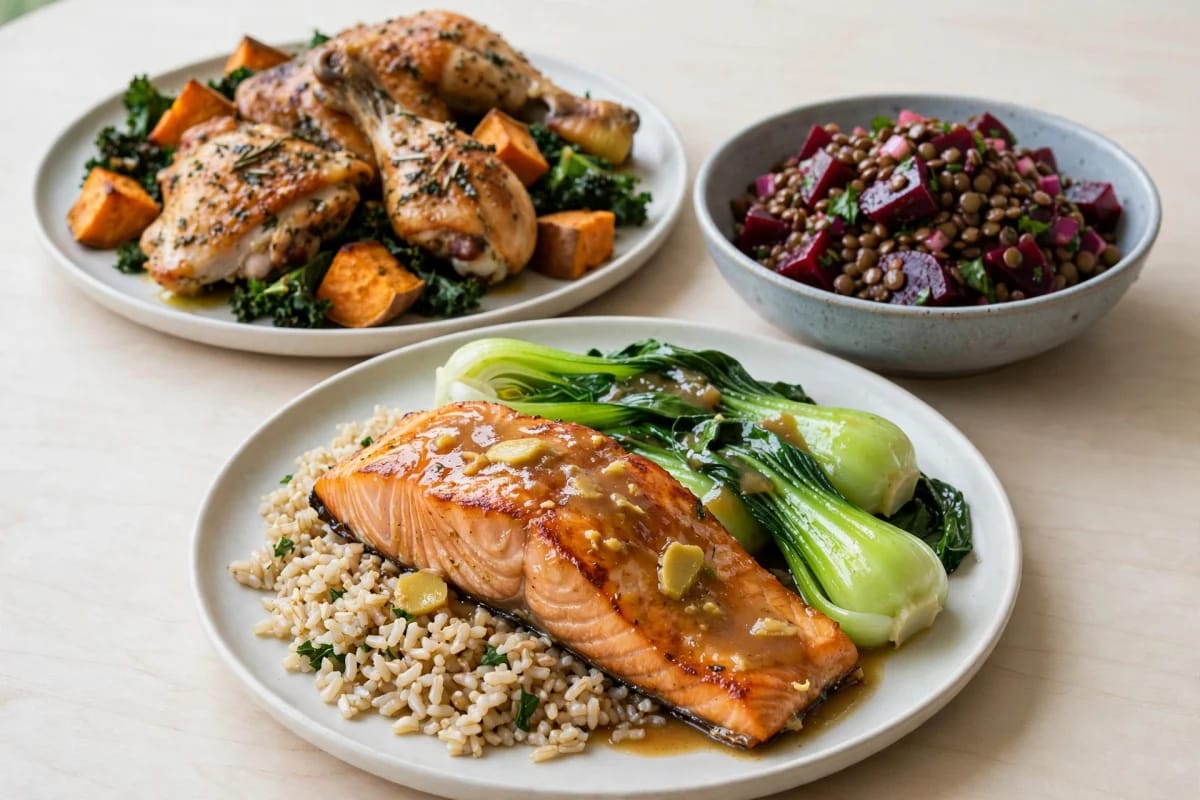
A flare starts under a watch strap or behind a knee, and by the second night the sheet feels like sandpaper. The cream helps, the flare still returns, and the internet answers with a long list of foods to cut.
This 7 day eczema meal plan for healthy skin is built around food that supports the skin barrier rather than food that promises to fix it, with 28 dishes leaning on oily fish, colorful vegetables, fermented dairy, and enough protein to repair.
A Sunday opens with kefir oats and blueberries, tucks sardines onto toast at lunch, and ends with herb roast chicken, sweet potato, and kale from one tray. The days move through Japan, the Levant, India, West Africa, and the Mediterranean, so no two dinners look alike.
No plate clears eczema on its own, and this plan does not pretend otherwise. What food can do is supply the fats, zinc, vitamin D, and protein the skin uses to rebuild itself, while trimming the ultra processed snacks and sugary drinks that some people notice make a flare worse.
The practical challenge is a household eating something different, so most dinners here work for everyone at the table with a portion change. Shop once, cook fish twice, and keep a jar of seeds on the counter, since the omega-3 dishes are the spine of the week.
It suits adults with atopic dermatitis who flare with the seasons, and parents cooking for a teenager whose skin reacts to stress, sweat, and weather. Anyone with a diagnosed food allergy, a child with a suspected allergy, or eczema that weeps or spreads needs a clinician first rather than a menu.
Key Principles of an Anti-Inflammatory Diet for Eczema
Five habits shape this anti-inflammatory diet for eczema, and the first four are about adding food rather than removing it. The fifth is the one that matters most, because a skin condition is a poor reason to start deleting whole food groups on your own.
- Oily Fish Twice a Week: Salmon, sardines, trout, and mackerel carry the long chain omega-3 fats that the body turns into compounds involved in calming inflammation. The Harvard Nutrition Source page on fish covers the evidence and the portion sizes worth aiming for each week.
- Color on Every Plate: Sweet potato, beetroot, greens, berries, and peppers bring carotenoids and vitamin C, which the skin uses in repair. Aim for two colors at lunch and three at dinner, since variety does more for a plate than any single superfood claim on a label.
- Feed the Gut Gently: Kefir, yogurt, lentils, oats, and seeds support the gut barrier, and the gut and skin do talk to each other. The research on that conversation is still early, so treat fermented food as a helpful habit rather than a treatment for a flare.
- Protein for Repair: Skin turns over constantly, which makes protein a repair material rather than a bodybuilding supplement. Eggs, chicken, fish, lentils, and dairy appear at every meal here so the total lands near 90 grams a day without a shake.
- Do Not Cut Foods Blind: Most adults with eczema do not have a food trigger, and the common elimination lists remove foods people tolerate perfectly well. If you suspect a trigger, keep a simple log and work with a dietitian, since unsupervised cutting risks nutrient gaps and rarely ends the flare.
Your 7 Day Eczema Meal Plan for Healthy Skin
The week starts with a gentle Sunday roast, moves through fish three times, and keeps every dinner simple enough for a work night, with breakfasts that lean on oats, kefir, and seeds. Nothing is fried hard, nothing leans on chili heat, and each day carries the protein, fiber, and omega-3 fats the skin uses most.
Day 1
Breakfast:
- Kefir and Blueberry Overnight Oats: Oats soak overnight in kefir with chia seeds and a handful of blueberries, then a spoon of almond butter goes on cold. It takes two minutes the night before and starts the day with protein and live cultures.
Lunch:
- Sardine and Tomato Toast with Rocket: Sardines mash onto toasted sourdough with lemon, olive oil, and sliced tomato, and rocket goes on top. It is the cheapest omega-3 lunch in the week and tastes far better than it sounds.
Dinner:
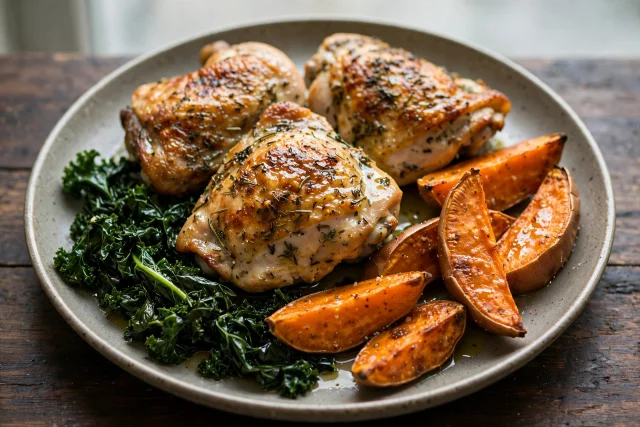
- Herb Roast Chicken with Sweet Potato and Kale: Chicken thighs roast with thyme, rosemary, and olive oil while sweet potato wedges brown beside them, and kale wilts in at the end. One tray, a lot of color, and enough left over for a second lunch.
Snacks:
- Walnuts with Orange Segments: A small handful of walnuts with two oranges covers the afternoon and brings vitamin C with the fats. Peel the orange properly and eat it away from the keyboard.
Day 2
Breakfast:
- Chia Pudding with Berries and Flaxseed: Chia seeds and ground flaxseed swell in milk overnight with a little maple, then berries and yogurt go on in the morning. It is a breakfast that holds until lunch and adds both fiber and plant omega-3.
Lunch:
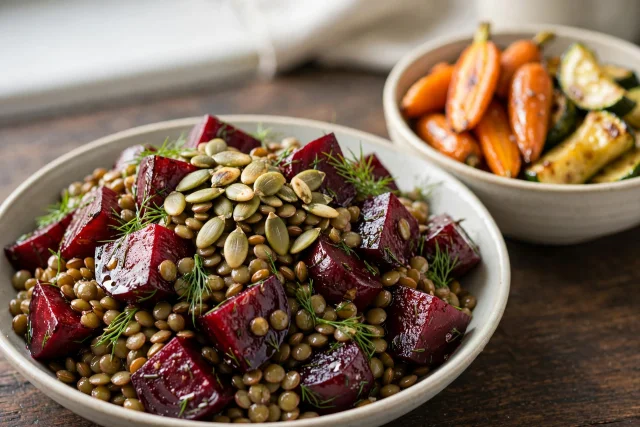
- Beetroot and Lentil Salad with Pumpkin Seeds: Roasted beetroot, green lentils, dill, and toasted pumpkin seeds toss in a lemon dressing with a spoon of yogurt. It travels well and the color alone makes a desk lunch feel less sad.
Dinner:
- Turmeric Chicken and Cauliflower Traybake: Chicken pieces and cauliflower roast with turmeric, cumin, and olive oil until the edges caramelize. Serve it with rice and a spoon of yogurt, and the pan does the rest.
Snacks:
- Pumpkin Seeds with Dried Apricots: Pumpkin seeds bring zinc, which the skin uses in repair, and apricots make them easier to eat by the handful. Portion both into a small jar for the week.
Day 3
Breakfast:
- Miso Soup with Silken Tofu and Spinach: Miso dissolves into hot broth with silken tofu and spinach, and a bowl of rice sits beside it. It is a warm, savory breakfast that suits a cold morning better than another sweet bowl.
Lunch:
- Chickpea and Avocado Salad with Lemon: Chickpeas, avocado, cucumber, and parsley toss in lemon and olive oil with plenty of black pepper. It is filling without being heavy, and it holds in a container if the avocado goes in whole.
Dinner:
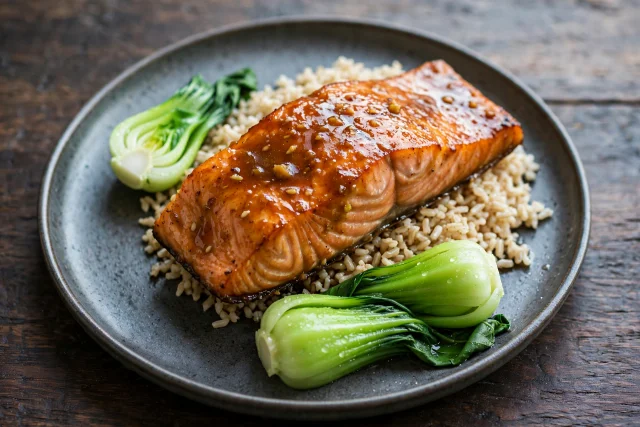
- Ginger Glazed Salmon with Brown Rice and Bok Choy: Salmon roasts under a ginger, honey, and soy glaze while brown rice finishes on the stove and bok choy steams above it. The fish stays juicy and the plate looks like something from a restaurant.
Snacks:
- Roasted Edamame with Sesame: Edamame pods roast at high heat with sesame oil and salt until the skins blister, then they are eaten straight from the tray. It is a snack that keeps your hands busy for a while.
Day 4
Breakfast:
- Millet Porridge with Peanut and Banana: Millet simmers into a soft porridge with a spoon of peanut butter and sliced banana on top. It is gluten free, cheap, and warm enough for a morning when the heating has not kicked in.
Lunch:
- Chicken and Cucumber Rice Paper Rolls: Poached chicken, cucumber, carrot, and mint roll into rice paper with a lime dipping sauce. They take a little practice and then become the easiest lunch in the rotation.
Dinner:
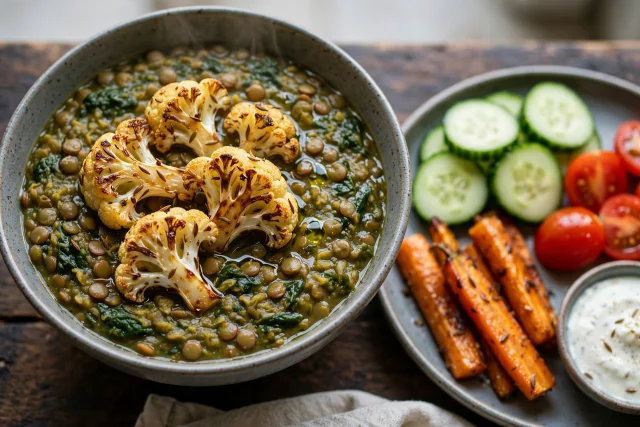
- Lentil and Spinach Dal with Roasted Cauliflower: Red lentils cook down with ginger, turmeric, and tomato, spinach wilts through at the end, and cauliflower roasts separately for crunch on top. Serve with rice or flatbread and a spoon of yogurt.
Snacks:
- Cold Cantaloupe with Lime: Half a cantaloupe with a squeeze of lime is sweet, soft, and quick, and it brings vitamin C and beta carotene in one bowl. It suits a flare week when crunchy snacks irritate your skin.
Day 5
Breakfast:
- Skyr with Blueberries and Ground Flaxseed: Thick skyr with blueberries, ground flaxseed, and a drizzle of honey takes three minutes and carries close to 20 grams of protein. It is the breakfast for a morning with no time to sit down.
Lunch:
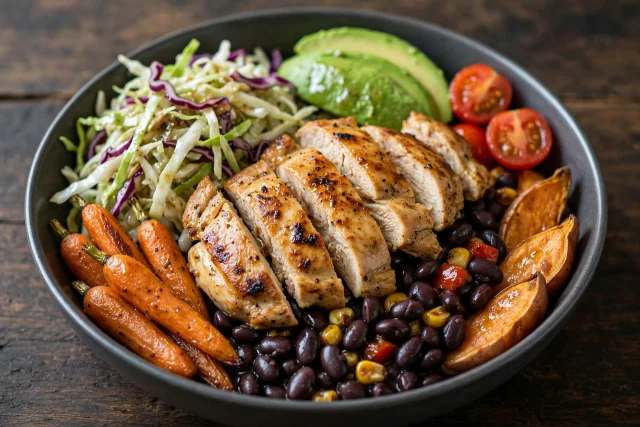
- Chicken and Black Bean Bowl with Cabbage Slaw: Grilled chicken, black beans, avocado, and a crunchy cabbage slaw share a bowl with lime and cumin. It is a lunch that eats like a burrito without the tortilla.
Dinner:
- Baked Trout with New Potatoes and Dill: Trout bakes with lemon and dill while new potatoes boil and green beans steam above them. The fish is milder than salmon and often cheaper, which matters if you are eating it twice a week.
Snacks:
- Carrot Sticks with Tahini Dip: Tahini loosened with lemon and water makes a dip that carries calcium and healthy fat, and carrots do the crunching. Keep both in the fridge door where you will see them.
Day 6
Breakfast:
- Vegetable Upma with Cashews: Semolina toasts with mustard seeds, curry leaves, carrot, and peas, then finishes with cashews scattered over. It is a South Indian breakfast that takes fifteen minutes and never feels like a compromise.
Lunch:
- Moong Dal and Spinach Soup: Yellow moong dal simmers with turmeric, ginger, and spinach into a light soup that settles easily. A squeeze of lemon at the end keeps it bright, and it freezes well in portions.
Dinner:
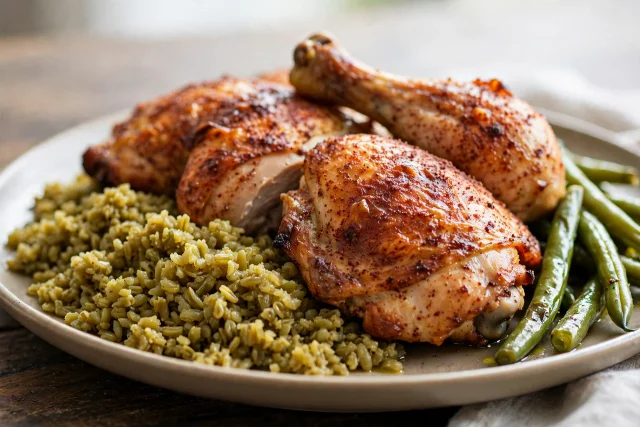
- Sumac Roast Chicken with Freekeh and Green Beans: Chicken roasts with sumac, paprika, and olive oil until the skin crisps, and freekeh cooks with a little of the pan juice. Green beans steam on the side and the whole plate smells like a Levantine kitchen.
Snacks:
- Turmeric Milk with Almonds: Warm milk with turmeric, cinnamon, and a thread of honey is a evening ritual more than a remedy, and almonds give it something to chew. Drink it before the late cupboard search starts.
Day 7
Breakfast:
- Buckwheat Pancakes with Blueberries: Buckwheat flour, egg, and milk make a nutty pancake that cooks in a dry pan, and blueberries warm through on top. It is a slow morning breakfast that still fits the week's pattern.
Lunch:
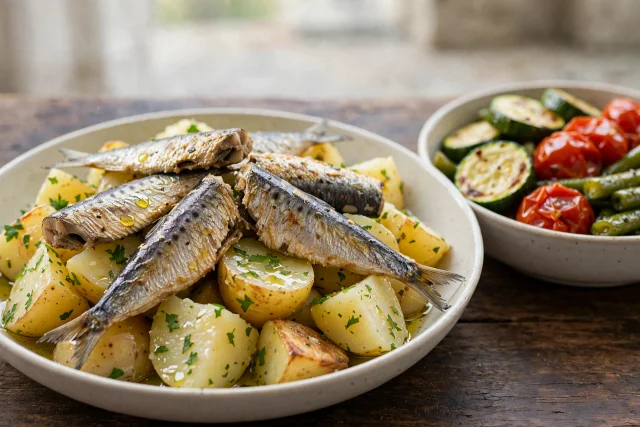
- Sardine and Warm Potato Salad: Sardines sit on warm new potatoes with parsley, lemon, and plenty of olive oil, and the fish softens into the potatoes as it sits. It is the most old fashioned plate in the week and one of the best.
Dinner:
- Chicken and Chickpea Stew with Pumpkin Seeds: Chicken thighs braise with chickpeas, tomato, and smoked paprika until the sauce thickens, and pumpkin seeds go over at the table. It freezes well, so make a double pot for the week after.
Snacks:
- Avocado with Lime and Pumpkin Seeds: Half an avocado with lime, salt, and toasted pumpkin seeds is a snack that feels like a starter. It takes a minute and carries the fats and zinc the skin uses.
Your Eczema Meal Plan Grocery List
This eczema meal plan grocery list covers every dish in the grid and leans on the fresh counter rather than the middle aisles. Buy fish twice in the week if your shop is close, since fresh sardines and trout are better within two days of buying.
Produce
- Fresh Vegetables: Sweet potatoes, kale, cauliflower, bok choy, cucumber, tomatoes, carrots, beetroot, spinach, courgette, green beans, new potatoes, cabbage, avocado, lemons, limes (every tray, bowl, salad, and steam in the grid).
- Fresh Fruit: Blueberries, oranges, lemons, limes, bananas, cantaloupe, apples (the breakfasts, the chia puddings, the salad dressings, and the afternoon snacks through the week).
- Herbs and Aromatics: Parsley, dill, thyme, rosemary, mint, coriander, fresh ginger, garlic, curry leaves, spring onion (the roasts, the dal, the upma, the fish, and the rice paper rolls).
Proteins
- Fish and Seafood: Salmon fillets, trout fillets, fresh sardines for grilling, two tins of sardines in olive oil (the ginger salmon, the baked trout, and the two sardine lunches).
- Poultry and Meat: Chicken thighs, chicken breast (the herb roast, the turmeric traybake, the black bean bowl, the chickpea stew, and the rice paper rolls).
- Eggs and Plant Protein: Eggs, silken tofu, chickpeas, black beans, red lentils, yellow moong dal, green lentils (breakfasts, soups, the dal, and the bowls).
Grains and Bakery
- Whole Grains: Rolled oats, brown rice, freekeh, millet, buckwheat flour, semolina, rice paper wrappers (the porridges, the bowls, the pancakes, and the rolls).
- Bread: One loaf of sourdough or dark rye, plus a pack of flatbread for the dal (the sardine toast, the breakfast plate, and the scooping bread on day four).
Dairy and Chilled
- Yogurt and Cultured: Kefir, plain yogurt, skyr, milk (the overnight oats, the chia puddings, the salad dressings, the tahini dip, and the turmeric milk).
- Chilled Extras: Feta or goat cheese if you tolerate it, butter for the pancakes and the upma (kept optional, since dairy is a personal call rather than a rule here).
Pantry, Oils and Flavorings
- Oils and Vinegars: Extra virgin olive oil, sesame oil, apple cider vinegar, rice vinegar (the roasts, the dressings, the edamame, and the dipping sauce for the rolls).
- Nuts and Seeds: Walnuts, almonds, cashews, pumpkin seeds, chia seeds, ground flaxseed, sesame seeds, tahini (breakfasts, snacks, the salads, and the dips).
- Canned and Jarred: Chopped tomatoes, coconut milk, chickpeas, black beans, olives, honey, maple syrup (the stew, the dal, the curries, and the breakfasts).
- Spices: Ground turmeric, cumin, smoked paprika, sumac, cinnamon, mustard seeds, black pepper (the roasts, the dal, the upma, the yogurt dips, and the evening milk).
How to Customize This Eczema Meal Plan
The swaps below keep the week flexible without turning it into a set of rules, and each one holds the protein, the color, and the fats roughly in place. Change what you need to change for a week, then return to the pattern rather than starting the whole thing over.
- When Fish Is Not on the Table: Eggs, chicken, and tofu cover the protein, and walnuts, chia, and flaxseed bring plant omega-3 fats in place of the fish. The conversion is not exact, so keep the seeds in the breakfast and the walnuts in the snack.
- When Dairy Is a Trigger for You: Kefir and yogurt are the easiest dairy to test, and oat or coconut versions work in the oats and the puddings. Keep calcium coming from tofu, tahini, almonds, and leafy greens if you drop dairy for more than a week.
- When Cooking Time Is Short: Tinned sardines, pre cooked lentils, frozen rice, and a bag of washed greens rebuild three dinners in fifteen minutes. A tray of roasted vegetables made once covers two lunches without another pan.
- When the Household Wants Something Else: Serve the same protein and vegetables with rice, pasta, or bread on the side, and the plate works for everyone. Nothing on the grid needs a separate dinner, which is what makes it survive a busy household.
- When a Flare Is at Its Worst: Keep meals plain and warm, since cooking smells and spice can feel like too much when the skin is angry. Soup, mashed sweet potato, rice, and poached chicken are all reasonable choices for a few days.
Getting Started With This 7 Day Eczema Meal Plan
Shop once, cook the Sunday roast and a pot of lentils, and keep the fish for the days you will actually cook it. Log nothing more than sleep, stress, and flares for the first two weeks, since those three explain more skin changes than most people expect.
Eczema care is mostly topical, and food sits beside the cream rather than replacing it. NIAMS atopic dermatitis guidance covers the treatment basics, and the NHS atopic eczema page explains triggers, emollients, and when to see a doctor about a flare that will not settle.
Keep exploring with our an anti-inflammatory week for reactive days, a low FODMAP week that settles the gut, an iron rich vegetarian week with citrus pairings, a Mediterranean fortnight built on fish and olive oil, and a plant based first week with plenty of color, alongside a low histamine week for sensitive skin and an anti-inflammatory week for painful joints.
This article is for information only and is not medical advice. Read our full disclaimer.