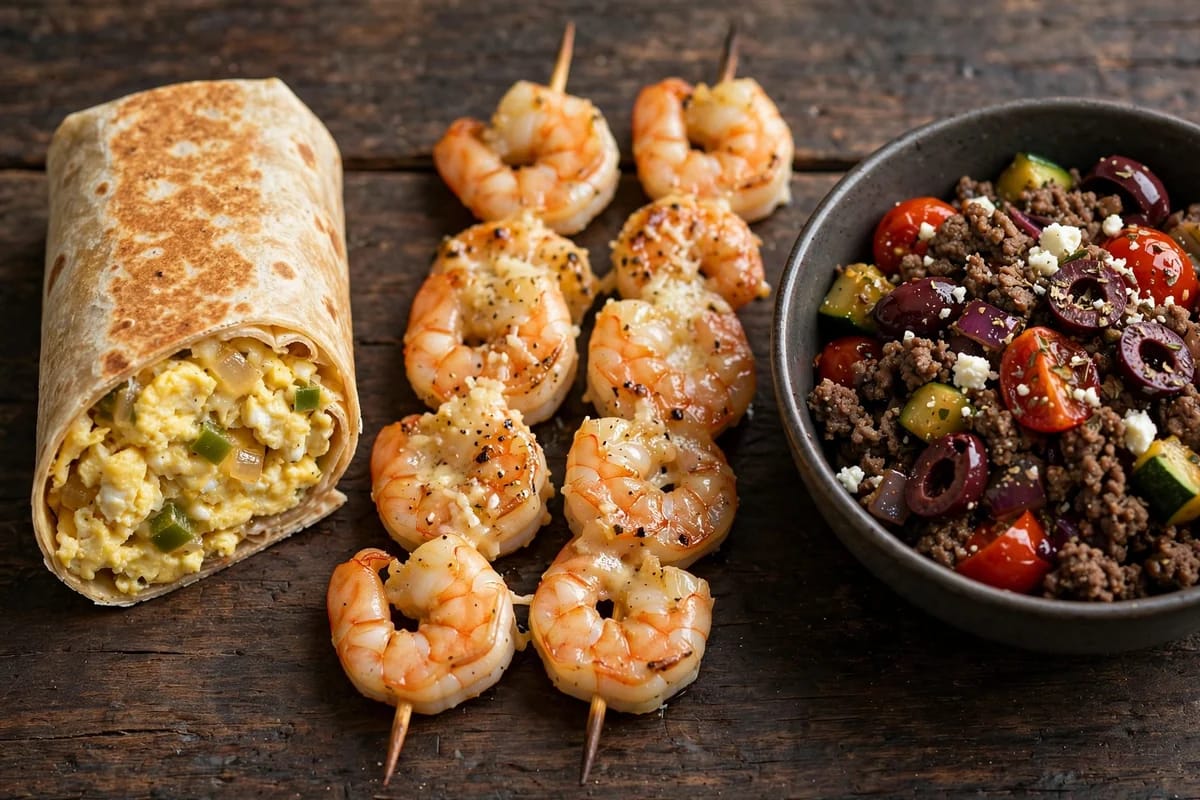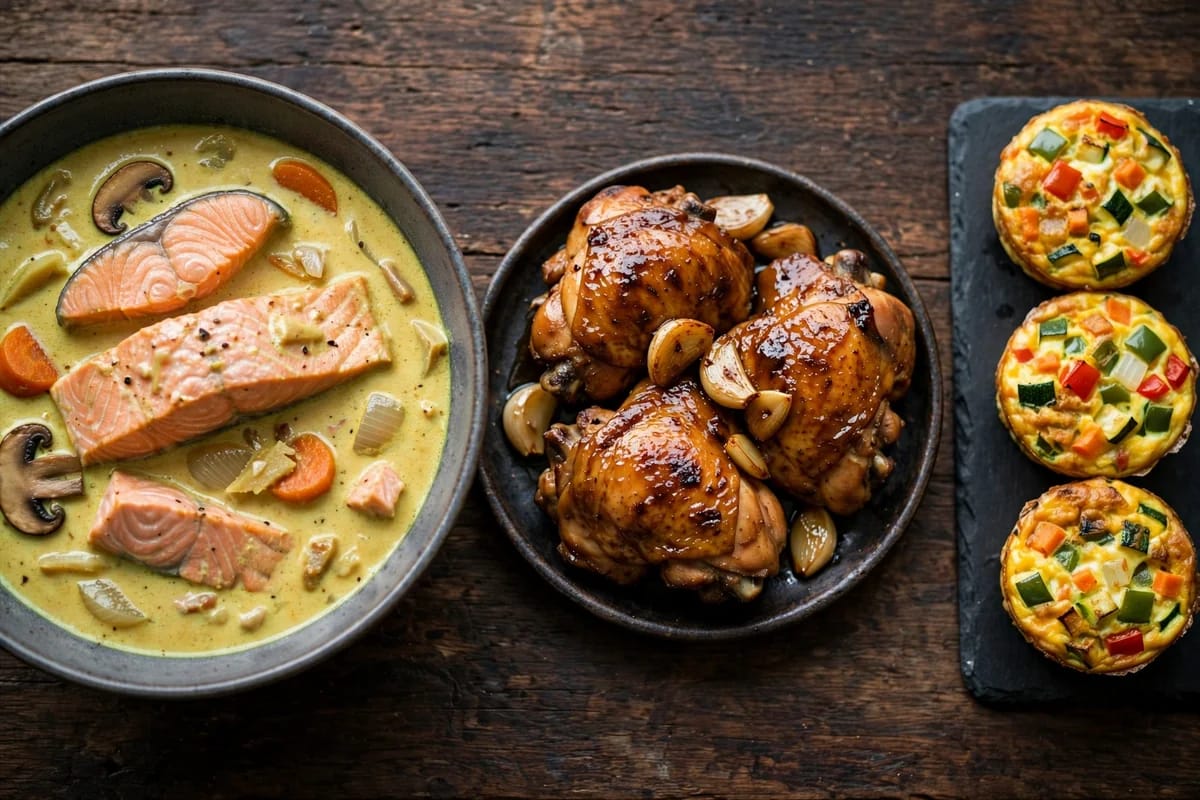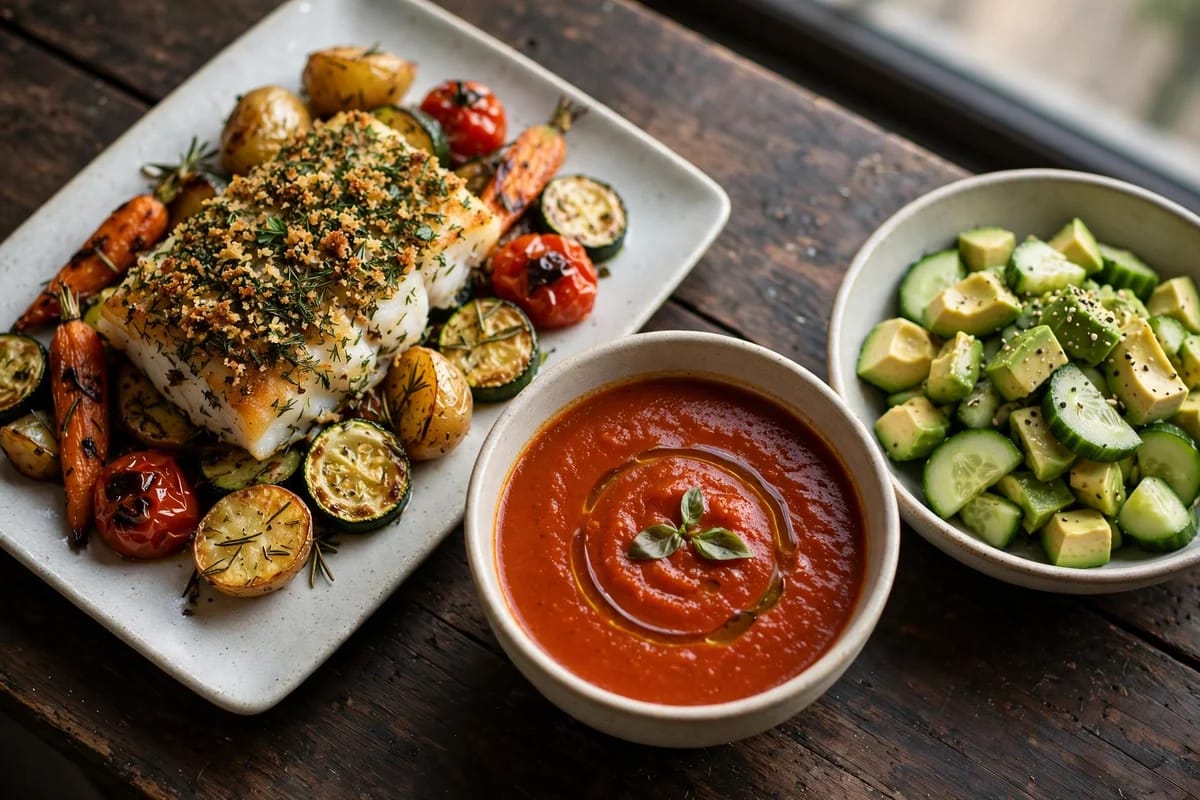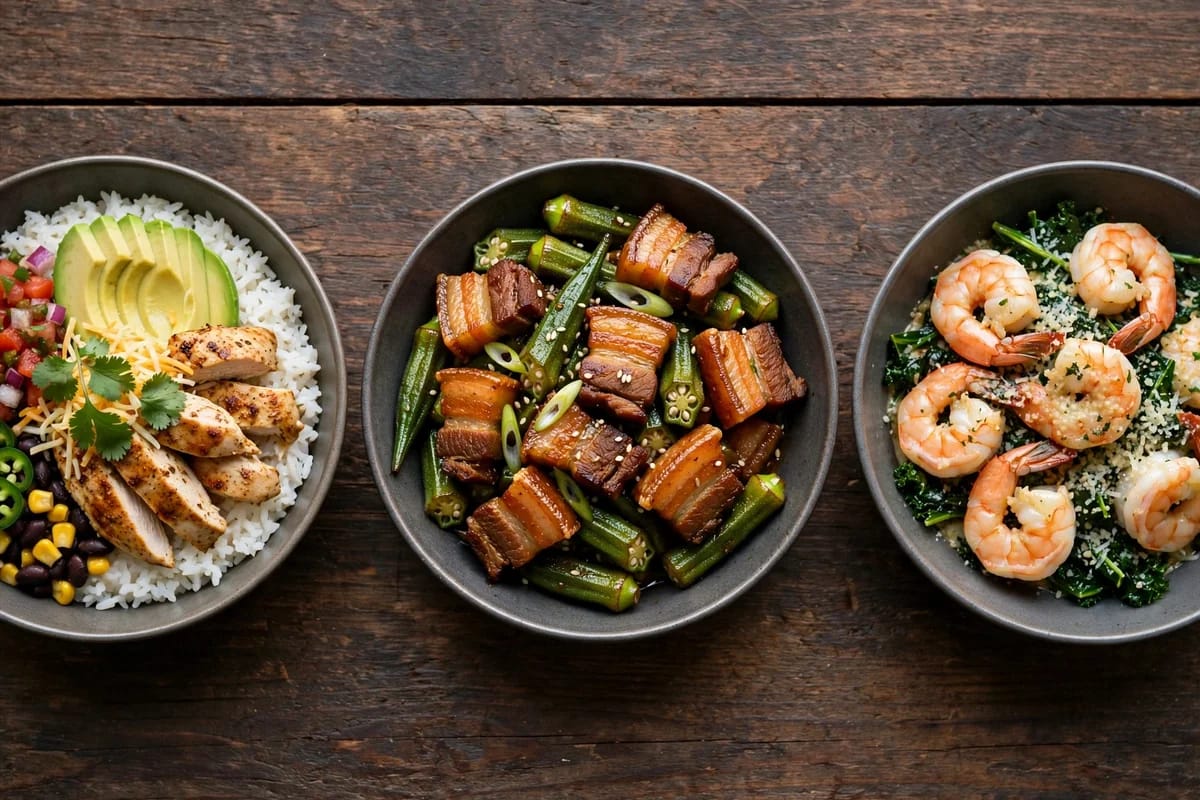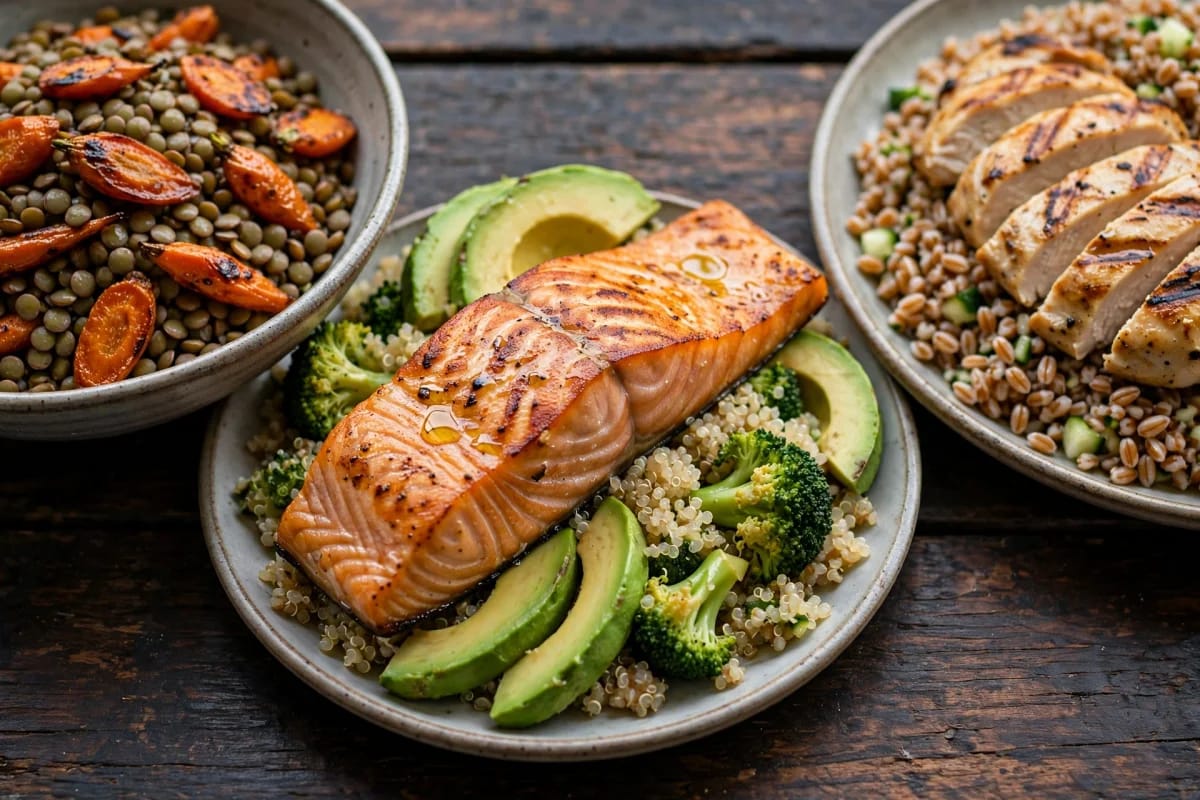
Three in the afternoon is where most PCOS weeks quietly fall apart. The lunch that looked balanced at noon has worn off, the biscuit tin starts talking, and dinner gets decided by whoever is hungriest.
This 7 day low glycemic meal plan for women with PCOS is built to flatten that curve, not by cutting carbs to nothing, but by pairing them with enough protein, fiber, and fat that the energy arrives slowly and stays. Every day carries four eating moments, and none of them runs on willpower alone.
The plates look like proper dinners. Seared salmon lands on quinoa with charred broccoli, shawarma chicken sits over bulgur with pickled turnip and garlic sauce, and a chickpea curry with brown basmati shows up midweek with yogurt on top. Breakfasts lean savory or protein heavy, lunches are built to pack, and snacks are there because the afternoon is the real test.
It suits women with PCOS who are managing insulin resistance, irregular cycles, hormonal acne, or weight that settles around the middle, and it suits anyone whose doctor has suggested watching blood sugar without turning every meal into a spreadsheet. If you cook for a partner or a family, the same food works on their plate with no separate dinner required.
The rhythm matters as much as the food. Mornings carry the most protein, lunches are assembled ahead so no decision is needed at noon, and dinners use one pan wherever possible. That structure is what makes a low glycemic week survivable on a working schedule.
Nothing here promises a fix, and PCOS care belongs with your doctor or dietitian, especially if you take metformin or any medication that affects blood sugar. What this week can do is give you seven days of steadier energy and a clear sense of which meals keep you level.
Why This Low Glycemic Meal Plan for Women With PCOS Works
The week is built around the way glucose actually arrives in the blood rather than around counting anything, so the benefits are the everyday kind you notice by midweek. Each reason below explains the mechanism, not just the promise, because knowing why a plate works makes it easier to repeat without the recipe in front of you.
- Steadier Energy Through the Afternoon: Fiber, protein, and fat slow the release of glucose from a meal, so the peak is lower and the drop afterward is gentler, which matters more when insulin resistance is part of the picture. That is the difference between a three o'clock slump and a three o'clock that simply passes.
- Protein at Every Eating Moment: Eggs, yogurt, fish, chicken, tempeh, and legumes appear at breakfast, lunch, dinner, and snacks rather than clustering at dinner. Spreading protein across the day supports satiety and helps protect muscle while hormones settle.
- Fiber That Feeds Your Gut: Beans, lentils, barley, oats, and vegetables carry soluble fiber that ferments slowly in the colon and feeds the bacteria tied to better insulin sensitivity. It also slows digestion, which is the quiet half of the blood sugar story.
- Fewer Crashes and Fewer Cravings: A steady glucose line means fewer urgent sweet cravings, and the snacks here are built with fat and fiber for exactly those moments. None of it relies on banning sugar outright, which rarely survives a stressful week.
- Food That Fits Real Life: Dinners use one pan or one tray, lunches are packed cold, and breakfasts repeat in shapes you can rotate. A plan that requires a second job will not last, so this one keeps the cooking ordinary.
Key Principles of a Low Glycemic Diet for PCOS
Five working habits hold the week together, and each one survives a busy day better than a rule about numbers. They come from the way low glycemic eating works in practice, where plate order, smart pairing, and grain choice do most of the heavy lifting for you.
- Build the Plate in Order: Start with vegetables, then protein, then the starch, and you naturally eat the slowest carbohydrate first. Eating vegetables and protein before rice or bread blunts the glucose rise from the same meal, which is a small habit with a measurable effect.
- Pair Every Carb: No carbohydrate sits alone on this week's plates, since bread comes with eggs, fruit comes with yogurt, and rice comes with fish or beans. The pairing is what turns a fast carb into a slow one, and it costs nothing extra.
- Choose Intact Grains: Barley, quinoa, steel cut oats, brown basmati, farro, and bulgur keep their bran and germ, so they digest more slowly than white rice or instant oats. Portions stay moderate, a cup cooked rather than a mountain, and the fiber count does the rest.
- Front-Load Protein at Breakfast: A savory or dairy-based breakfast keeps the morning steadier than toast and jam, and it sets the tone for the day. The eggs, yogurt, labneh, and smoked trout here are all doing that job, and you can read more about how carbohydrate quality works if you want the detail behind it.
- Keep Sweetness to Fruit and Dairy: Raspberries, pears, oranges, blueberries, and pomegranate carry fiber and water alongside their sugar, and plain yogurt brings protein. Sweetness stays at the table, just attached to something that slows it down.
Your 7 Day Low Glycemic Meal Plan
This 7 day low glycemic meal plan for women with PCOS opens with a salmon dinner and a packed lentil lunch, then moves through Mexican, Japanese, Indian, Levantine, Nordic, and American plates. The early days teach the pairing habit, the middle days build speed, and the closing days stretch the pattern.
Day 1
Breakfast:
- Greek Yogurt with Raspberries and Chia: Thick Greek yogurt with crushed raspberries, a spoon of chia, and toasted almonds on top. It holds until lunch without the mid morning hunt for something sweet.
Lunch:
- Lentil Salad with Roasted Carrots and Arugula: Small green lentils tossed warm with cumin roasted carrots, arugula, and a lemon mustard dressing. Packed in a jar, the leaves stay perky until noon.
Dinner:
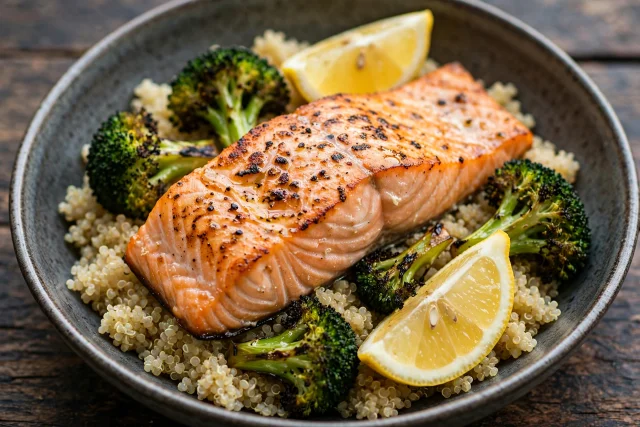
- Oven Baked Salmon with Quinoa and Broccoli: Salmon roasts until it flakes at the touch, with quinoa steamed underneath and broccoli charred at the edges. The oven baked salmon recipe takes half an hour, most of it hands off.
Snacks:
- Salted Almonds and Orange Segments: A small handful of almonds with two oranges peeled into segments. Salt and juice together quiet a sugar craving faster than a biscuit does.
Day 2
Breakfast:
- Egg and Black Bean Breakfast Tostada: A corn tortilla crisped in a dry pan, spread with mashed black beans, and topped with a fried egg, salsa, and cilantro. It eats like a slow morning breakfast and takes ten minutes flat.
Lunch:
- Chicken and Pinto Bean Salad with Lime: Shredded chicken, pinto beans, cherry tomatoes, and romaine tossed in lime and olive oil. Cold from the fridge, it is the lunch that survives a desk drawer.
Dinner:
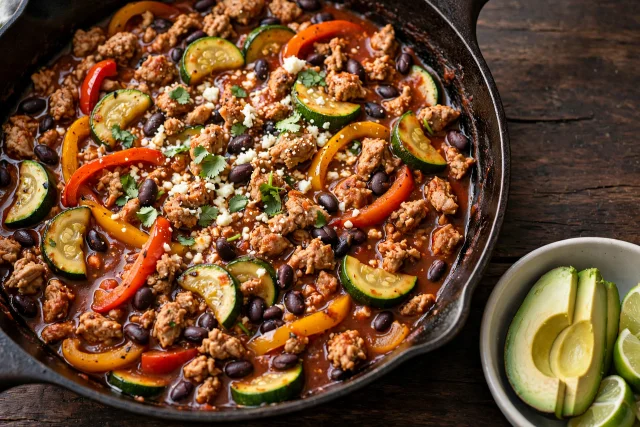
- Turkey and Zucchini Enchilada Skillet: Ground turkey simmers with zucchini, peppers, and black beans in a mild enchilada sauce, then finishes under a little cheese. Serve it with avocado slices and leave the tortillas in the cupboard.
Snacks:
- Jicama and Radish Sticks with Lime: Jicama and radishes cut into matchsticks with lime and a dust of chili. The crunch is the point, and it keeps your hands busy while dinner cooks.
Day 3
Breakfast:
- Steel-Cut Oats with Pear and Walnut: Steel cut oats cooked slow with a diced pear and finished with walnuts and cinnamon. The pear sweetens the pot so no sugar is needed.
Lunch:
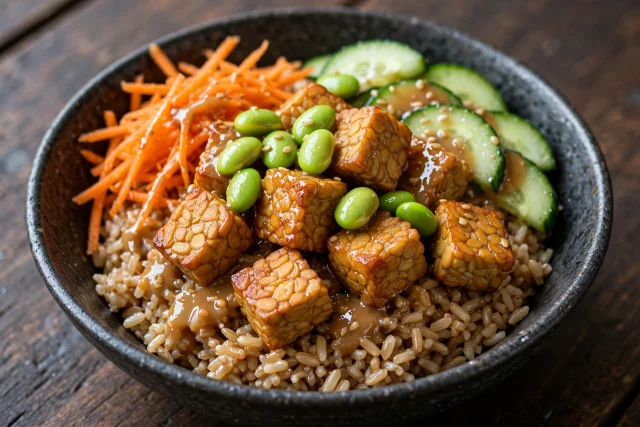
- Tempeh and Edamame Rice Bowl: Golden tempeh cubes and bright edamame over brown rice with cucumber, carrot, and a sesame ginger dressing. It travels well and eats just as happily cold.
Dinner:
- Ginger Salmon with Baby Bok Choy and Soba: Salmon seared skin side down and glazed with ginger and tamari, with bok choy wilted in the same pan and soba underneath. The whole thing lands in twenty five minutes.
Snacks:
- Seaweed and Cucumber Snack: Roasted seaweed sheets with cold cucumber spears and a little sesame oil. Salty, cold, and crunchy, it is the snack that stops a chip run.
Day 4
Breakfast:
- Masala Scrambled Eggs with Spinach: Eggs scrambled soft with turmeric, cumin, and a handful of spinach, with half a whole wheat roti alongside. A savory morning keeps the sweet tooth quiet until lunch.
Lunch:
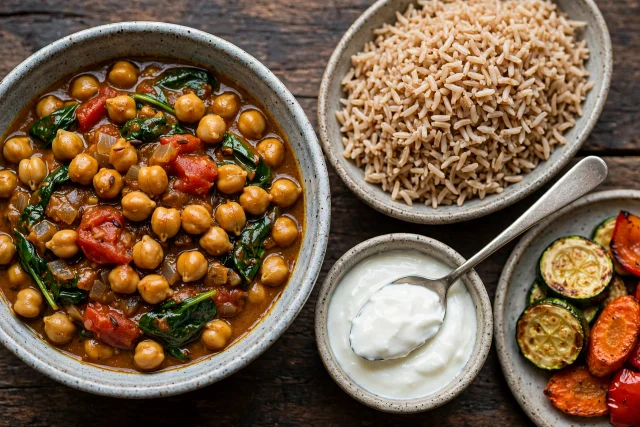
- Punjabi Chickpea Curry with Brown Basmati: Chickpeas simmered in tomato, ginger, and garam masala with spinach folded in at the end. A spoon of yogurt on top cools it and adds protein.
Dinner:
- Yogurt-Marinated Tandoori Chicken with Charred Cauliflower: Chicken thighs sit in spiced yogurt overnight, then roast with cauliflower until the edges char. The marinade does the work and the oven does the rest.
Snacks:
- Roasted Pumpkin Seeds with Cumin: Pumpkin seeds toasted in a dry pan with cumin and a pinch of salt. A small bowl after lunch keeps the afternoon steadier.
Day 5
Breakfast:
- Labneh Bowl with Cucumber Ribbons and Mint: Labneh spread thick in a bowl with cucumber ribbons, mint, olive oil, and a scatter of za'atar. It is cooling, salty, and quick on a rushed morning.
Lunch:
- Quinoa Tabbouleh with Pomegranate and Parsley: Quinoa stands in for bulgur with parsley, mint, pomegranate seeds, and lemon. It tastes better after an hour in the fridge, which makes it a good make ahead lunch.
Dinner:
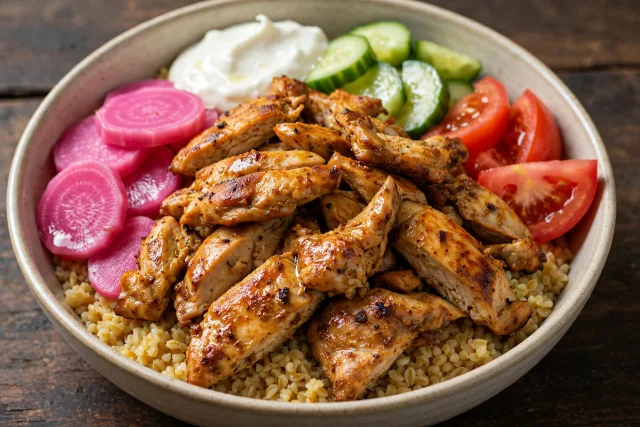
- Shawarma-Spiced Chicken Bowl with Toum and Pickled Turnip: Chicken thighs rubbed with shawarma spice and seared hard, piled over bulgur with tomato, cucumber, pickled turnip, and garlic sauce. The chicken shawarma bowl follows the same idea with a little more detail.
Snacks:
- Hummus with Bell Pepper Strips: A few spoonfuls of hummus with sweet pepper strips for scooping. It is a two minute snack that still carries fiber and fat.
Day 6
Breakfast:
- Rye Crispbread with Smoked Trout and Dill: Rye crispbread layered with smoked trout, a smear of cream cheese, and dill. It feels like a hotel breakfast and takes three minutes.
Lunch:
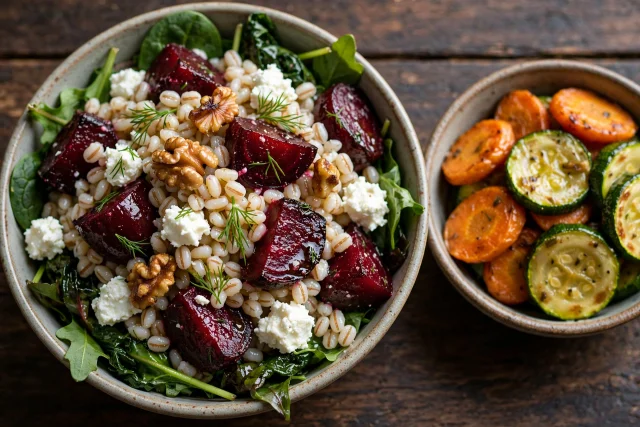
- Barley and Beet Salad with Feta: Pearl barley tossed with roasted beets, feta, dill, walnuts, and a little olive oil. The barley stays chewy, which is exactly why it keeps you full.
Dinner:
- Roasted Cod with Fennel and Celeriac Mash: Cod roasted with fennel wedges until the fish just flakes, served over celeriac mash. It is a quiet dinner that still feels like one.
Snacks:
- Icelandic Skyr with Wild Blueberries and Flax: Thick skyr with blueberries and a spoon of ground flax. It tastes like dessert and carries a serious amount of protein without trying.
Day 7
Breakfast:
- Spinach and Feta Frittata: Eggs baked with spinach, feta, and scallions, cut into wedges for the week. Two wedges with a slice of tomato make a breakfast that holds until lunch.
Lunch:
- Turkey and Avocado Butter Lettuce Cups: Ground turkey seasoned with cumin and paprika spooned into butter lettuce with avocado and lime. Light enough for a warm afternoon, filling enough to count.
Dinner:
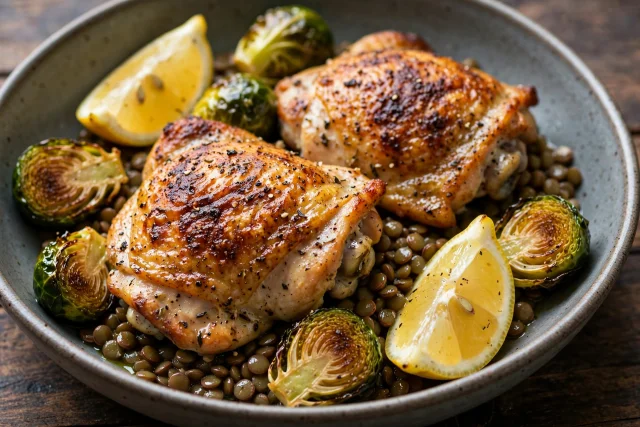
- Sheet-Pan Chicken with Brussels Sprouts and Lentils: Chicken thighs roast on a sheet pan with Brussels sprouts, then get spooned over warm lentils with lemon. One pan, one wash up, and leftovers that improve overnight.
Snacks:
- Crisp Apple Wedges with Peanut Butter Dip: Apple wedges with peanut butter whisked with a little yogurt and cinnamon. It is the after dinner snack that keeps you out of the pantry.
Your Low Glycemic Food List for PCOS
Everything below covers the twenty eight plates above in one shop, grouped by aisle so you can walk the list once and be done. The only midweek restock is fresh fish, and the pantry shelf carries every other item on the list through the full week.
Fruits
- Fresh Berries: Raspberries, blueberries, wild blueberries (for the yogurt bowls and the skyr).
- Lower Sugar Fruit: Oranges, pears, apples, lemons and limes (for snacks, porridge, dressings, and the frittata plate).
- Pomegranate: One pomegranate or a tub of seeds (for the tabbouleh).
Vegetables
- Leafy Greens: Spinach, arugula, romaine, butter lettuce, parsley, mint, dill, cilantro (for salads, the skillet, the bowls, and the frittata).
- Cruciferous: Broccoli, Brussels sprouts, cauliflower (for the salmon plate, the sheet pan dinner, and the tandoori tray).
- Root Veggies: Carrots, beets, celeriac, radishes, jicama (for the lentil salad, the barley salad, the mash, and the snack sticks).
- Others: Zucchini, bell peppers, cucumbers, cherry tomatoes, fennel, garlic, ginger, scallions (for the skillet, the bowls, the cod, and the dressings).
Proteins
- Fish and Seafood: Salmon fillets, cod fillets, smoked trout (for three dinners and one breakfast).
- Poultry: Chicken thighs, chicken breast, ground turkey (for the bowls, the sheet pan, the tandoori tray, and the lettuce cups).
- Eggs: A dozen and a half eggs (for the tostada, the masala scramble, and the frittata).
- Legumes and Soy: Green lentils, chickpeas, black beans, pinto beans, tempeh, edamame (for salads, the skillet, the curry, and the rice bowl).
Whole Grains
- Intact Grains: Quinoa, pearl barley, steel cut oats, brown basmati rice, bulgur, soba noodles (for the dinner plates and the packed lunches).
- Breads and Crackers: Rye crispbread, whole wheat roti, corn tortillas (for breakfasts and the tostada).
Nuts, Seeds, and Fats
- Nuts: Almonds, walnuts, pine nuts (for the yogurt, the barley salad, and the tabbouleh).
- Seeds: Chia seeds, ground flax, pumpkin seeds, sesame seeds (for breakfasts, snacks, and the sesame dressing).
- Oils and Butters: Olive oil, sesame oil, peanut butter, tahini (for cooking, dressings, and the dip).
Dairy and Flavorings
- Dairy: Greek yogurt, plain yogurt, skyr, labneh, feta, cream cheese, butter for the mash (for breakfasts, sauces, and the salads).
- Spices and Herbs: Cumin, turmeric, garam masala, shawarma spice, smoked paprika, chili flakes, cinnamon, za'atar, dried dill (for every dinner in the week).
- Pantry: Tamari, lemon mustard dressing ingredients, canned tomatoes, vegetable stock, hummus, olives (for the bowls, the curry, and the snacks).
How to Customize Your PCOS Meal Plan
Five swaps cover the situations that usually derail a week, and each one keeps the plate balanced rather than simply removing a food. Read the lead in for your situation, then change only that one part of the meal and leave everything else alone.
- When the Afternoon Craving Hits: Pair fruit with a fat and a protein instead of reaching for something baked, so apple with almond butter, pear with cheese, or orange with a few walnuts. The sugar still lands, just slowly.
- When Dinner Needs to Be Fast: Keep frozen salmon and a bag of frozen broccoli, then roast both on one tray while quinoa cooks. Twenty minutes gets you the Day one plate on a night with no patience left.
- When Bread Is the Craving: Choose a dense whole grain loaf or rye crispbread and put protein on it, so eggs, trout, or chicken rather than butter alone. The bread stays, the spike does not.
- When You Are Eating Out: Order the grilled protein with extra vegetables and ask for the starch on the side, then eat the vegetables first. Most menus can do this without a single substitution conversation.
- When You Want Something Sweet After Dinner: Warm berries with a spoon of Greek yogurt and cinnamon, or two squares of dark chocolate with a few almonds. It closes the meal without restarting the sugar cycle.
Getting Started With This 7 Day Low Glycemic Meal Plan
Start with the shop, not the cooking. Buy the full list once, cook a pot of lentils and a tray of barley on the first evening, and roast the beets while the oven is already on, since those three jobs make four lunches almost effortless. Portion the grains into containers the same night so lunch is assembled rather than decided.
Then pick two dinners to repeat in week two and rotate the rest, because repetition turns a plan into a habit. If you want a gentler version of the same style, the PCOS friendly meal plan runs on similar principles with softer edges, and your clinician can adjust portions if you take medication that lowers blood sugar.
Keep exploring with our low carb week for steadier energy and two heart smart Mediterranean weeks, plus an easy plant based starting point, a budget friendly healthy week and a fifty dollar grocery plan, alongside a hormonal health week for menopause and a steady plan for reducing belly fat.
This article is for information only and is not medical advice. Read our full disclaimer.