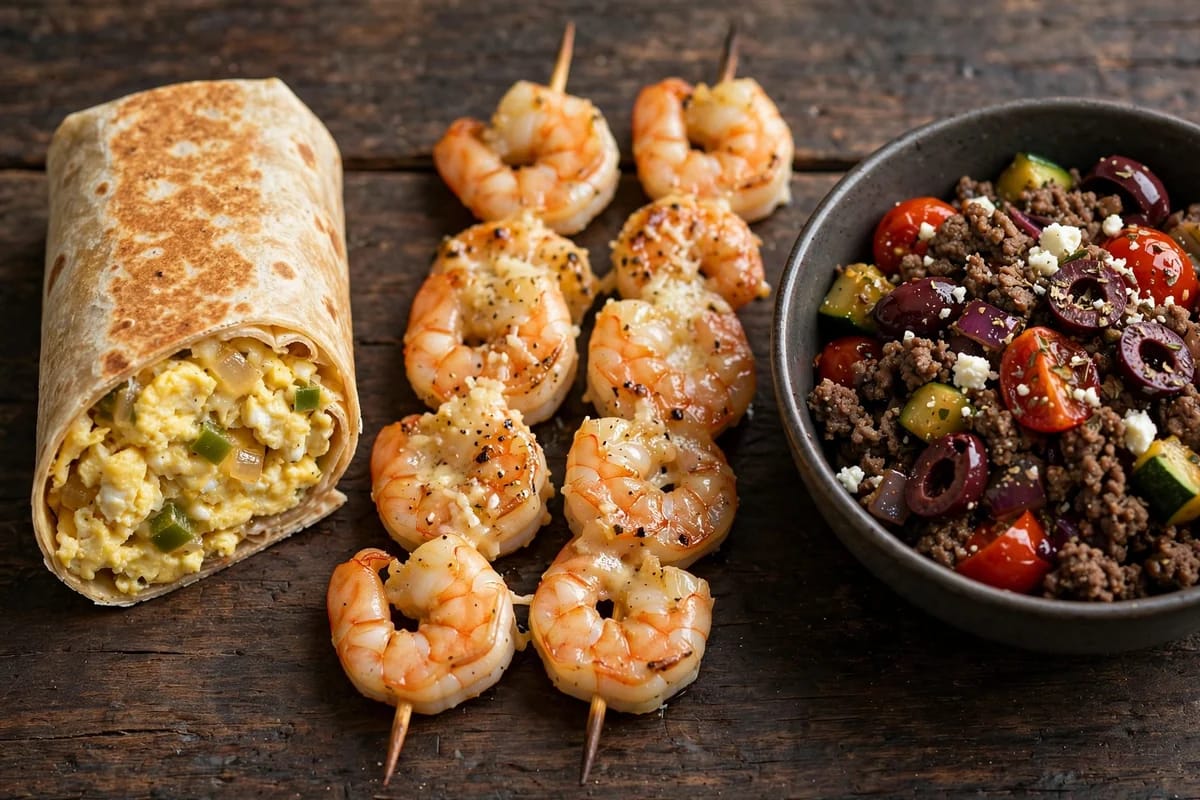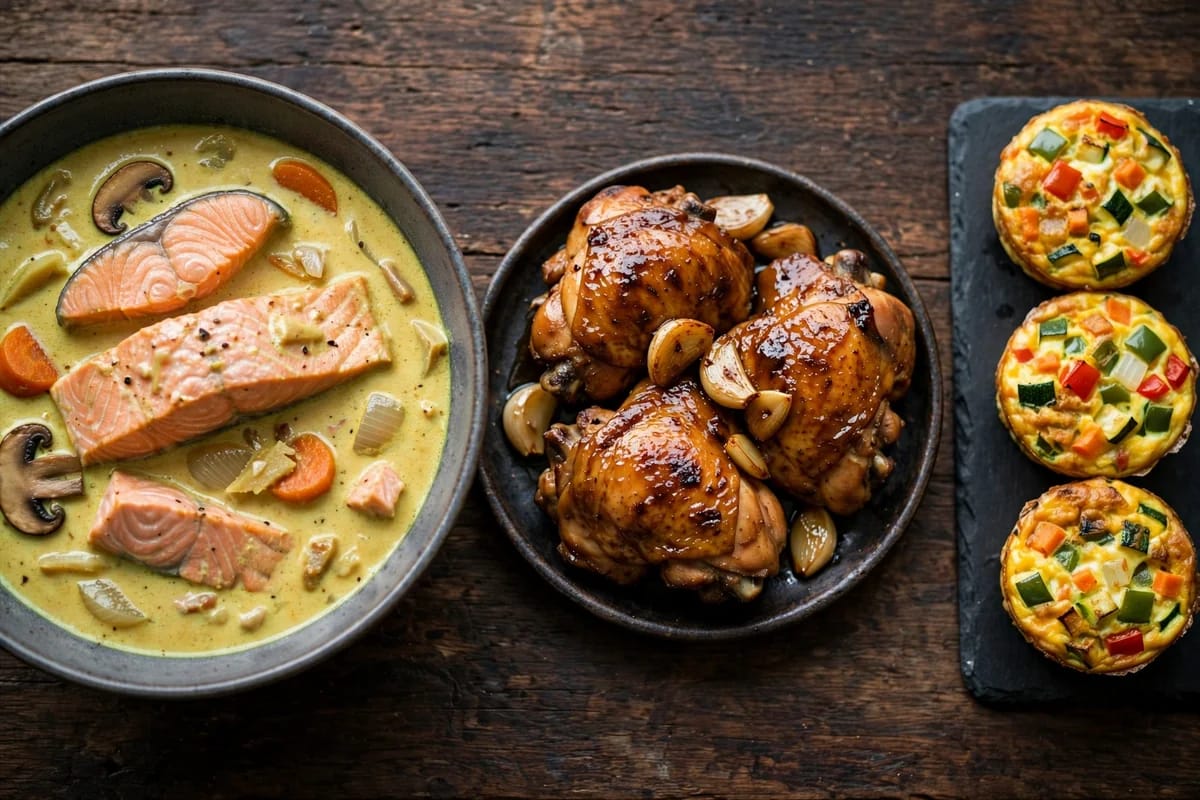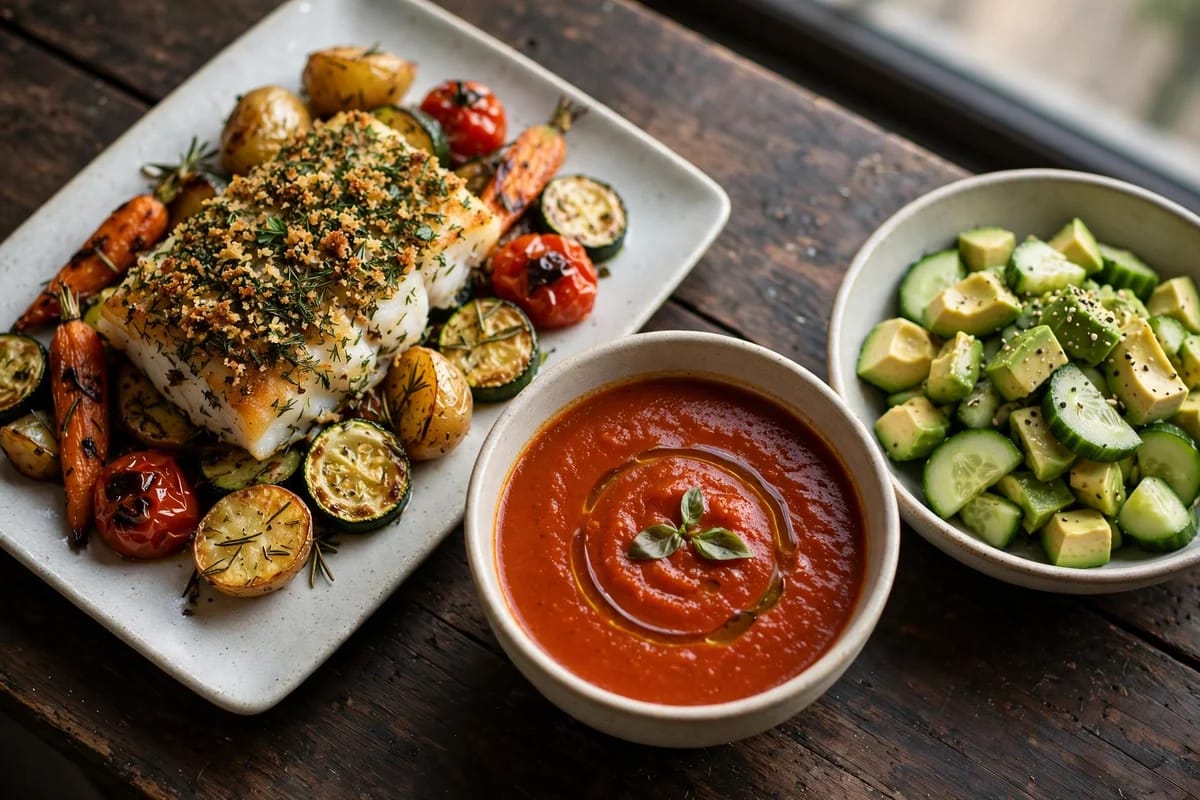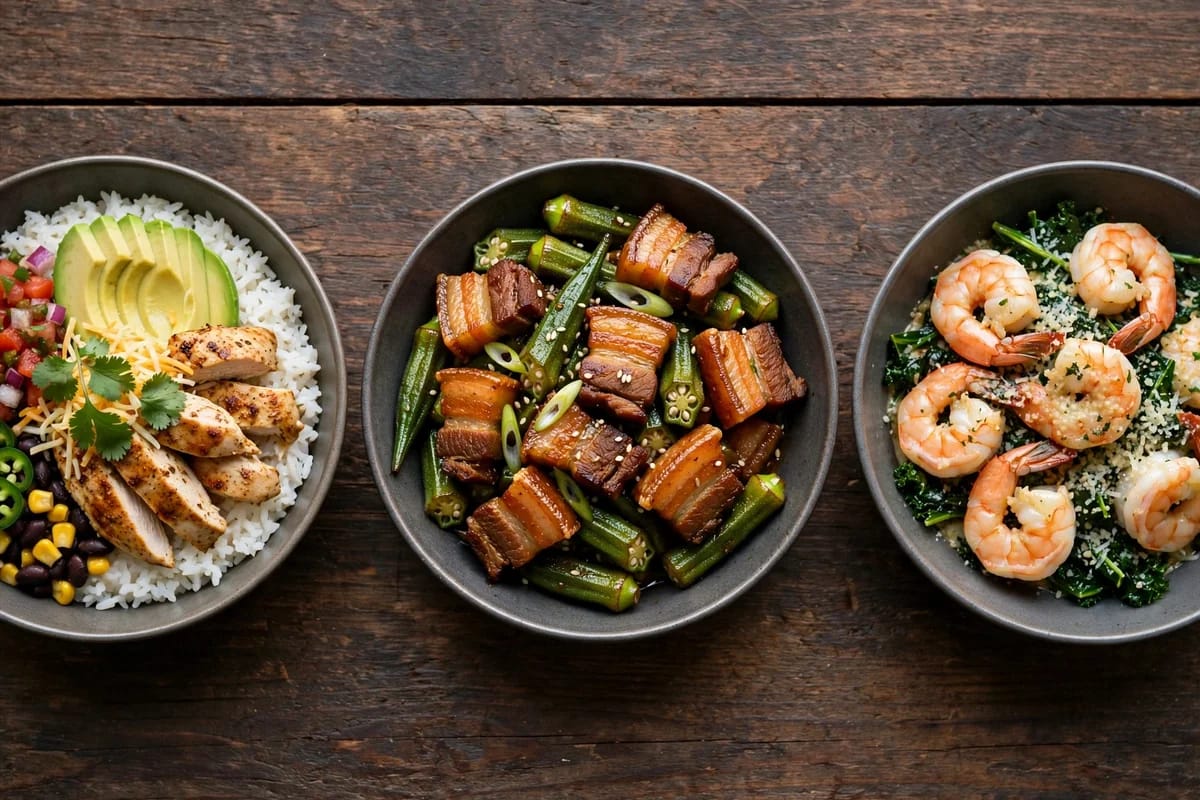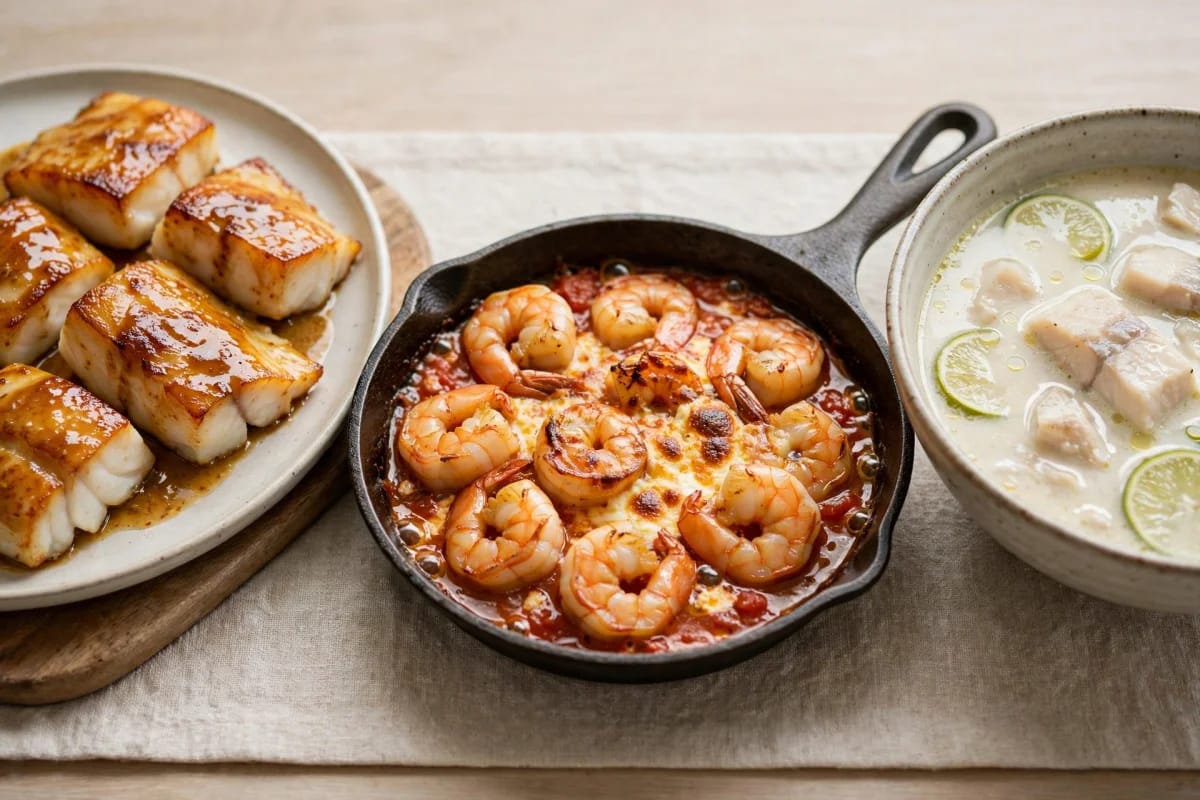
The fish counter is where a lot of good intentions stall. The fillets look beautiful, the price per kilo is unclear, and nobody wants to spend twenty pounds on something that turns rubbery in a hot pan.
This 7 day pescatarian meal plan for healthy eating takes that fear out of the week, with 28 dishes that treat fish as an everyday ingredient rather than a restaurant event. Five dinners come from the counter or the tin, and the other two lean on eggs, beans, and yogurt so the shopping stays reasonable.
The week opens with maple mustard cod on barley and roasted beets, moves through miso salmon soba and shrimp saganaki, and closes with a lemon herb trout tray bake. Breakfasts are quick, lunches pack cold, and the snacks are small enough to carry in a bag.
Nothing here needs a special pan or a thermometer. Most of the fish cooks in under twelve minutes, the sauces come together while the water boils, and the recipes assume you might be cooking for one person who eats fish and one who does not.
Seafood is also where a little knowledge pays off, since species, freshness, and mercury advice all matter more than they do with a bag of lentils. This pescatarian meal plan sticks to familiar, low mercury fish and keeps the portions realistic, which is the honest way to eat it often.
Most weeks here begin with a pescatarian cooking beside someone who still eats meat, and every recipe works for both plates. New cooks, anyone cutting back on meat, and people who simply like seafood fit just as well, and anyone pregnant or managing a condition should check the species advice first.
Key Principles of a Pescatarian Diet
Five habits hold this week together, and each one answers a question that comes up in the first month of eating this way. None of them requires a fishmonger, a meat thermometer, or a Sunday spent prepping, and each one shows up somewhere in the seven days below, from the ten minute fillet to the tin in the cupboard.
- Choose Fish That Carries Omega 3s: Salmon, sardines, trout, mackerel, and herring do more for the week than white fish alone, and this pescatarian meal plan builds four days around them. The Harvard Nutrition Source guide to fish explains which species carry the most omega 3 fats and why they matter for heart and brain health.
- Cook It Briefly and Gently: Most fish needs about ten minutes per inch of thickness, and it is done when the flesh just separates into flakes. Pulling it off the heat a minute early and letting it rest finishes the job without drying the edges, which is the mistake that turns people off cooking fish at home.
- Build the Plate Like the Mediterranean: Half the plate is vegetables, a quarter is a grain or a potato, and a quarter is fish or shellfish. That shape keeps the meal light without leaving you hungry, and it is why this pescatarian plan reads like dinner rather than a diet.
- Keep Tins in the Cupboard: Sardines, tuna, and mackerel in olive oil cost less than fresh fillets and keep for months, so they carry two lunches here. Fresh fish is best cooked the day you buy it, and frozen fillets are a fine substitute when the counter looks thin.
- Keep Eggs and Dairy in Their Place: Eggs and yogurt appear at breakfast and in snacks, which keeps protein steady without making fish feel optional. It also means the week still works if the fish counter is closed, since there is always something in the fridge to build a plate around.
Your 7 Day Pescatarian Meal Plan for Healthy Eating
This 7 day pescatarian meal plan for healthy eating travels through Nordic, Japanese, Greek, Thai, Italian, Moroccan, and French kitchens, so the fish never lands in the same sauce twice. Dinners alternate between counter and tin, and a longer Mediterranean DASH plan picks up the same rhythm if two weeks suit you better.
Day 1
Breakfast:
- Rye Toast with Smoked Trout, Cucumber, and Dill: Dark rye toast takes a thick layer of cream cheese, flaked smoked trout, thin cucumber, and dill. It is a five minute breakfast with enough salt and fat to hold you until lunch, and it makes a quiet cup of coffee feel like a proper start.
Lunch:
- Beet and Barley Salad with Feta and Walnuts: Pearl barley tosses with roasted beets, feta, walnuts, and a mustard vinaigrette while the grains are still warm enough to soften the cheese. It packs into a container without wilting, and the color alone makes a desk lunch feel less like leftovers.
Dinner:
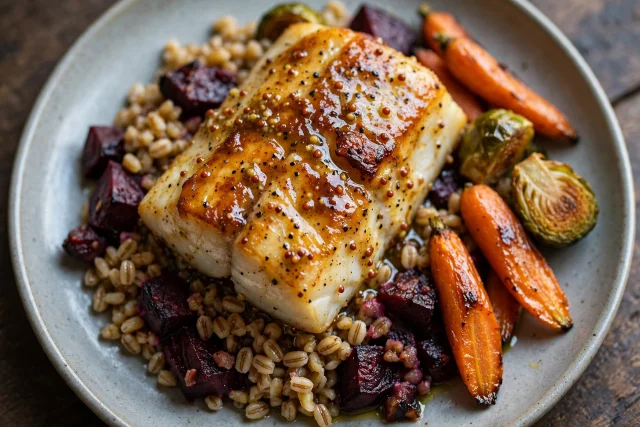
- Maple Mustard Cod with Barley and Roasted Beets: Cod fillets brush with maple and whole grain mustard, roast until they flake at the touch of a fork, and land on barley with roasted beets and carrots. The glaze turns sticky at the edges, and the sweet sharpness cuts through the earthy beets.
Snacks:
- Rye Crispbread with Whipped Cottage Cheese and Radish: Cottage cheese whips smooth with a little olive oil and lemon, then spreads on crispbread under sliced radish and cracked pepper. It is the snack to keep at the office, since the components sit in the fridge for days and assemble in a minute.
Day 2
Breakfast:
- Scallion Tamago Rice Bowl with Nori: Eggs cook in a small pan into soft layers, slice into ribbons, and sit over warm rice with scallions, nori, and a drizzle of soy. It takes ten minutes and tastes like something from a proper Japanese breakfast, which is a good way to start a gray morning.
Lunch:
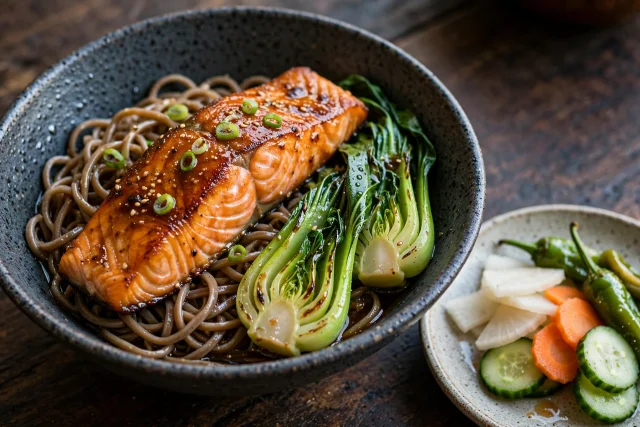
- Miso Salmon Soba Bowl with Bok Choy: Salmon brushes with white miso, mirin, and a little maple, then broils until the glaze blisters and the fish stays pink inside. Soba noodles and steamed bok choy catch the extra sauce, and the bowl eats well cold if lunch gets pushed back.
Dinner:
- Teriyaki Mackerel with Rice and Steamed Greens: Mackerel fillets pan sear skin side down until crisp, then finish under a ginger soy glaze that thickens in the same pan. Steamed greens and rice soak up what runs off the fish, and the whole plate is on the table in twenty minutes.
Snacks:
- Cucumber Sunomono with Sesame: Thin cucumber slices sit in rice vinegar with a pinch of sugar and salt, then get sesame seeds and a few strands of wakame. It is cold, sharp, and small, which is exactly what you want between heavier meals.
Day 3
Breakfast:
- Greek Yogurt with Honey, Walnuts, and Figs: Thick yogurt goes into a bowl with honey, toasted walnuts, and sliced figs, and the honey pools against the side of the bowl in the best way. It takes two minutes and feels generous, which is more than most breakfasts manage on a workday.
Lunch:
- Greek Salad with Chickpeas and Feta: Tomato, cucumber, red onion, olives, and feta get a spoon of chickpeas and a dressing of olive oil and oregano. The Greek salad recipe is the base, and the chickpeas turn a side dish into a full lunch that keeps until the afternoon.
Dinner:
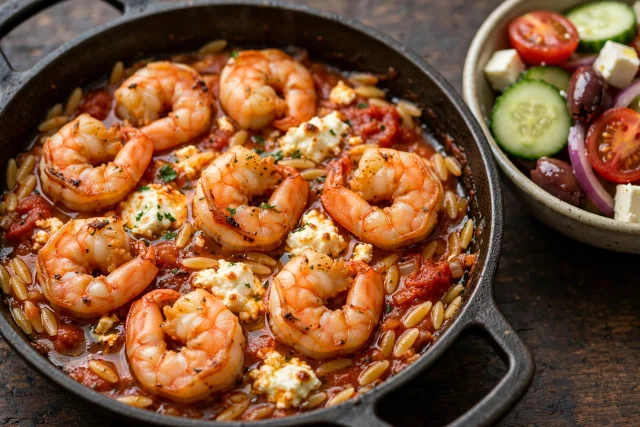
- Shrimp Saganaki with Orzo and Greek Salad: Shrimp cook in a tomato sauce with garlic, ouzo if you have it, and crumbling feta that melts into the edges. Orzo goes underneath to catch the sauce, and a small salad on the side keeps the plate from turning heavy.
Snacks:
- Whipped Feta with Cucumber and Pita: Feta blends with yogurt and a little lemon until it turns into a dip, then spreads into warm pita with cucumber spears for scooping. It is salty and tangy enough to satisfy a chip craving, and it takes five minutes with a small blender.
Day 4
Breakfast:
- Coconut Chia Pudding with Mango and Lime: Chia seeds soak in coconut milk with lime zest and a spoon of honey, then layer with mango in a jar. It sets overnight, travels well, and tastes tropical enough to make a dark October morning feel less serious.
Lunch:
- Thai Green Papaya Salad with Peanuts: Shredded green papaya, carrot, and green beans pound with lime, fish sauce, chili, and palm sugar, then finish with crushed peanuts. The crunch is the point, and it stays loud for hours, which is rare in a packed lunch.
Dinner:
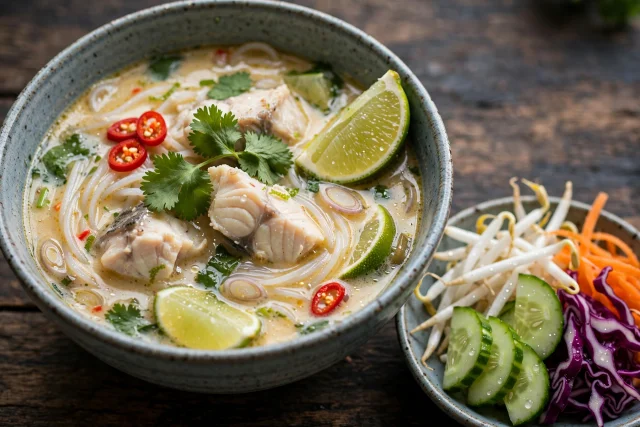
- Thai Coconut and Lime Fish Soup with Rice Noodles: White fish poaches gently in coconut milk with lemongrass, ginger, lime leaves, and a little chili until it just separates into flakes. Rice noodles and a squeeze of lime go in at the end, and the bowl is fragrant enough to fill the kitchen.
Snacks:
- Mango Sticky Rice Bites: Sweet rice cooks in coconut milk, cools, and presses around slivers of mango into small bites. They are sticky, sweet, and a little chewy, and two of them close a meal without anyone needing a full dessert.
Day 5
Breakfast:
- Lemon Ricotta Pancakes with Blueberries: Ricotta folds into the batter and keeps the pancakes tender, while lemon zest cuts through the richness. Blueberries go in at the end so they burst rather than bleed, and a small stack with yogurt on the side is a weekend breakfast that still feels light.
Lunch:
- Italian Tuna and White Bean Salad with Arugula: Tuna in olive oil flakes through cannellini beans, red onion, arugula, and a lemon dressing, with parsley over the top. It is the lunch to make when the fridge is thin, since two cans and a handful of greens carry it.
Dinner:
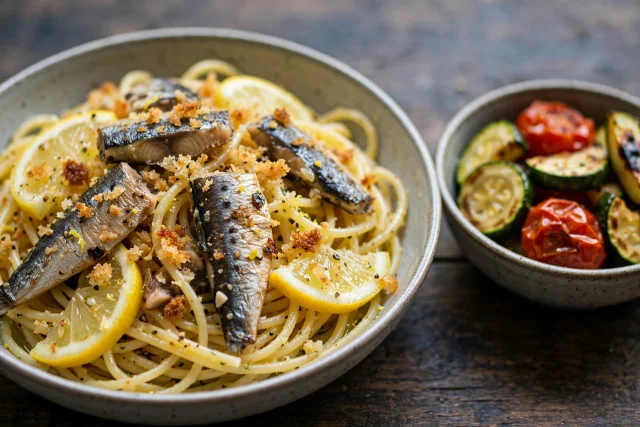
- Sardine and Lemon Pasta with Zucchini: Sardines break down in warm olive oil with garlic, chili, and lemon while zucchini ribbons soften in the same pan. Spaghetti goes in with a splash of pasta water, and the sauce comes together in the time the pasta boils.
Snacks:
- Tomato and Mozzarella Skewers with Basil: Cherry tomatoes, small mozzarella balls, and basil leaves thread onto toothpicks with a little olive oil and salt. They are the easiest thing to put on a table before dinner, and they disappear before the pasta is drained.
Day 6
Breakfast:
- Spiced Yogurt with Figs, Honey, and Pistachios: Yogurt stirs with cinnamon and a pinch of cardamom, then takes figs, honey, and chopped pistachios on top. It tastes like a North African breakfast without any cooking, and the spices make plain yogurt feel intentional.
Lunch:
- Moroccan Carrot and Chickpea Salad with Cumin and Orange: Grated carrot and chickpeas toss with cumin, orange segments, parsley, and a lemon dressing. The orange does the work of a sweetener, and the salad keeps its shape in a lunch box for a full day.
Dinner:
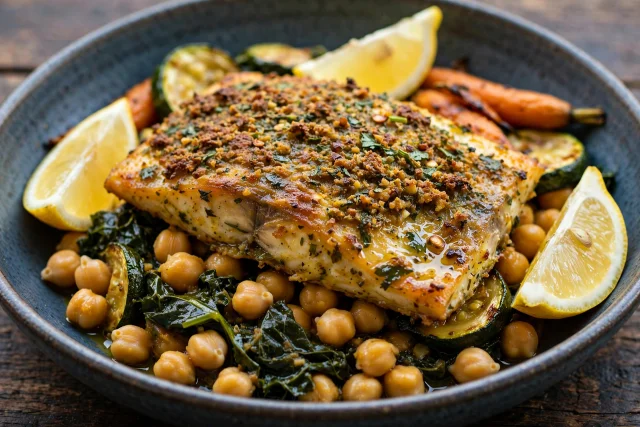
- Chermoula Baked Hake with Chickpeas and Greens: Hake bakes under a chermoula of parsley, cilantro, garlic, cumin, and lemon until the herb crust darkens and the fish stays moist. Chickpeas and wilted greens catch the juices underneath, and the tray goes straight to the table.
Snacks:
- Dates Stuffed with Almond Butter and Sesame: Medjool dates split, fill with almond butter, and press into sesame seeds with a pinch of salt. They are rich enough that one is plenty, and they keep in the fridge for the days when dinner runs late.
Day 7
Breakfast:
- Herb Omelette with Gruyere and Chives: Three eggs cook soft in butter with Gruyere and chives folded through the middle, then slide onto toast. It takes eight minutes and turns the last of the cheese into a breakfast that feels like a hotel one.
Lunch:
- Nicoise Salad with Tuna, Green Beans, and Potatoes: New potatoes, green beans, olives, tomatoes, and egg arrange over greens with flaked tuna and a mustard vinaigrette. It is a composed salad rather than a tossed one, and every component can be cooked ahead and assembled cold.
Dinner:
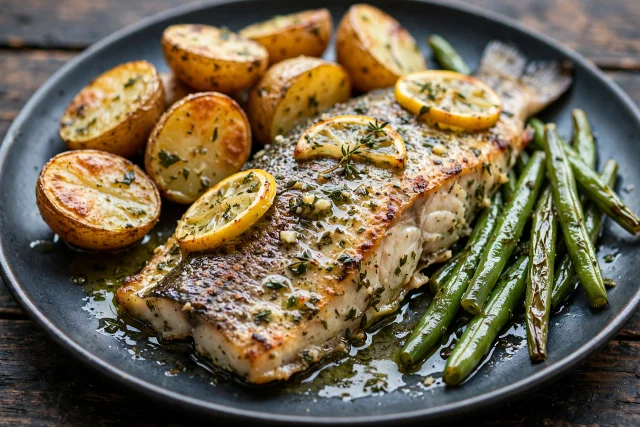
- Sheet Pan Lemon Herb Trout with Potatoes and Green Beans: Trout roasts on a tray with halved potatoes, green beans, lemon slices, and thyme until the skin crisps and the flesh pulls away cleanly. One pan, twenty five minutes, and almost nothing to wash, which is the whole appeal after a long week.
Snacks:
- Dark Chocolate and Hazelnut Bark: Dark chocolate melts, spreads thin, and sets with toasted hazelnuts and flaky salt broken through it. A square after dinner satisfies a sweet craving, and a batch lasts a fortnight in a cool cupboard.
Your Pescatarian Food List and Grocery Guide
One main shop plus a midweek fish stop covers all twenty eight dishes, and the aisles below follow a normal store run. USDA FoodData Central lists protein and omega 3 values for the species you buy, and the tins on the pantry shelf carry the days when the counter is closed.
Fresh Fish and Shellfish
- Fresh Fillets: Cod, salmon, mackerel, hake, trout (buy on the day you cook them and keep them on ice on the way home).
- Shellfish: Raw shrimp, peeled (frozen shrimp thawed overnight works just as well in the saganaki).
- Tinned and Smoked: Sardines in olive oil, tuna in olive oil, smoked trout (the tins carry two lunches and one pasta dinner).
Eggs and Dairy
- Eggs: A dozen eggs (the tamago bowl and the herb omelette).
- Dairy: Greek yogurt, feta, mozzarella balls, cottage cheese, Gruyere, cream cheese, butter (feta and yogurt do most of the work).
Fresh Produce
- Vegetables: Tomatoes, cherry tomatoes, cucumber, red onion, green beans, zucchini, bok choy, green papaya, carrots, beets, potatoes, arugula, radish, garlic, fresh ginger.
- Fruits: Figs, blueberries, mango, oranges, lemons, limes, avocado (figs only if they look good, otherwise double the blueberries).
- Fresh Herbs: Dill, parsley, cilantro, basil, chives, thyme, mint (buy parsley and cilantro together, they carry three dinners).
Grains and Bakery
- Whole Grains: Pearl barley, soba noodles, rice noodles, jasmine rice, orzo, arborio rice if you like a risotto (soba is the fastest dinner grain here).
- Bread and Crackers: Rye bread, rye crispbread, pita, crusty white loaf (crispbread keeps for weeks).
Nuts, Seeds, and Dried Fruit
- Nuts: Walnuts, pistachios, hazelnuts, peanuts (toast a tray and keep it in a jar).
- Seeds and Nut Butter: Sesame seeds, chia seeds, almond butter (sesame goes on the sunomono and the date snack).
- Dried Fruit: Medjool dates (the stuffed dates are the easiest thing in the whole week).
Pantry, Oils, and Spices
- Oils and Sauces: Olive oil, toasted sesame oil, soy sauce, fish sauce, rice vinegar, white miso, mirin, maple syrup, honey, Dijon and whole grain mustard, capers, olives, coconut milk.
- Spices: Cumin, coriander, smoked paprika, turmeric, cinnamon, cardamom, chili flakes, black pepper, sea salt, nori sheets.
- Baking: Dark chocolate, flaky salt, cornstarch for the pancakes if you keep it (the bark uses chocolate and hazelnuts only).
Easy Ingredient Swaps for This Pescatarian Meal Plan
Fish is less forgiving than beans, so these five swaps solve the situations that actually come up during the week. Each one keeps the plate balanced and the cooking time short, whether the counter is empty or the household has one person who will not eat shellfish.
- When the Fish Counter Looks Thin: Frozen fillets, tinned sardines, and smoked trout cover the week without any compromise on protein. Thaw frozen fish in the fridge overnight and cook it the same way, and use tinned fish in the pasta or the salad where the sauce carries the flavor.
- When Someone at the Table Eats Meat: Add a seared chicken thigh or a few slices of steak to their plate and keep the fish and the sides the same for everyone. The grains, salads, and vegetables here already work as a shared table, so nobody ends up cooking two separate dinners.
- When Shellfish Is Off the Table: Firm white fish cut into chunks replaces shrimp in the saganaki and holds its shape in the tomato sauce. The feta still melts into the sauce, and the orzo still catches it, so the dish keeps its character.
- When the Evening Is Short: Tinned tuna, pre-cooked grains, bagged greens, and a lemon make a full plate in seven minutes. The Niçoise salad is built for exactly that, and the sardine pasta needs only as long as the water takes to boil.
- When You Want a Meat Free Night: Eggs, chickpeas, and white beans carry dinner without any fish at all. Swap the fish for a chickpea and spinach stew, or double the beans in the Niçoise and add an extra egg, and the nutrition still lands where it should.
Getting Started With This 7 Day Pescatarian Meal Plan
Shop for the first three days on one trip and leave the fish for the days you cook it, since fresh fillets lose their edge after a couple of days in the fridge. Cook a pot of barley, roast a tray of beets, make the vinaigrette, and wash the herbs, and the first three dinners become assembly rather than cooking.
For the species question, the FDA advice about eating fish is the plainest place to check what is low in mercury and how often to eat it. Pregnant readers and parents of small children should use that page before the first shop, and anyone with a fish allergy should treat the whole plan as off the table.
Keep exploring with our a cheaper week with fish money in mind, a fifty dollar grocery list, and a gentler plan for sensitive guts, plus a low residue week for flare ups and a lower sodium plan for kidney health, alongside another pescatarian week to compare and a Mediterranean plan built on fish.
This article is for information only and is not medical advice. Read our full disclaimer.