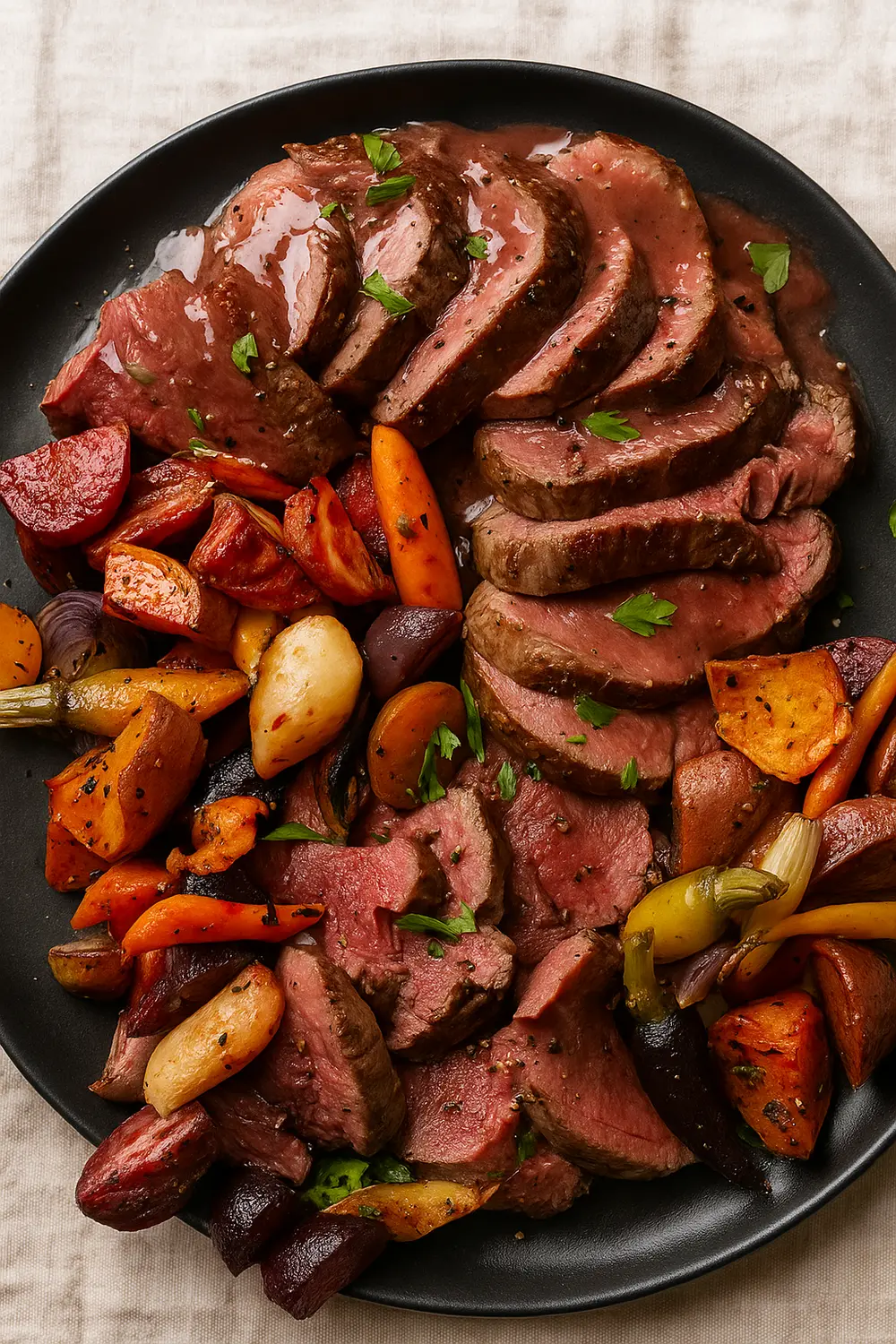
Few dishes capture the essence of French fine dining quite like the Chateaubriand steak.
Chateaubriand is a thicker roast traditionally served for two. It’s a meal meant to be shared, elegant enough for a dinner date, yet substantial enough for a holiday celebration.
This elegant French chateaubriand recipe features the luxurious center-cut tenderloin, expertly seared and roasted to a perfect medium-rare, then drizzled with a decadent chateaubriand sauce made from rich demi-glace and dry red wine.
Paired with seasonal roasted root vegetables (mélange de légumes), this classic French château briand feast is perfect for holidays such as Christmas parties, Thanksgiving, Easter holiday, or summer roasts and serves four people.
This recipe doesn’t require hours in the kitchen or a long list of ingredients; it’s all about technique, not extravagance.
Once you master the basics, from selecting the right cut to achieving a golden crust and preparing a silky Chateaubriand sauce, you’ll create a dish that rivals any fine-dining restaurant.
Though it has a reputation for being a gourmet dish, it’s surprisingly approachable once you understand the method behind it.
Chateaubriand vs Filet Mignon
A common point of confusion is the distinction between Chateaubriand and Filet Mignon. Both come from the same tenderloin muscle, but they differ in size, preparation, and presentation.
The Filet Mignon is cut from the smaller, tapering end of the tenderloin and typically sliced into individual steaks before cooking.
In contrast, the Chateaubriand comes from the thicker center section of the tenderloin. It’s cooked whole as a roast, carefully tied to maintain its cylindrical shape, then sliced thickly on the diagonal for sharing.
Chateaubriand is ideal for elegant dinners and holiday celebrations, while Filet Mignon suits refined single-plate meals.
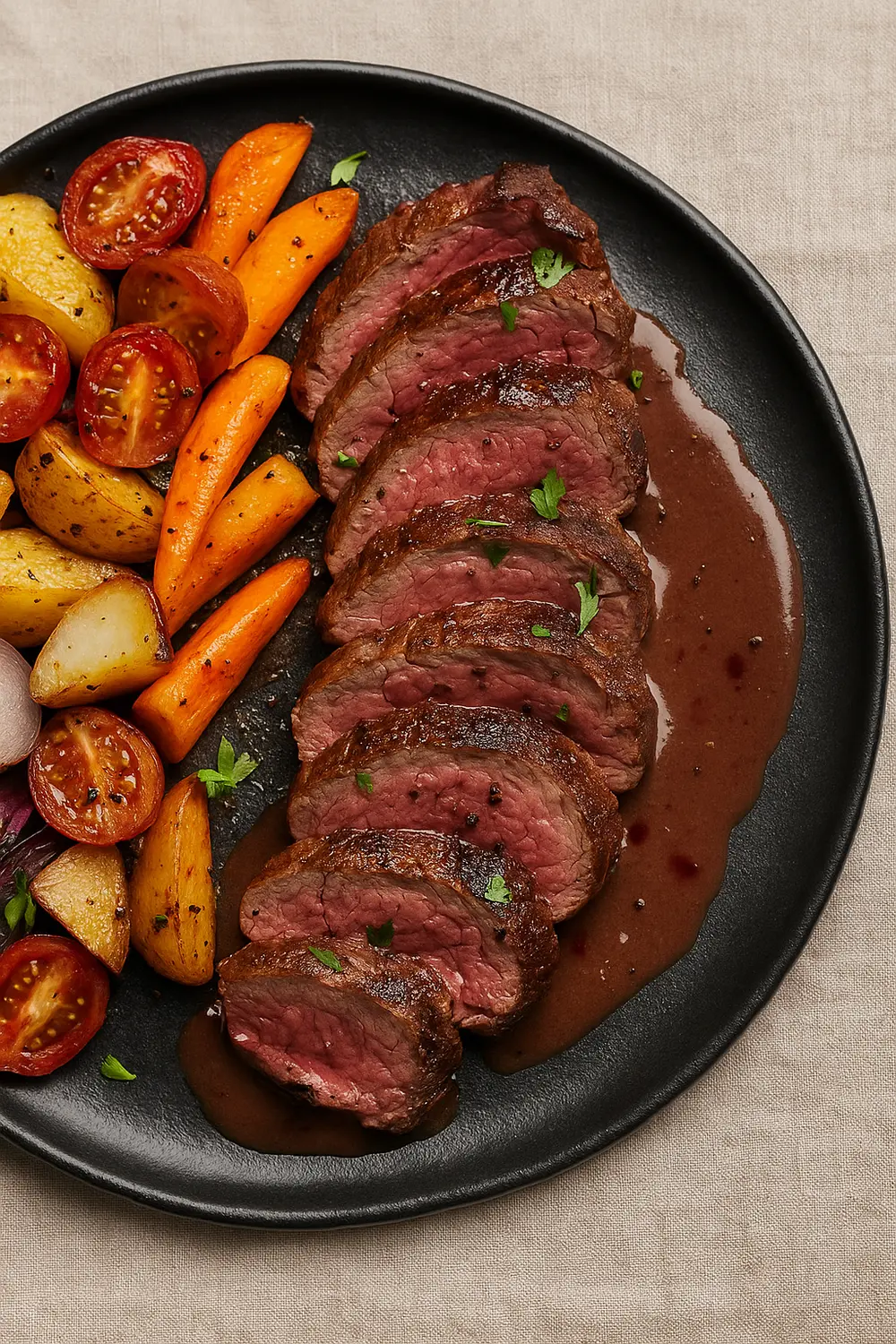
Key Ingredients for this Classic Chateaubriand Steak Recipe
The magic of this recipe lies in the simplicity and quality of its components, which form a perfect trinity of meat, sauce, and accompaniment.
For the Chateaubriand Roast (Le Chateaubriand)
- Center-Cut Beef Tenderloin: This two-pound portion must be the thick, uniform center of the tenderloin. Ensure it is properly trimmed of silverskin and tied with butcher’s twine to guarantee even roasting and prevent the roast from sprawling out.
- Salt and Pepper: For a cut this exquisite, generous amounts of kosher salt and freshly cracked black pepper are necessary to build a deep, dark crust during the searing phase.
- Neutral Oil and Unsalted Butter: The oil provides the high smoke point needed for the initial scorching sear, while butter is added at the end of the sear to enrich the crust and provide a flavorful foundation for the pan sauce.
For the Classic Red Wine Sauce (Sauce Chateaubriand)
- Shallots: These are preferred over onions for their milder, sweeter, and more delicate flavor, which softens beautifully without overpowering the sauce’s structure.
- Dry Red Wine: A full-bodied, dry wine, such as a Cabernet Sauvignon or Bordeaux, provides the necessary acidity and depth to deglaze the pan and build the complex flavor profile of the reduction.
- Demi-Glace: Demi-glace is a highly reduced, concentrated stock (veal or beef is recommended) that provides unmatched richness, body, and a velvety mouthfeel that cannot be achieved with simple stock alone.
- Fresh Thyme and Parsley: Thyme sprigs infuse the reducing sauce with classic, savory French aromatics, while freshly chopped parsley is the vibrant, final garnish added just before serving.
For the Roasted Root Vegetables (Mélange de Légumes)
- Assorted Root Vegetables: The traditional pairing includes hardy vegetables like carrots, potatoes, parsnips, and onions, which provide a sweet, caramelized, and rustic texture contrast to the soft beef.
- Olive Oil and Coarse Seasoning: Simple high-quality olive oil facilitates the roasting and caramelization, while coarse sea salt and pepper bring out the vegetables’ natural sweetness.
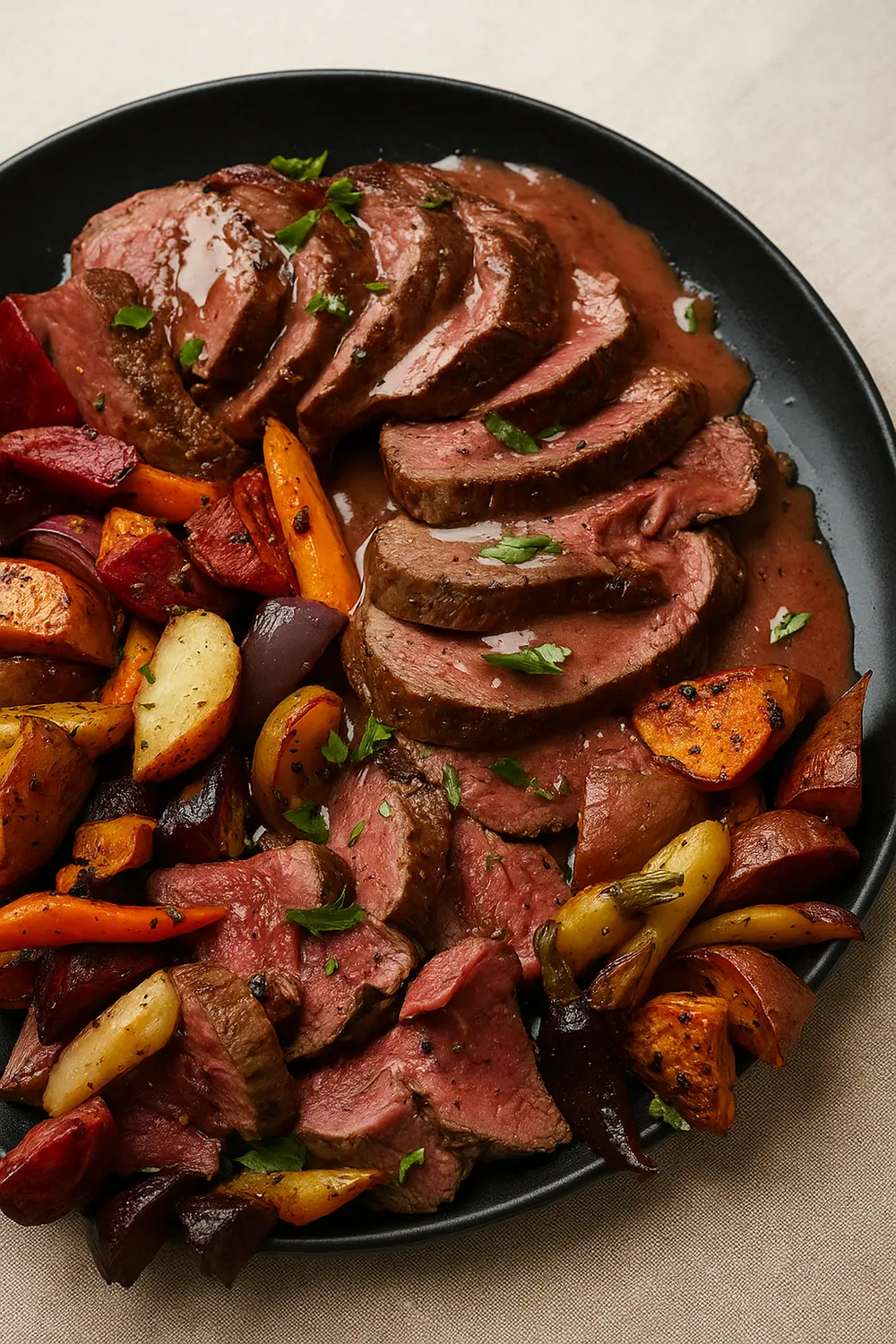
Essential Tools for Making This French Chateaubriand Recipe
Mastering the Chateaubriand beef tenderloin requires simple tools, but their quality and application are essential for success.
- Heavy-Bottomed Skillet (Cast Iron is Recommended): A cast iron pan retains heat exceptionally well, ensuring the quick, scorching-hot sear needed for the golden crust on the beef roast without cooking the interior prematurely.
- Instant-Read Meat Thermometer (Mandatory): Because the margin for error is so small with this expensive cut, an instant-read thermometer is necessary to ensure the roast is removed exactly at 130°F for a perfect medium-rare result.
- Butcher’s Twine: If the roast is not pre-tied, this twine is vital for shaping the meat into a uniform cylinder, preventing the ends from thinning out and overcooking.
- Wire Rack and Rimmed Baking Sheet: Roasting on a wire rack ensures 360-degree heat circulation, guaranteeing an even crust all around the roast, while the rimmed sheet catches any drippings.
- Fine-Mesh Strainer: Used in the final stage of sauce preparation, the strainer removes the shallots and thyme sprigs, yielding a clear, professional, and elegant chateaubriand sauce with a flawless consistency.
- Sharp Chef’s Knife and Carving Fork: Essential for the final, clean, against-the-grain slicing of the rested roast, which is key to maintaining the meat’s tenderness.
Nutritional Benefits of Chateaubriand Steak
The most tender cut in French cooking carries nutrition worthy of its reputation. Fifty grams of protein anchor every elegant serving.
- Fifty Grams of Protein: Tenderloin delivers around fifty grams of complete protein per serving, among the highest of any single dish here. For background, see the tenderloin protein records on PubMed.
- Iron-Rich Indulgence: Premium beef supplies highly absorbable iron that supports energy through demanding days and celebrations alike.
- B Vitamins: Tenderloin brings niacin and B12 for energy metabolism, nutrients most diets underdeliver on busy weeks.
- Worth Savoring Slowly: Such richness satisfies in modest portions, especially with roasted vegetables stretching the plate.
Why You’ll Love This Chateaubriand Steak
Beyond its decadent taste, chateaubriand steak offers significant nutritional advantages, particularly for those following high-protein or low-carbohydrate diets. Red meat's protein case is straightforward. Harvard's Nutrition Source shares steak protein notes.
- Restaurant-Quality Flavor at Home: This French delivers the taste and presentation of a fine-dining meal without requiring professional kitchen equipment.
- Excellent Source of High-Quality Protein: With approximately 50 grams of protein per serving, chateaubriand is an exceptional source for muscle building, satiety, and overall cellular function.
- Rich in Iron: The beef provides 4.2 mg of Iron per serving, supporting healthy blood oxygenation and energy levels and it is considered a good source of iron.
- High in B Vitamins: The cut is an excellent source of essential B vitamins, particularly Vitamin B12 (3.5 mcg) and Niacin, which are vital for nerve function and converting food into energy.
- Mineral Powerhouse: It is rich in Zinc (4.1 mg), a key mineral supporting immune health and metabolism, and Selenium, which acts as an important antioxidant.
- Naturally Lower in Fat: Compared to ribeye or T-bone, the beef tenderloin cut is leaner while still delivering rich, satisfying flavor.
- Low in Carbohydrates: This cut is naturally low in total carbohydrates and sugars, making it highly suitable for keto and low carb diets.
- Elegant Yet Simple to Prepare: Despite its gourmet reputation, the recipe is straightforward once you master the basic sear and roast technique.
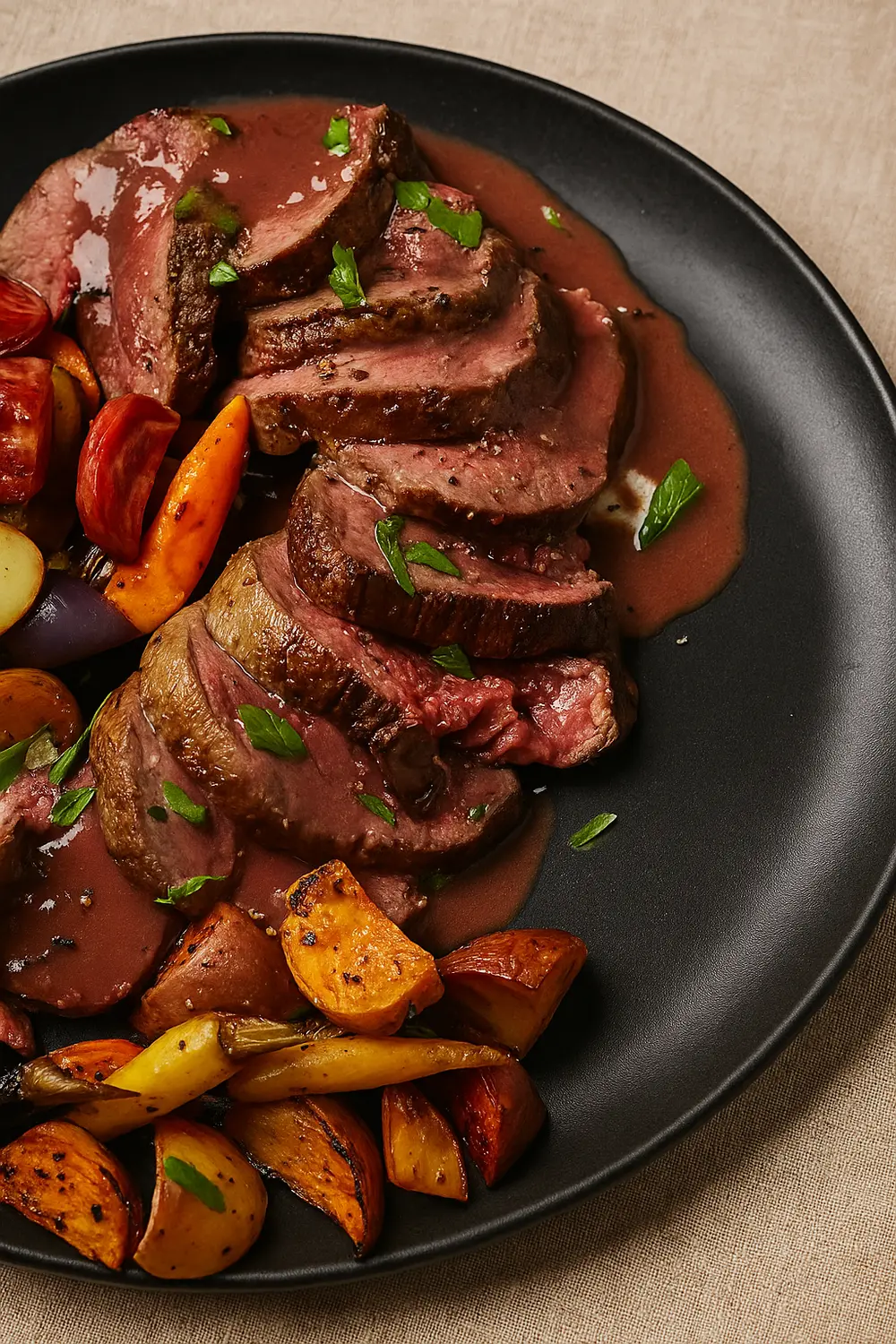
What to Serve with Chateau Briand
The tradition of serving French chateaubriand calls for accompaniments that balance the lean beef and complement the rich red wine reduction.
- Classic Starchy Sides: Historically, chateaubriand was served with chateau potatoes (small, turned potatoes sautéed in butter and herbs) or simple fried potatoes with garlic and olive oil.
- Roasted Root Vegetables: A seasonal mélange of roasted root vegetables (carrots, parsnips, onions, beets, and potatoes) offers a rustic sweetness and pleasant textural difference against the tender meat.
- Green Vegetables: Steamed asparagus is a classic choice, often finished with butter and a touch of salt, or dressed with a light white wine sauce incorporating herbs and garlic.
- Fresh Salads: A simple, elegant salad, perhaps featuring a French vinaigrette (lemon juice and olive oil or balsamic vinegar), lettuce, fresh tomatoes, and grated cheese, offers a necessary fresh, crisp element.
How To Cook Chateaubriand Like a Pro
Preparing the best Chateaubriand steak carries high expectations in the kitchen, and following these tips will help you not only meet them but also exceed them.
1. Meticulous Trimming and Tying
The silverskin, a tough membrane found on the tenderloin, must be completely removed, as it will contract and toughen during cooking.
Furthermore, tie the beef tenderloin tightly and uniformly so that the roast maintains its shape, leading to truly even cooking from end to end.
If the roast is tapered, the ends will be overcooked, wasting a portion of the expensive cut.
2. Maintain the Right Temperature
Success with this luxurious ingredient hinges on three specific temperatures:
- Ensuring the meat starts at room temperature for an even cook.
- Maintaining a high oven temperature (450°F) for efficient roasting
- Monitoring the precise internal temperature.
Do not rely on time estimates; the instant-read thermometer is your absolute best tool.
Removing the roast exactly five degrees below the target ensures that the carryover cooking finishes the meat perfectly medium-rare (135°F).
3. Embrace the Low-Heat Method
While the high-heat method (450°F) is excellent for speed and a crisp crust, professional chefs often prefer the low-temperature sear-roast (sometimes known as the reverse sear method, roasting as low as 250°F).
This technique is superior because it generates a much gentler thermal gradient, resulting in the coveted “edge-to-edge pinkness.”
For the lean cut, minimizing the gray band of overcooked meat directly beneath the crust is essential for achieving the highest level of tenderness.
4. Pair with Chateaubriand Sauce
The historical evolution of this dish, which required rich sauces and garnishes, occurred precisely because the beef itself is low in fat. Lean cuts differ from marbled ones. Label-reading basics from Healthline walk through the differences.
Ensure your sauce is prepared flawlessly using high-quality demi-glace and finished with cold butter to provide the fat content and luscious mouthfeel the beef lacks.
This pairing elevates the meal from a simple steak to a balanced, decadent French feast.
Final Remarks
The classic French Chateaubriand steak represents a pinnacle of European gastronomy, demanding respect for both its history and its delicate nature.
Success is achieved by recognizing the fundamental character of the center-cut tenderloin: it is a lean, supremely tender roast that must be protected from overcooking through meticulous temperature control.
Feel free to customize the accompaniments, swap the roasted root vegetables for creamy mashed potatoes, sautéed asparagus, or a fresh watercress salad to suit your taste.
You’ll find the full recipe and step-by-step instructions just below.
Keep exploring with our fiesta grilled chicken platter and crushed-ice fiesta cups, plus a rosemary crown lamb roast, garlic yogurt chicken skewers, and a minty blackberry cooler, with an iron-building meal week and a strict carnivore month over on Santiago Maricel.
This article is for information only and is not medical advice. Read our full disclaimer.