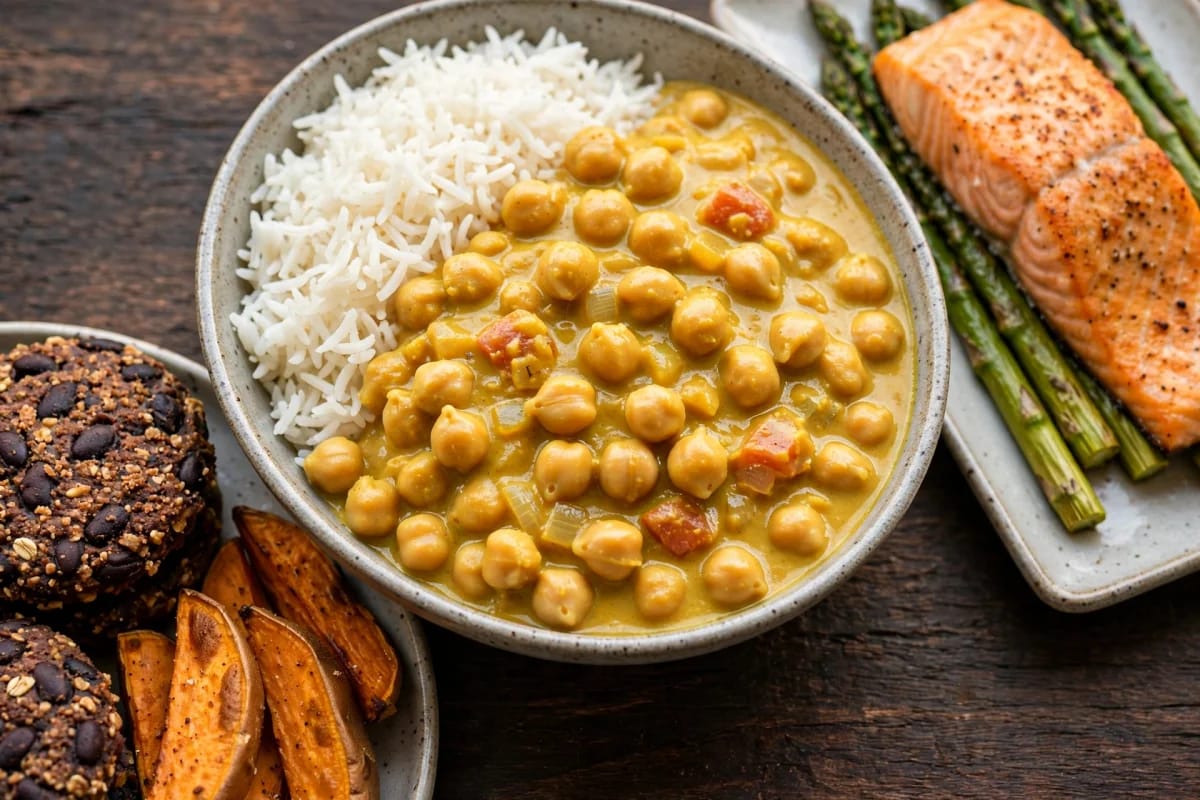
You like the idea of eating more plants, and you also like a Sunday roast, so every plant based plan you have tried ended the same way. Three days in, someone at the table asks where the meat went, and the whole thing quietly falls apart.
This 7 day flexitarian meal plan for beginners is built for that household, where meat stays on the menu two or three times a week and vegetables, beans, and grains carry the rest without anyone feeling shortchanged.
The week opens with a yogurt bowl and a chickpea farro salad, then moves through salmon, turkey chili, coconut chickpea curry, palak paneer, falafel, lemon chicken, and black bean burgers. Twenty eight dishes, four slots a day, and enough familiar food that a beginner can cook it without a special shopping trip.
Flexitarian is not a strict label, and nobody is counting your meat grams at the door. It is a direction, more plants on the plate and less meat by default, and a single week is enough to feel how that shift works in your own kitchen.
The real work is building flavor without relying on meat in the center of the plate, since beans, mushrooms, eggplant, and toasted spices carry a dish when they are cooked properly. The recipes here lean on acid, fat, and heat for that reason, not on long ingredient lists.
This week suits households where one person wants to eat more plants and another still wants chicken, new cooks who want a gentle start, and anyone who tried going vegetarian and missed the food they grew up with.
Why This Flexitarian Meal Plan Is Worth Trying
A flexitarian week asks less of you than a full diet change and still shifts the balance of most meals toward plants. The pattern is linked to lower risks of heart disease and type 2 diabetes in large studies, and the healthy eating plate shows how much room vegetables and plant protein can take without removing meat entirely.
- You Keep the Meals You Love: Roast chicken, chili, and salmon stay in the rotation, just fewer times a week. That keeps the change livable, and a plan you can keep beats a perfect one you abandon by Thursday.
- Protein Stays Covered: Eggs, dairy, beans, lentils, tofu, and fish appear across the week, so nobody is running on salad alone. Each day carries protein at all four slots, which is what keeps energy steady.
- The Cooking Stays Familiar: Most dinners are one pan, one pot, or one tray, and the techniques are the ones you already use. Nothing here needs a pressure cooker, a dehydrator, or an ingredient hunt across three shops.
- Grocery Costs Stay Reasonable: Beans, lentils, oats, cabbage, and frozen vegetables cost less than meat, and the week uses meat as a flavor rather than the bulk of the plate. The savings show up without any coupon work.
- It Works for the Whole Table: Each dinner can be served with meat on the side for anyone who wants it, so one pot feeds the household without a second menu. That flexibility is the reason this pattern survives real life.
Your 7 Day Flexitarian Meal Plan for Beginners
The week moves through Mediterranean, Mexican, East Asian, Indian, Middle Eastern, Italian, and American cooking, and the meat lands on three dinners rather than seven. Early days show how filling beans and whole grains can be, midweek leans on curry and paneer, and the weekend closes with a burger that happens to be meat free.
Day 1
Breakfast:
- Greek Yogurt with Berries and Walnuts: Thick yogurt, berries, and walnuts with a drizzle of honey make a breakfast that takes two minutes and holds until lunch. It is the gentlest possible start for someone who does not want to think too hard on day one.
Lunch:
- Chickpea and Farro Salad with Feta: Chewy farro, chickpeas, cucumber, tomato, and feta toss with lemon and olive oil, and the bowl keeps in the fridge for three days. It is the lunch that convinces beginners that a plant plate can be satisfying.
Dinner:
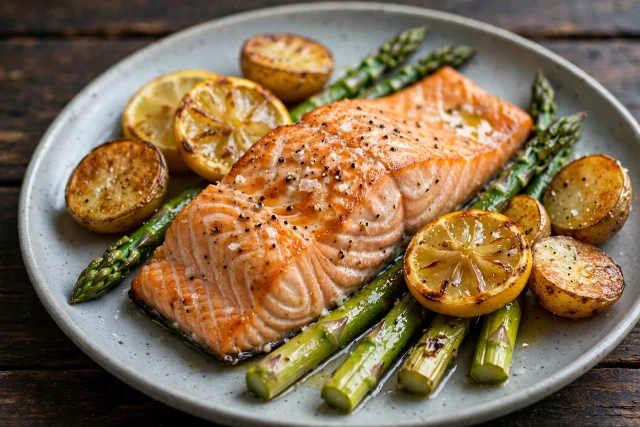
- Sheet Pan Salmon with Lemon and Asparagus: Salmon and asparagus roast on one tray with lemon and baby potatoes, and the whole dinner is done in twenty five minutes. It is a familiar meal with meat as the star, which makes the first night easy.
Snacks:
- Apple with Peanut Butter: A crisp apple and a spoon of peanut butter cover the sweet and salty craving at once. Keep the jar and a knife where you can see them, and the snack happens without a decision.
Day 2
Breakfast:
- Egg and Black Bean Tostadas: Crisp corn tortillas hold mashed black beans, a fried egg, and salsa, and the plate feels like a proper sit down breakfast. It takes ten minutes, and the beans add fiber that a plain egg on toast never delivers.
Lunch:
- Lentil and Corn Taco Salad: Warm lentils, charred corn, lettuce, tomato, and avocado with a lime cumin dressing make a lunch bowl with real substance. Cook the lentils the night before and the whole thing comes together in ten minutes.
Dinner:
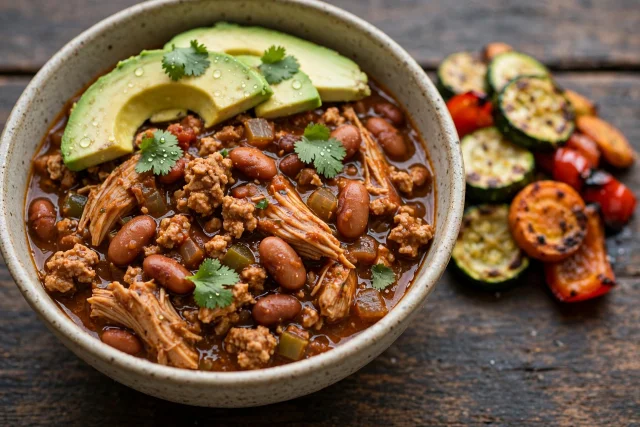
- Turkey and Pinto Bean Skillet Chili: Ground turkey browns with onion, then tomatoes, pinto beans, and chili powder simmer into a pot that feeds four. Serve it with rice or tortillas, and the leftovers taste better the next day.
Snacks:
- Carrot Sticks with Guacamole: Mashed avocado with lime, salt, and cilantro makes a dip that carries carrot sticks and cucumber. It is a snack that feels rich without any cooking, and it takes five minutes.
Day 3
Breakfast:
- Soy Milk and Banana Overnight Oats: Rolled oats soak overnight with soy milk, chia, and banana, and the jar is ready before the coffee finishes. Soy milk adds protein, which matters on a day with no meat until dinner.
Lunch:
- Sesame Soba Salad with Edamame: Soba noodles toss with edamame, shredded cabbage, carrot, and a sesame ginger dressing, and the salad eats well cold. It is a lunch that travels to work without needing a microwave.
Dinner:
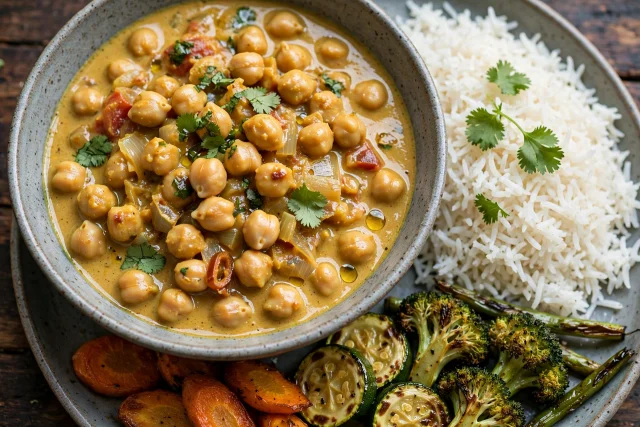
- Coconut Chickpea Curry with Basmati Rice: Onion, garlic, ginger, and garam masala simmer with chickpeas and coconut milk until the sauce thickens, and basmati rice soaks it up. The coconut chickpea curry recipe converts doubtful beginners, since it tastes rich without any meat.
Snacks:
- Toasted Pepitas with Chipotle: Pumpkin seeds toast in a dry pan with chipotle powder and salt until they pop. A small jar keeps for a week and gives you something crunchy to reach for after dinner.
Day 4
Breakfast:
- Savory Masala Oats with Peas: Rolled oats cook with cumin, mustard seeds, peas, and carrot into a soft savory porridge. It sounds unusual if you only know sweet oats, and it keeps you full far longer than a sugary granola.
Lunch:
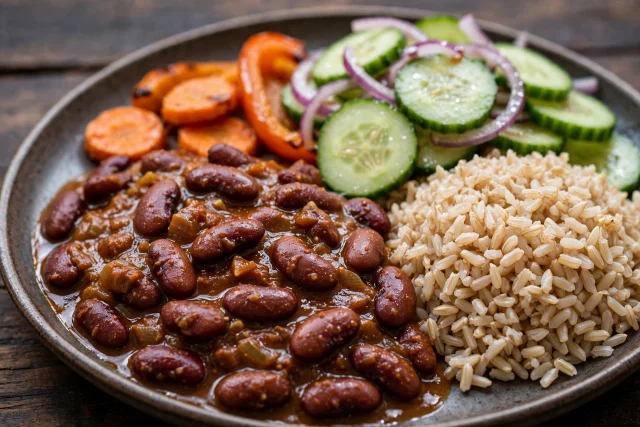
- Rajma with Brown Rice and Cucumber: Kidney beans simmer in a tomato onion masala and get spooned over brown rice with cucumber on the side. It is a complete lunch from a pot, and the beans carry protein and fiber in the same bite.
Dinner:
- Palak Paneer with Whole Wheat Roti: Spinach blends with ginger, garlic, and a little cream before paneer cubes go in, and roti mops up the green sauce. It is a restaurant dish that turns out to be simple at home, and it converts people who thought they disliked spinach.
Snacks:
- Spiced Roasted Pepitas: Another jar of seeds, this time with cumin and chili, because the afternoon craving arrives whether or not you planned for it. Keep them next to the fruit bowl rather than in a cupboard.
Day 5
Breakfast:
- Labneh Bowl with Za'atar and Tomato: Thick labneh or Greek yogurt with za'atar, olive oil, tomato, and cucumber makes a savory breakfast that feels like a mezze spread. A piece of flatbread on the side turns it into a proper meal.
Lunch:
- Falafel Wrap with Jerusalem Salad: Warm falafel, chopped salad, tahini, and pickled onion wrap into a flatbread, and the whole lunch costs less than a sandwich shop. The falafel wrap recipe works with frozen falafel if making them from scratch feels like too much.
Dinner:
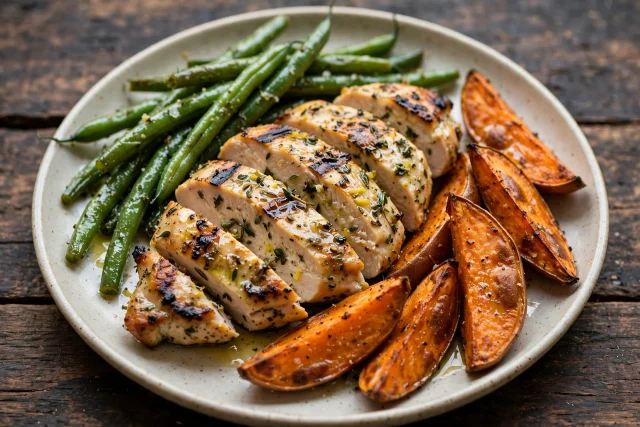
- Grilled Lemon Herb Chicken with Sweet Potato Wedges: Chicken marinates in lemon, garlic, and herbs, then grills while sweet potato wedges roast in the oven. The lemon herb chicken recipe earns its place as the second meat dinner of the week, and it holds that spot with flavor rather than habit.
Snacks:
- Dates with Almond Butter: Two dates with a spoon of almond butter taste like a dessert and take no effort. Keep the portion to two, since dates are sweet enough that the jar can disappear.
Day 6
Breakfast:
- Breakfast Egg Muffins with Spinach and Pepper: Eggs whisk with spinach, pepper, and a little cheese, then bake in a muffin tin for the week. The breakfast egg muffins recipe reheats two at a time with a piece of fruit, so breakfast needs no cooking at seven.
Lunch:
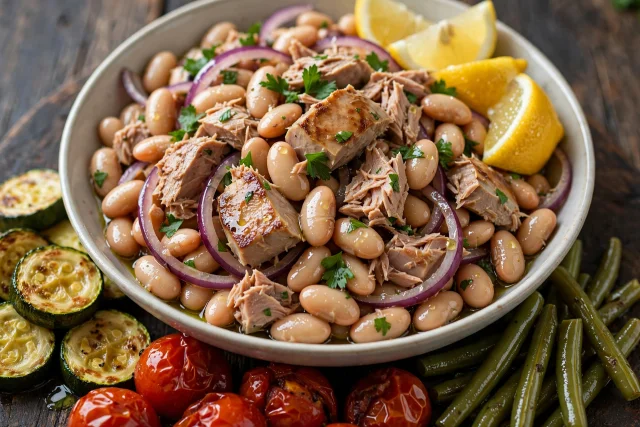
- Tuna and Cannellini Bean Salad: Tinned tuna, cannellini beans, red onion, parsley, and lemon make a lunch from the cupboard in ten minutes. It is the meal to remember on the day the fridge looks empty and takeaway is tempting.
Dinner:
- Mushroom Bolognese with Whole Wheat Pasta: Finely chopped mushrooms and lentils simmer with tomato, wine, and herbs until the sauce turns deep and meaty. Nobody at the table asks where the beef went, and the pot feeds four with leftovers.
Snacks:
- Ricotta with Blueberries: A small bowl of ricotta with blueberries and a crack of black pepper makes a snack that feels like dessert. It carries protein, so it holds better than a biscuit at four in the afternoon.
Day 7
Breakfast:
- Peanut Butter Banana Toast: Whole grain toast with peanut butter and sliced banana is a two minute breakfast that keeps a beginner on track. A pinch of cinnamon on top makes it feel intentional rather than improvised.
Lunch:
- Smoked Turkey Lettuce Boats with Avocado: Smoked turkey, avocado, and tomato stack into crisp lettuce leaves with a mustard dressing. It is a light lunch for a day that ends with burgers, and it takes five minutes.
Dinner:
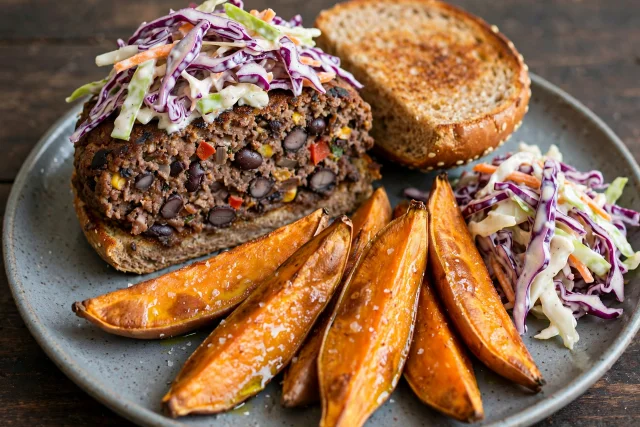
- Black Bean Burgers with Sweet Potato Wedges: Mashed black beans, oats, onion, and cumin form patties that hold together in a hot pan, and sweet potato wedges roast alongside. Pile on slaw and avocado, and the meat free dinner satisfies the whole table.
Snacks:
- Popcorn with Nutritional Yeast: Popcorn tossed with olive oil and nutritional yeast makes a savory snack with real crunch. It is cheap, fast, and a much better answer than a bag of crisps on a quiet evening.
Your Flexitarian Grocery List for One Week
One shop covers all twenty eight dishes, and the meat section is deliberately short. The list groups by aisle, and the plant proteins, grains, and tins do most of the heavy lifting across the seven days. Buy the tinned and frozen items in one go, since those are what keep the week running when fresh food runs out.
Produce
- Fresh Vegetables: Cucumber, tomato, romaine, cabbage, carrot, bell pepper, mushrooms, spinach, asparagus, baby potatoes, sweet potatoes (for the salads, curries, and trays).
- Fresh Fruit: Bananas, apples, berries, blueberries, lemons, limes, avocado (for breakfasts, snacks, and dressings).
- Aromatics and Herbs: Garlic, ginger, onion, scallions, parsley, cilantro, mint, dill (batched across the week).
Proteins
- Meat and Fish: Salmon fillets, ground turkey, chicken thighs, smoked turkey (for the sheet pan, chili, grill, and wraps).
- Eggs and Dairy: Eggs, Greek yogurt, labneh, feta, ricotta, parmesan, milk (for breakfasts, snacks, and sauces).
- Legumes and Soy: Chickpeas, black beans, kidney beans, cannellini beans, green lentils, edamame, tofu, falafel (for the bowls, curries, and burgers).
- Tins and Jars: Tinned tuna, tahini, peanut butter, almond butter (for the salads, dressings, and snacks).
Grains and Bakery
- Whole Grains: Rolled oats, farro, brown rice, basmati rice, soba noodles, whole wheat pasta, corn tortillas (for the bowls, curries, and tostadas).
- Bread and Wraps: Whole grain bread, flatbread, whole wheat burger buns (for the toast, wraps, and burgers).
Pantry and Flavor
- Oils and Vinegars: Olive oil, sesame oil, rice vinegar, red wine vinegar (for dressings, marinades, and finishing).
- Spices: Cumin, coriander, garam masala, chili powder, smoked paprika, chipotle powder, za'atar, cinnamon, bay leaves (batched across the week).
- Jars and Tins: Coconut milk, crushed tomatoes, tomato paste, vegetable broth, soy sauce, honey, nutritional yeast, olives (for the curries, sauces, and snacks).
Freezer
- Freezer Backup: Frozen edamame, frozen spinach, frozen berries, frozen falafel (for the evenings when the week meets reality).
How to Customize Your Flexitarian Meal Plan
The swaps below keep the week workable when the household disagrees, the budget tightens, or the same bean pot starts to feel repetitive. Each one keeps the plate balanced, with a plant protein, a vegetable, and a grain still doing their jobs.
- When the Family Wants Meat: Add grilled chicken or sliced steak to the side of the curry, bowl, or pasta rather than cooking a second dinner. The plant dish stays the center, and the meat becomes an addition for whoever wants it.
- When You Need More Protein: Add a boiled egg, a spoon of Greek yogurt, tofu, or an extra half cup of beans to any meal. Protein at breakfast and lunch matters most, since those are the slots where beginners usually fall short.
- When Beans Feel Like a Chore: Canned lentils, jarred chickpeas, and frozen edamame cut the cooking to almost nothing. Rinse them well, season them properly, and nobody can tell the difference in a curry or a salad.
- When the Week Gets Busy: Cook one pot of chili, one tray of vegetables, and one pot of rice on the first day, then mix them through the week. Prep on one afternoon saves the week more often than any recipe does.
- When Eating Out: Choose a bean burger, a falafel plate, or a vegetable curry, and ask for extra vegetables instead of extra meat. Most menus now carry at least one plant forward dish that a beginner can order without a lecture.
Getting Started With This 7 Day Flexitarian Meal Plan for Beginners
Start with two meat free dinners, not seven, and let the rest of the week follow the flexitarian meal plan without pressure. The chili, the curry, and the black bean burgers are the easiest first wins, because they are hearty and nobody notices what is missing.
Stock the pantry before the first shop, since beans, lentils, rice, and tinned tomatoes make the week possible on a tired evening. A healthy diet with plenty of vegetables, fruit, and whole grains is the direction this flexitarian meal plan travels, and a beginner only needs the first few steps to feel the difference.
Keep exploring with our vegetarian week built for steady iron, a three week plant based reset, and a gentler first plant based week, plus a cheap week that keeps vegetables on every plate and two weeks of Mediterranean cooking for heart health, alongside ten egg free vegetarian breakfasts to start the day and forty Mediterranean breakfasts to start the day.
This article is for information only and is not medical advice. Read our full disclaimer.