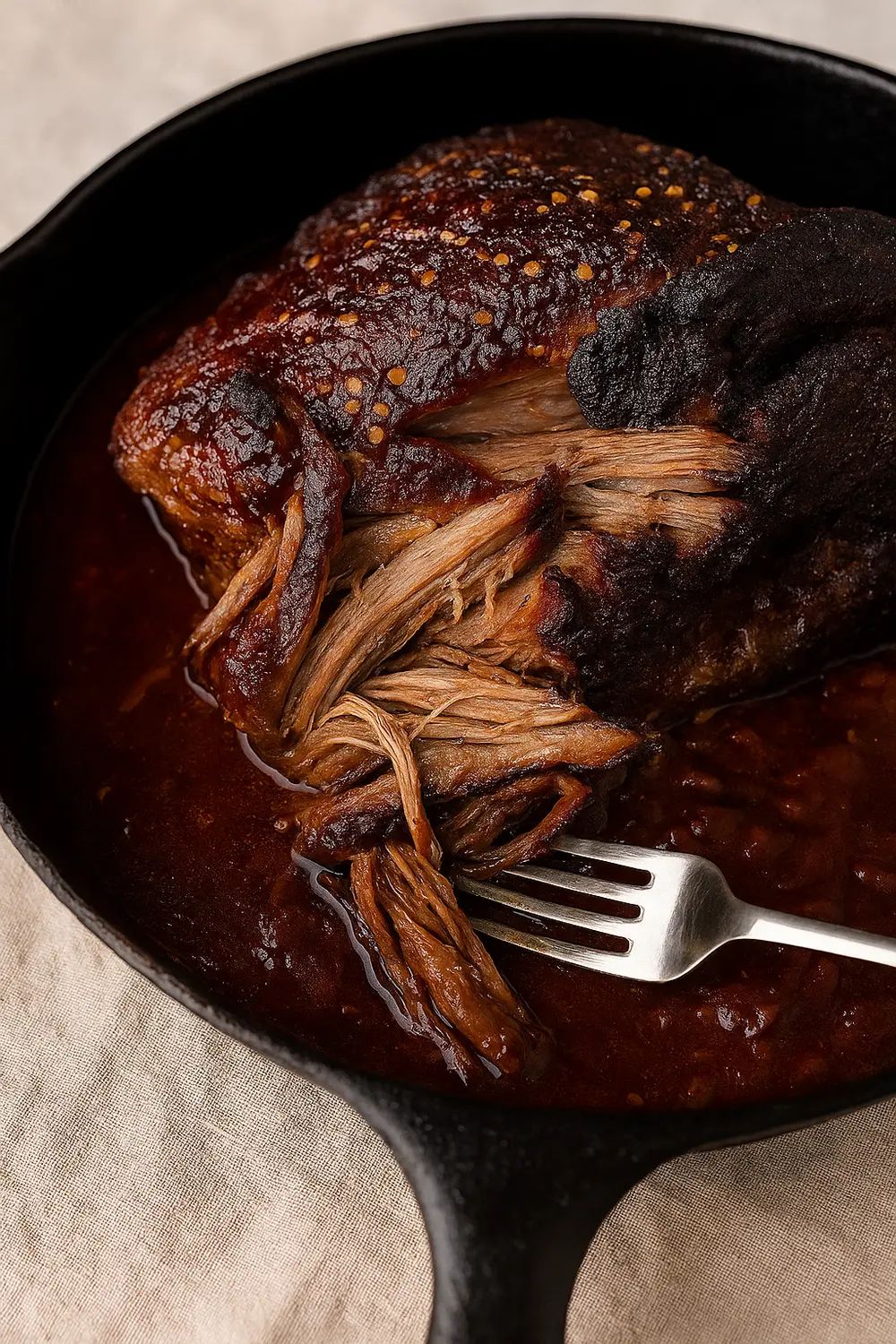
Beef brisket is a cut of meat that comes from the lower chest or breast of the cow, just above the front legs.
It’s a large, relatively tough cut of meat, rich in connective tissue, because it comes from a well-exercised part of the cow that gets a lot of movement.
Brisket has a rich, beefy flavor, but because of its toughness, it requires slow, low-temperature cooking methods like smoking, braising, or slow roasting to break down all that collagen and make it tender. Low and slow tames tough cuts. Harvard's Nutrition Source shares low-and-slow notes.
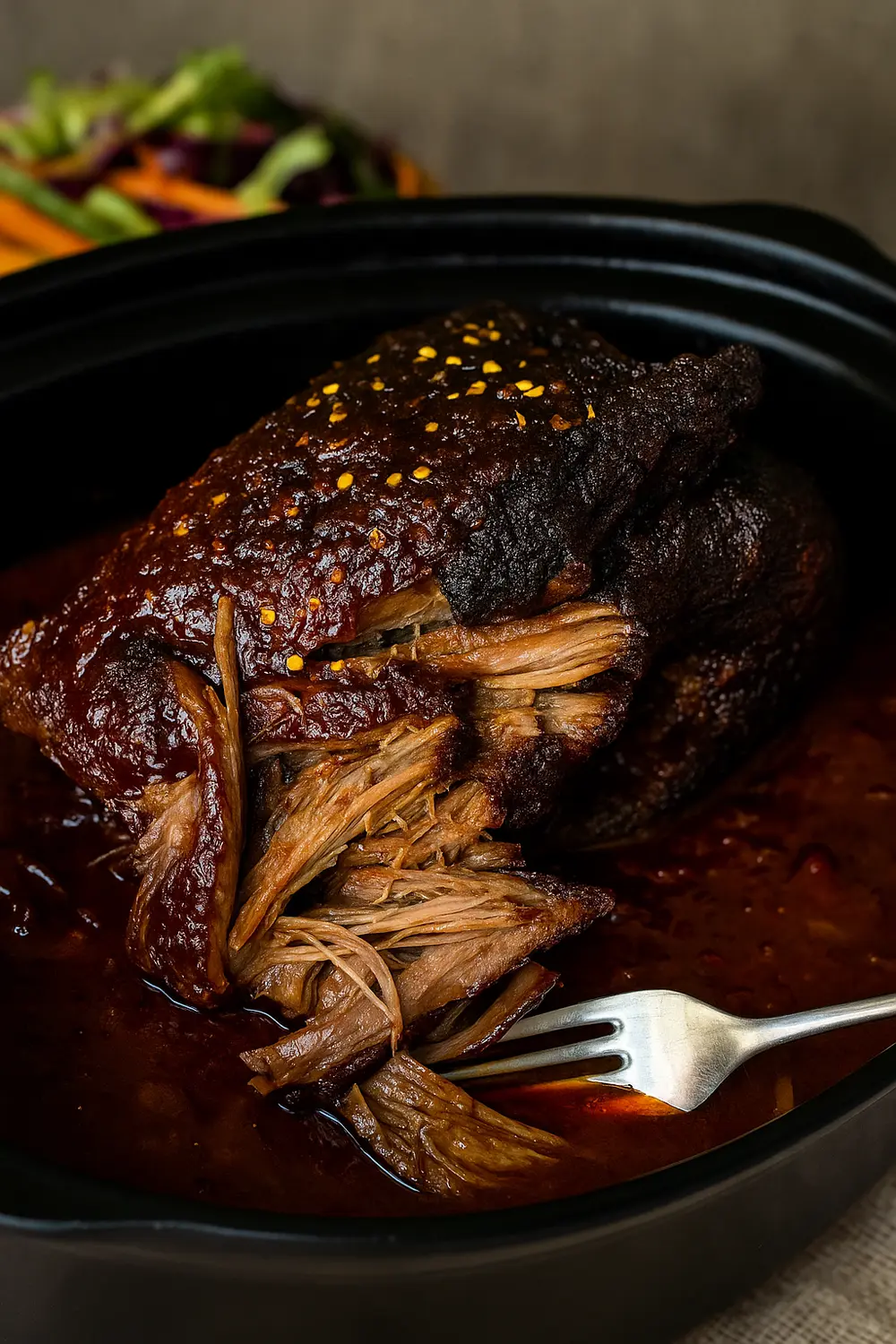
This smoked beef brisket recipe features tender, melt-in-your-mouth brisket, smoked low and slow, then braised in a rich BBQ sauce in the slow cooker until perfectly juicy and smoky.
In this recipe, the brisket is first rubbed with a bold, smoky dry rub and slow-smoked over hickory wood until a flavorful bark forms and the aroma becomes irresistible.
The smoked brisket is then transferred to a slow cooker to finish cooking gently in a rich, tangy BBQ sauce, resulting in fork-tender meat infused with deep, smoky flavor.
This slow cooker beef brisket recipe is surprisingly easy to make, serves ten, and is perfect for family dinners, BBQ nights, potlucks, or holiday gatherings like Thanksgiving and Christmas. Ten-serve smokes feed gatherings. Gathering-portion guidance from Healthline walks through it.
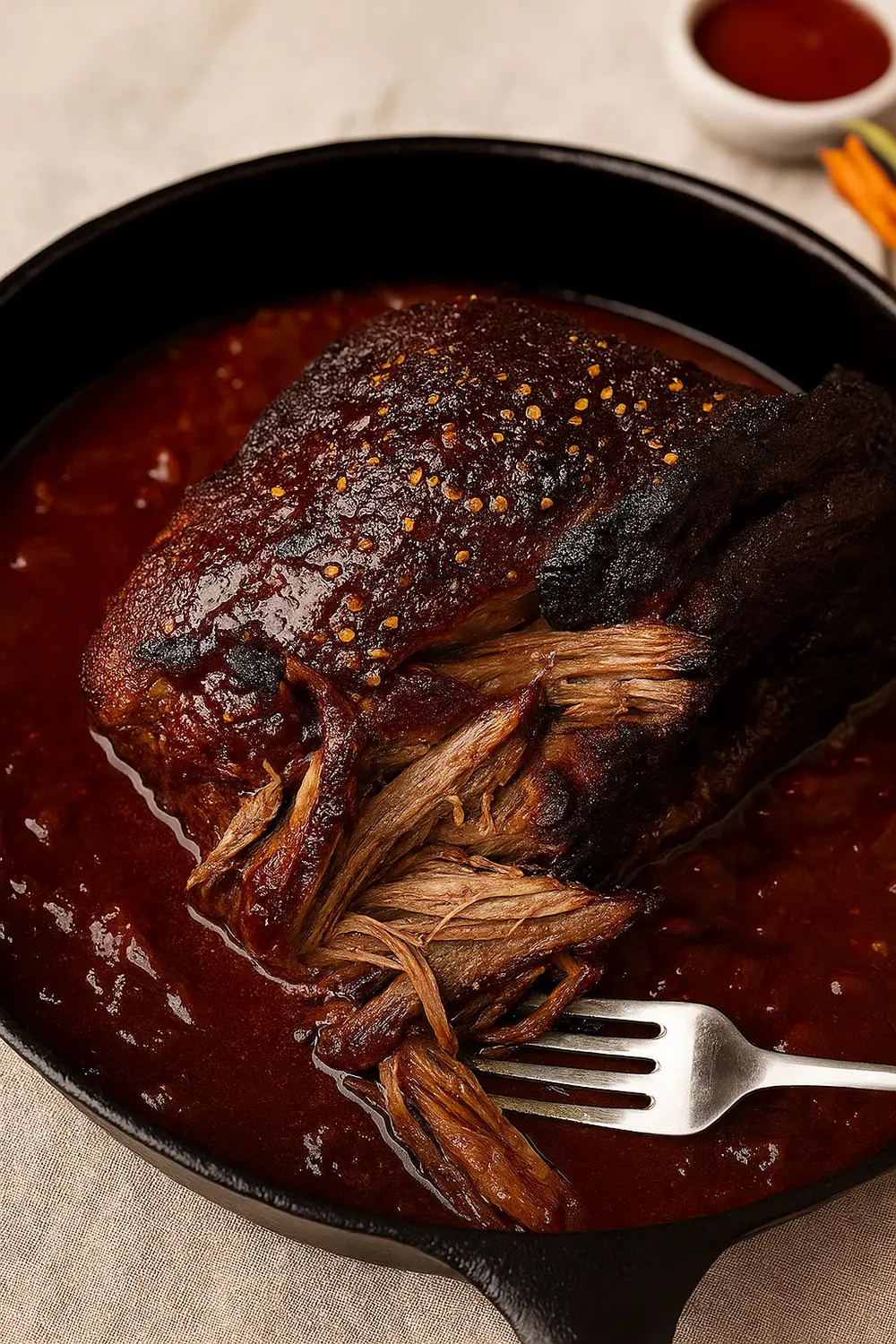
Key Ingredients of This Smoked Beef Brisket Recipe
Every ingredient in this smoked beef brisket recipe plays a role in transforming a tough cut of meat into a tender, flavorful masterpiece.
1. Beef Brisket (Flat Cut)
The tough, collagen-rich cut from the lower chest is prized for its deep beef flavor. Look for even marbling throughout rather than one thick fat seam. Even marbling bastes the meat from within as it renders.
Its high connective tissue content requires the low-and-slow method to melt into gelatin, guaranteeing melt-in-your-mouth tenderness. Rush it with high heat and the same cut eats dry and chewy.
Choose a flat with even thickness and a full fat cap intact. Ask the butcher to leave at least a quarter inch of fat for self-basting. Score the fat cap lightly so rub reaches the meat below.
2. Hardwood
Hardwoods such as hickory, oak, or applewood provide the essential, authentic smoke flavor. Avoid softwoods like pine, which taste of resin and ruin meat. Fruit woods suit shorter cooks while oak endures overnight.
This deep, complex wood aroma cannot be replicated by liquid flavorings alone. Fruit woods burn milder and sweeter, while hickory hits hardest, so blend to taste.
Soak chips briefly so they smolder instead of flaring. Chunks beat chips for long cooks since they release smoke steadily for hours. Add fresh chips only when the smoke thins to nearly nothing.
3. Smoked Paprika
Smoked paprika is the primary source of rich color and deep, earthy smoke background flavor in the rub. Whisk it through the salt and pepper so color spreads evenly.
This is crucial for mimicking the visual appeal and depth of smoked brisket. Apply the rub the night before so color and flavor penetrate rather than sitting on top.
Spanish smoked paprika tastes cleaner than generic blends. A fresh tin matters more than the exact variety. Date the tin when opened since ground spices fade within months.
4. Kosher Salt & Black Pepper
These two are the indispensable backbone of classic barbecue seasoning. Coarse grinds build bark while fine grinds dissolve away. Mix the two with brown sugar for the classic Texas style base.
The salt aids in tenderizing the meat overnight through osmosis, enhancing flavor penetration. A coarse grind on both builds the crust that slow cooking alone never forms.
Season heavier than feels right for any other roast. Brisket's thickness swallows mild seasoning whole. Rest the seasoned meat uncovered in the fridge overnight.
5. Brown Sugar
A small amount is necessary to promote the rapid caramelization needed to form the crisp bark during the final broil step. White sugar works but brings no extra flavor along.
Dark brown sugar brings faint molasses notes that white sugar cannot. Keep the amount modest so sweetness never overtakes smoke. A light hand keeps smoke and beef in the lead.
Watch closely under the broiler since sugared bark crosses from crisp to burnt in under a minute. Keep the oven light on and the door shut while it works.
6. BBQ Sauce
A high-quality, sugar-free BBQ sauce forms the sweet, tangy, and rich braising medium while controlling carbs. Thin, vinegar heavy styles suit this braise better than thick sweet ones.
This coats the meat, and its sugars caramelize during the broil phase. Thin it slightly with broth if it clings too thickly to spread. Stir it smooth before pouring so no gloopy pockets remain.
Taste the sauce straight first. A harsh bottled sauce never mellows completely, so start with one you enjoy plain. Warm a spoonful to check sweetness before committing the batch.
7. Beef Broth
Added minimally to introduce moisture without submerging the meat. Think steaming, not swimming, when judging the pour. The meat should sit above the liquid line, never drown in it.
This ensures a moist braise rather than a boil, preserving the texture. The liquid should climb no more than a third of the meat's height. Lid tightly so escaping steam never dries the surface.
Save every drop of the braising liquid afterward. Strained and reduced, it becomes the serving sauce that keeps leftovers juicy. Freeze flat in portions for the fastest weeknight thaw.
8. Apple Cider Vinegar
A critical acidic element that cuts through the intense richness of the beef fat and the sweetness of the BBQ sauce, balancing the overall flavor profile.
Add it with the braising liquid rather than at the end so its harsh edge cooks off. Raw vinegar splashed late tastes sharp instead of bright. A little in the mop keeps each layer bright through long cooks.
Apple cider vinegar earns its place over white for faint fruitiness. Distilled white works when that is all on hand. Store it cool and dark so its fruitiness never fades.
9. Worcestershire Sauce
Adds deep, savory umami and enhances the meaty richness of the brisket. A dash wakes up braising liquid without announcing itself. Anchovy paste plays the same role when the bottle runs dry.
It complements the BBQ sauce and aromatics, rounding out the flavor of the braising liquid. Start small, since its tang concentrates as the braising liquid reduces.
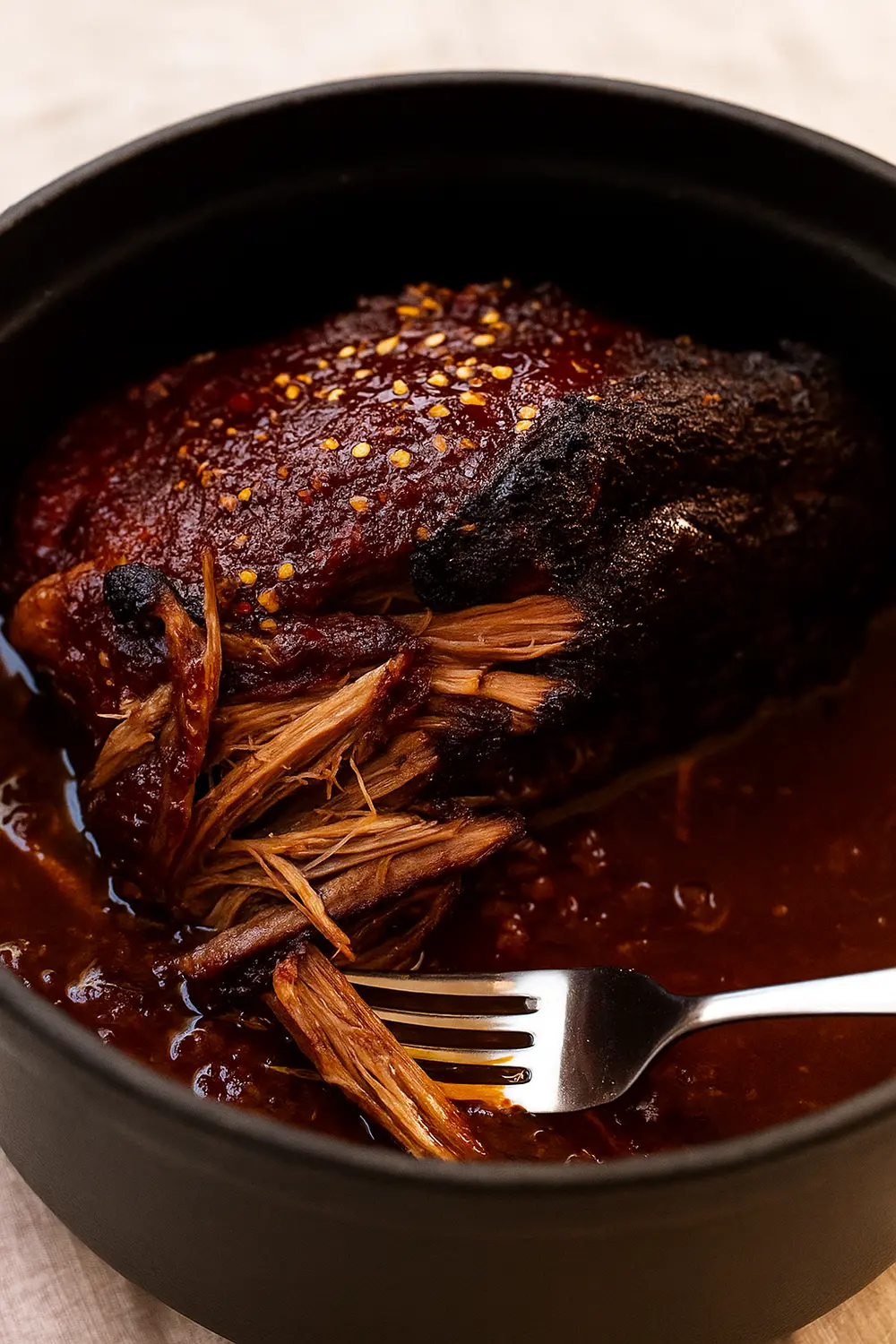
Essential Tools for This Slow Cooker Smoked Brisket Recipe
Since this method combines the best of both smoking and slow cooking techniques, two main sets of equipment are required for achieving peak flavor and tenderness.
- Smoker or Grill: A dedicated smoker (pellet, electric) or a charcoal/gas grill set for low, indirect heat is needed for the 2–3 hour smoking phase to infuse authentic wood flavor.
- Hardwood Chips or Chunks: Hickory, oak, applewood, or pecan wood provides the real smoke that gives the brisket its signature aroma and flavor.
- Digital Thermometer (Dual-Probe): Helps monitor both the smoker’s ambient temperature and the brisket’s internal temperature to maintain a steady 225°F.
- 10 Quart Slow Cooker: Essential for the 8 to 10 hour slow braise that breaks down collagen and ensures melt-in-your-mouth tenderness.
- Sharp Knives: A trimming knife is used to remove excess fat, and a long slicing knife ensures clean cuts against the grain.
- Baking Sheet & Heavy-Duty Aluminum Foil: Lines the pan for broiling to form the bark and later wraps the brisket during the resting period.
- Instant-Read Meat Thermometer: Used to confirm the brisket reaches 195°F to 205°F for perfectly tender meat.
Nutritional Benefits of Smoked Beef Brisket
Fourteen hours of smoke and patience produce more than incredible flavor. This brisket brings serious substance to the BBQ table.
- Forty-Five Grams of Protein: Each generous serving carries around forty-five grams of complete protein for legendary satisfaction. For background, see the low-and-slow brisket records on PubMed.
- Zero-Carb Main: The meat itself carries virtually no carbohydrates, anchoring low-carb BBQ plates effortlessly.
- Iron and Zinc: Slow-smoked beef supplies highly absorbable forms of both minerals for energy and immune health.
- Slice It Right: Thin slices against the grain stretch one brisket across a crowd while keeping portions sensible.
Why You’ll Love This Slow Cooker Beef Brisket
This beef brisket recipe is designed to bridge the gap between traditional, labor-intensive barbecue and convenient weeknight cooking, delivering sensational results with minimal fuss.
- Melt-in-Your-Mouth Tenderness: The slow cooker’s gentle, sustained heat breaks down tough collagen, producing melt-in-your-mouth brisket that’s tender and juicy every time.
- Authentic, Deep Smoke Flavor: An initial smoke over real hardwood (like hickory or oak) locks authentic barbecue flavor into the brisket, giving a richer result than recipes using artificial flavorings.
- Stress-Free: After the initial smoke, the slow cooker takes over, making this beef brisket recipe perfect for preparing ahead of time for stress-free serving at potlucks or holidays.
- High-Quality Protein: Brisket is exceptionally rich in protein, providing all nine essential amino acids necessary for muscle repair, growth, and overall cellular function.
- Essential Heme Iron: Beef is rich in heme iron, which the body absorbs more easily than plant-based iron, helping prevent fatigue and anemia by supporting red blood cell oxygen transport.
- High in Zinc: Zinc is an essential trace mineral abundant in beef that plays a key role in supporting the immune system, aiding in wound healing, and facilitating DNA synthesis.
- Selenium Content: Brisket contributes selenium, an antioxidant mineral crucial for thyroid hormone metabolism and overall cell protection.
- B Vitamins for Energy and Brain Health: Brisket is rich in B vitamins, especially B12 and B6, which support energy production, brain health, nervous system function, and metabolic processes.
What to Serve with Beef Brisket
A truly great BBQ brisket demands a cast of equally robust and classic sides that provide textural and flavor contrast, balancing the meat’s smoky richness with acidity, sweetness, or creamy comfort.
1. Classic Comfort Sides
- Macaroni and Cheese: A creamy, comforting contrast to the smoky texture of the beef.
- Baked Beans: Traditionally slow-cooked with molasses and pork, these provide a savory, sweet, and smoky foil to the meat.
- Potato Salad or Mashed Potatoes: Simple starches that pair excellently, absorbing the rich BBQ juices.
2. Crispy Salads
- Coleslaw: The vinegary or mayonnaise-based crunch is critical for cutting the richness of the brisket fat and provides necessary acidity and a cooling texture.
- Pickles and Sliced Onions: Served alongside the brisket, these provide a sharp, tangy bite that refreshes the palate between savory bites.
3. Bread and Grains
- Cornbread or Cornbread Casserole: A dense, slightly sweet bread that is perfect for soaking up the remaining sauce and au jus.
- Sliced White Bread: The ultimate simple Texas tradition, used to cradle the smoked brisket slices.
4. Green Vegetables
- Collard Greens: Often slow-cooked with ham hocks, they bring a savory, earthy bitterness.
- Green Beans or Broccoli Salad: Simple, fresh vegetables that add color and crunch to the plate.
Pro Tips for Making the Best Smoked Beef Brisket
These specialized recommendations will help elevate your slow cooker smoked beef brisket recipe from merely good to unforgettable.
1. Let the Rub Rest Overnight
Treating the dry rub as an overnight marinade is the single greatest enhancement to flavor depth.
Allowing the salt and spices a minimum of 8 hours ensures deep osmosis, where the salt penetrates the meat structure, acting as a profound flavor carrier and predigester.
2. Ensure Clean Smoke
During the initial smoking phase, ensure you are generating thin, blue smoke, not thick, white smoke, which can taste bitter and acrid.
Clean smoke infuses the best, authentic flavor into the meat’s surface before it goes into the slow cooker.
3. Keep the Slow Cooker Lid Sealed
A slow cooker relies on consistent, contained heat to break down collagen and cook the brisket evenly, so keeping the lid sealed is essential.
Lifting the lid causes the internal temperature to drop instantly and significantly (by 10 to 15 degrees), which extends the cook time by 30 minutes to an hour or more.
4. Position the Fat Cap Correctly
For the brisket flat, always place the fat cap side facing up in the slow cooker.
This position ensures that as the fat melts, it cascades down the sides of the meat, naturally basting the leaner parts below and sealing in moisture throughout the long cooking cycle.
5. Use Minimal Liquid
Brisket is not stew meat, so use minimal broth and sauce at the start (1½ cups) to ensure a slow braise, not a boil.
The meat will release its own juices, preventing dryness without compromising texture.
Final Remarks
This slow cooker smoked beef brisket delivers melt-in-your-mouth tenderness, a rich hickory-smoked flavor, and a perfectly caramelized BBQ bark that’s sure to impress.
Feel free to swap the brisket for a smaller cut if cooking for fewer people, or adjust the spice rub to suit your preferred heat level and experiment with different BBQ sauces to match your taste.
Pair it with creamy mashed potatoes, roasted vegetables, or a crisp coleslaw for a complete, hearty meal that’s perfect for family dinners, holiday gatherings, or backyard BBQs.
You’ll find the full list of ingredients and step-by-step cooking instructions just below.
Keep exploring with our char-kissed inasal drumsticks and ice-cold fiesta cups, plus a sesame-chili cucumber salad, a feta-loaded Greek salad, and a batch of egg muffins, and a smoke-ring protein week plus a BBQ-plate calorie week from Santiago Maricel.
This article is for information only and is not medical advice. Read our full disclaimer.